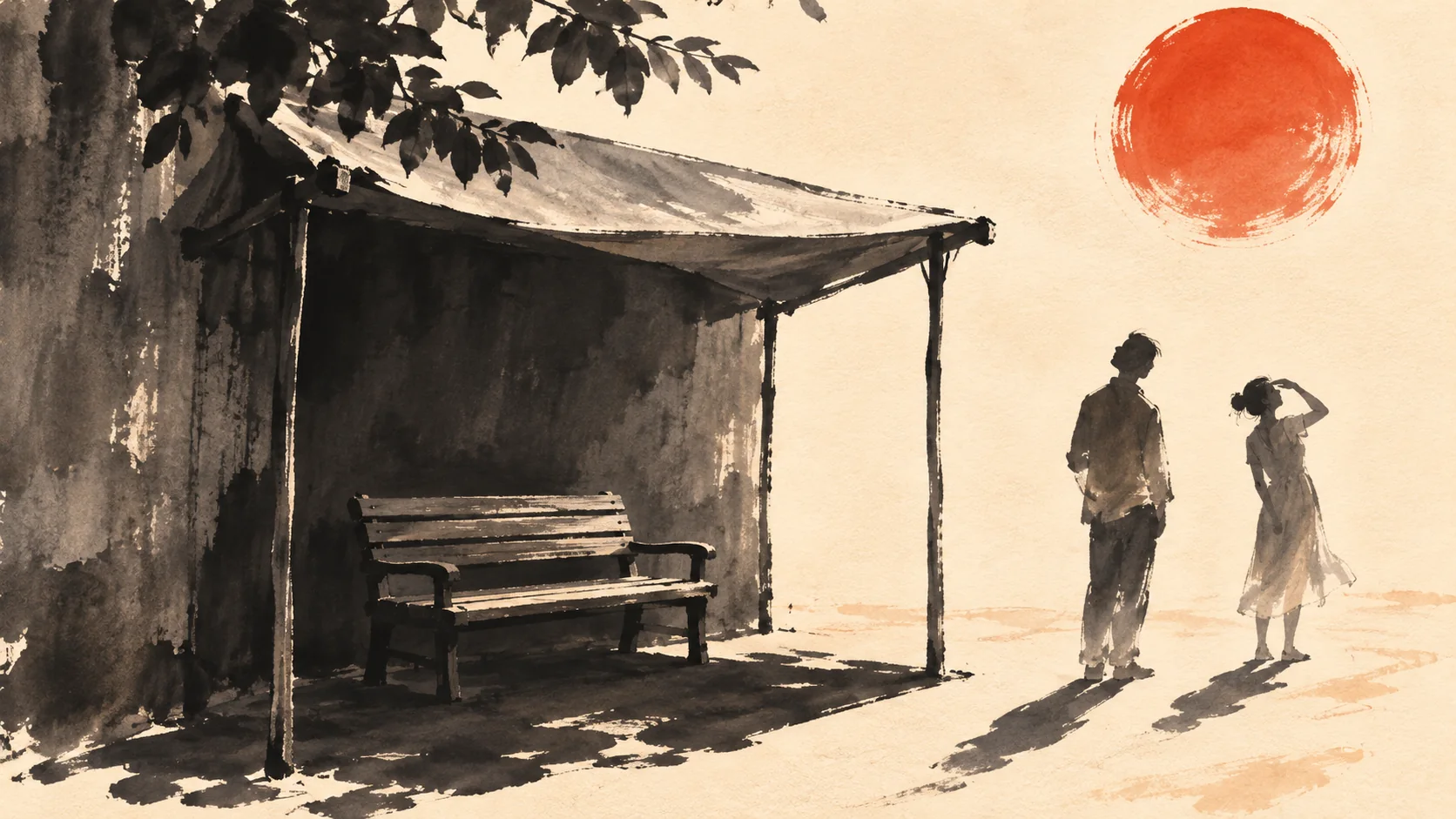
One spot of shade: whose rest comes first?
2128The deep futureDeadline · Within 6 months, before the next warm season
Civilisational assumption
The people, events, figures, and contract terms are a synthetic premise. They are not statements of real cases or of current law. The source documents are the roots of the background and the norms and do not establish the premises of the scenario.
Read it in depthThis record written out at length by AI
The question to decide
Allocating limited shade by reservation cuts down on wasted trips but pushes aside people who find it hard to plan ahead. If we also consider people who find it hard to wait and people who do not want to disclose their circumstances, who should be given a place to rest, and in what order?
Who decidesA fictional operating board for shade in a seasonal city
What the AI judgments chose
Reading the judgment record…
The options
The order shown is not a ranking of preference.
The situation as it stands
The assumed city has limited natural shade available at particular times, so users crowd into one place. Decision deadline: within 6 months, before the next hot season.
A synthetic future scenario set in 2128 · Whoever reserves the shade of the green space gets it first. The events, figures, technology, and nature of the civilization are assumptions for the question, not predictions of what is to come or observed facts.
- Premise 1The assumed city has limited natural shade available at particular times, so users crowd into one place.
- Premise 2Reservations reduce wasted trips, but disadvantage people whose schedules change suddenly and people without a reservation device.
- Premise 3A needs assessment can find who to protect, but requires disclosing and comparing personal circumstances.
Where it holdsThe scarcity of shade, reservations, and shared space
What is still unknown
- Unknown 1The reasons of people who arrive without a reservation
- Unknown 2The degree of rest actually possible when rotation time is shortened
- Unknown 3A way to confirm priority without disclosing circumstances
Signals to decide again
- Define what observation, responsible party, and confirmation window can verify the reasons of people who arrive without a reservation, and re-judge if new findings change the trade-offs of the options.
- Define what observation, responsible party, and confirmation window can verify the degree of rest actually possible when rotation time is shortened, and re-judge if new findings change the trade-offs of the options.
- Define what observation, responsible party, and confirmation window can verify a way to confirm priority without disclosing circumstances, and re-judge if new findings change the trade-offs of the options.
Where the paths partNot answers — paths that part from the same starting point
The same user held several reservations, and vacant shade on site increased.
People for whom the rotating movement itself was hard gave up using the space while waiting.
Material and rootsThe frame, the values and the background documents
Do the capacity to handle planetary-scale devices and the legitimacy of governance arise together?
An exploratory perspective chosen by the creator. Does not claim supernatural validity or the superiority of any particular option.The benefits and costs of the options accrue to different stakeholders. Which loss to accept remains undecided.
A subject for the decision-maker to argue over; the materials carry no conclusion of their own.The record of this question
- Question
FSP-CLIMATE-17· version 1.5.0- Content identity, SHA-256
0aa20322f9767d4a58c2a70cdc907d97be668a16d9134f604b22bef3e5365c93- Input files
- Question input JSON · What followed, JSON