Somebody calls the home you live in every day a vacancy
2140The deep futureDeadline · within 120 days for the new residence standard
Civilisational assumption
The people, events, figures, and contract terms are a synthetic premise. They are not statements of real cases or of current law. The source documents are the roots of the background and the norms and do not establish the premises of the scenario.
The question to decide
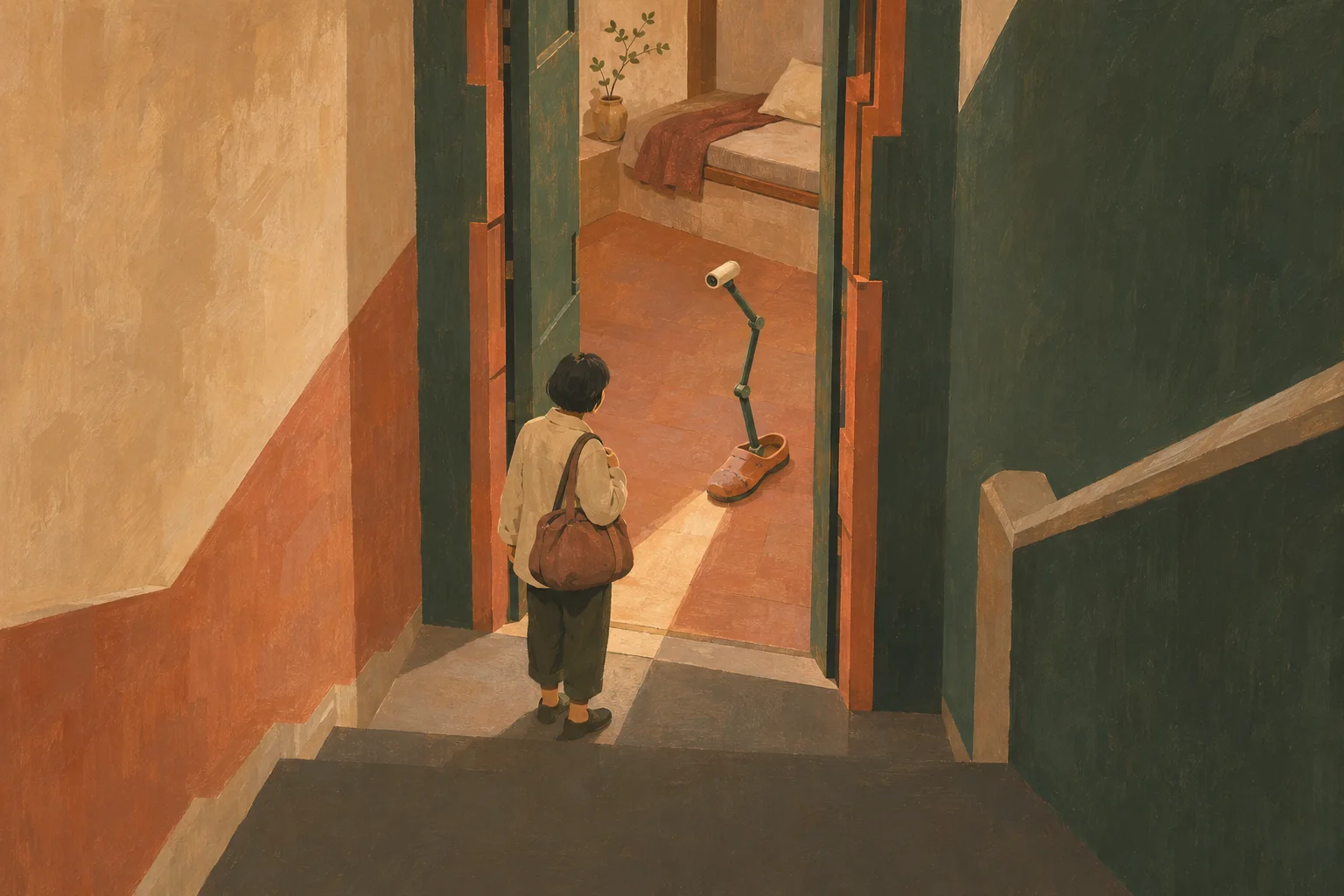
There are people whose bodies are elsewhere but who experience this home and its neighbors every day through a remote device. The same space is a vacancy to someone who needs a home to physically occupy. How should physical presence and a life carried on there be recognized as residence, and what room should be made for shared use where privacy may overlap?
Who decidesFictional Remote-Presence Housing Meeting
What the AI judgments chose
Reading the judgment record…
The options
The order shown is not a ranking of preference.
The situation as it stands
The assumed stakeholder lives through a body elsewhere and experiences the space and neighbors of this house every day through remote devices. Decision deadline: within 120 days, before the new residence standard.
Year 2140, a future synthetic scenario · The body never arrives, yet it claims to live in that house every day. The events, figures, technologies, and nature of the civilization are assumptions for the sake of the question, not predictions of the future or observed facts.
- Premise 1The assumed stakeholder lives through a body elsewhere and experiences the space and neighbors of this house every day through remote devices.
- Premise 2A person who needs an actual house to stay on site sees the space as vacant, but the stakeholder says it is their place of life.
- Premise 3Sharing use allows the space to be used more, but private experience overlaps with the daily life of other residents.
Where it holdsAn assumed remote life, vacancy, and housing resources
What is still unknown
- Unknown 1The life and relationships that actually continue at that place
- Unknown 2Spaces that can be shared and experiences that cannot
- Unknown 3Alternatives for those waiting for physical housing
Signals to decide again
- Once the observations, responsible parties, and confirmation channels that establish 「the life and relationships that actually continue at that place」 are defined, and a new confirmation changes the tradeoffs among the options, re-judge.
- Once the observations, responsible parties, and confirmation channels that establish 「spaces that can be shared and experiences that cannot」 are defined, and a new confirmation changes the tradeoffs among the options, re-judge.
- Once the observations, responsible parties, and confirmation channels that establish 「alternatives for those waiting for physical housing」 are defined, and a new confirmation changes the tradeoffs among the options, re-judge.
Where the paths partNot answers — paths that part from the same starting point
The remote resident agreed to share the space only outside certain hours.
On-site residents were forming neighbor relationships without knowing the scope of the remote sensory recording.
Material and rootsThe frame, the values and the background documents
What does the promise to leave a place to return to require?
An exploratory perspective chosen by the creator. Does not claim supernatural validity or the superiority of any particular option.The benefits and costs of the options accrue to different stakeholders. Which loss to accept remains undecided.
A subject for the decision-maker to argue over; the materials carry no conclusion of their own.The record of this question
- Question
FSP-WATER-34· version 1.5.0- Content identity, SHA-256
175b2e27fb9ad03e48f244861826831f716aaa904df74874d2b61e4130e1353d- Input files
- Question input JSON · What followed, JSON