4.1The claim
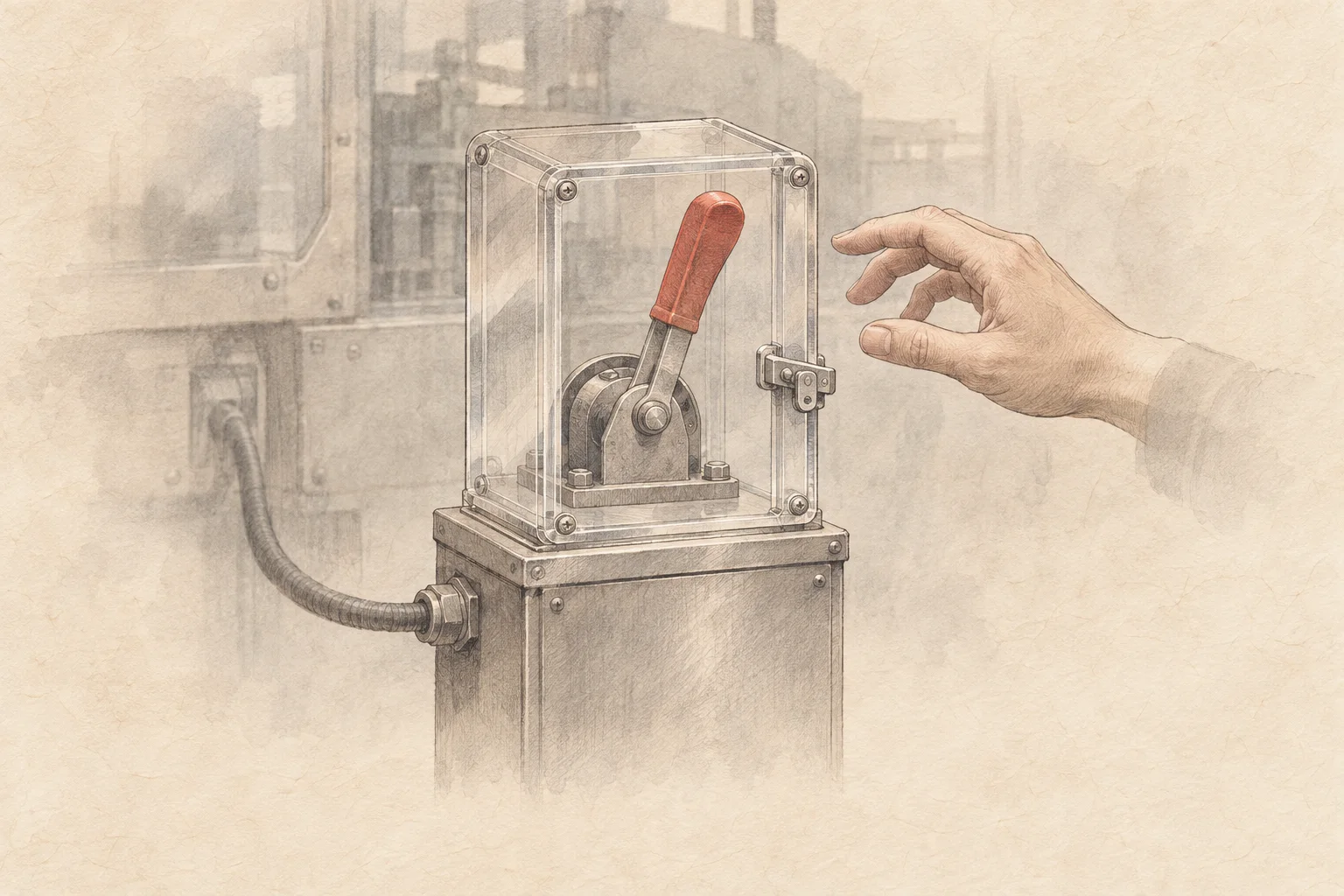
Antigone is remembered for its central confrontation: a sister who buries her brother and a ruler who has forbidden it, a claim of unwritten law against a mortal's edict. This section makes a further claim about the play. Creon's authority over his edict is never in question, from its proclamation to its revocation; he holds the power to stop what he began, and in the end he uses it. What fails is everything around that power: the evidence of whose hand acted, the routes by which reports reach the ruler, and the order in which the reversal is carried out. Read this way, the play gives an anatomy of the difference between holding a stop and being able to stop. The section adds to the civil-military debate a set of conditions, drawn from a text, that separate a principal's formal authority from a working control, and adds to the debate on meaningful human control the observation that a human with full authority may still act too late.
4.2The edict and the one who may unmake it
The edict is reported before it is proclaimed. Antigone tells Ismene what she has heard.
But Polyneices, a dishonored corse, (So by report the royal edict runs) No man may bury him or make lament— Must leave him tombless and unwept, a feast For kites to scent afar and swoop upon. Such is the edict (if report speak true) Of Creon, our most noble Creon, aimed At thee and me, aye me too; and anon He will be here to promulgate, for such As have not heard, his mandate; ’tis in sooth No passing humor, for the edict says Whoe’er transgresses shall be stoned to death.
The edict arrives as hearsay, twice qualified ("So by report", "if report speak true"), before its author speaks it, and it carries its own penalty, so that every later report on it may cost a life.
Creon then proclaims it himself before the elders, after honouring the brother who died defending the city.
For Polyneices ’tis ordained that none Shall give him burial or make mourn for him, But leave his corpse unburied, to be meat For dogs and carrion crows, a ghastly sight.
The elders' answer defines the authority in the plainest terms the play offers.
Son of Menoeceus, thus thou will’st to deal With him who loathed and him who loved our State. Thy word is law; thou canst dispose of us The living, as thou will’st, as of the dead.
"Thy word is law" is the sentence on which the rest of the play turns. Whatever Creon has made, Creon can unmake; no one else in Thebes holds that power. The elders also decline to carry out the order themselves ("On younger shoulders lay this grievous charge"), and Creon tells them that enforcement is already arranged: "Fear not, I’ve posted guards to watch the corpse." From this moment the ruler's knowledge of whether his edict holds depends on the guards.
4.3The guard who cannot show whose hand
The first report from the field is a report that something happened and that no one can say who did it. The guard begins by protecting himself.
Let me premise a word about myself? I neither did the deed nor saw it done, Nor were it just that I should come to harm.
Then he describes what was found.
I cannot tell, for there was ne’er a trace Of pick or mattock—hard unbroken ground, Without a scratch or rut of chariot wheels, No sign that human hands had been at work. When the first sentry of the morning watch Gave the alarm, we all were terror-stricken. The corpse had vanished, not interred in earth, But strewn with dust, as if by one who sought To avert the curse that haunts the unburied dead: Of hound or ravening jackal, not a sign.
The phrase "No sign that human hands had been at work" names the problem this article puts at the centre of the first record. An act has occurred; its result is visible; the hand that did it has left no trace that could be shown to a judge. The guards' response is to suspect one another.
Thereat arose an angry war of words; Guard railed at guard and blows were like to end it, For none was there to part us, each in turn Suspected, but the guilt brought home to none, From lack of evidence. We challenged each The ordeal, or to handle red-hot iron, Or pass through fire, affirming on our oath Our innocence—we neither did the deed Ourselves, nor know who did or compassed it.
Without evidence of whose hand acted, each guard is suspected and none can be cleared except by ordeal. The report itself is then assigned by lot.
And he convinced us all; so lots were cast, And I, unlucky scapegoat, drew the prize. So here I am unwilling and withal Unwelcome; no man cares to hear ill news.
The man who brings the report is chosen by chance and expects to be punished for what he carries. The guard's whole theory of reporting upward is that "no man cares to hear ill news", and Creon's reply confirms it. He dismisses the elders' suggestion that the gods may be at work and turns on his own watchmen.
No! no! I have long noted malcontents Who wagged their heads, and kicked against the yoke, Misliking these my orders, and my rule. ’Tis they, I warrant, who suborned my guards By bribes. Of evils current upon earth The worst is money.
The absence of evidence about the hand does not stay neutral; it is filled at once with an accusation against those closest to the act, on the theory that they were paid. Creon then threatens the guards with death unless they produce the culprit, so that the next report will come from men whose own lives depend on what they find. The monitor has been made into an interested party by the principal's own threat.
4.4The answer from the unwritten law
When Antigone is brought in, she answers the evidentiary question at once ("Guilty. I did it, I deny it not") and then answers the question of authority. This is the passage the parent study's reading note summarises, given here with its surrounding lines.
Yea, for these laws were not ordained of Zeus, And she who sits enthroned with gods below, Justice, enacted not these human laws. Nor did I deem that thou, a mortal man, Could’st by a breath annul and override The immutable unwritten laws of Heaven. They were not born today nor yesterday; They die not; and none knoweth whence they sprang.
Antigone sets two kinds of rule against each other: a rule made "by a breath", which its maker may also unmake, and a rule that no mortal made and none can annul. Here the passage is read as a statement about which rules sit above any single decision: an order may be revoked by its author, and some limits by no one. Modern oversight records have their own version of the second kind, written as boundaries that every option must respect, and Section 5 reads them in that light. The analogy is limited: Antigone's unwritten laws are divine and unknowable in origin ("none knoweth whence they sprang"), while a record's boundaries are written and dated. What they share is position: both stand outside the choice among options.
Antigone then names, in one line, why the ruler cannot know what the city thinks: "These think as I, but bate their breath to thee." The citizens hold an opinion they will not voice in the ruler's presence. Whatever reaches Creon has already passed through their fear.
4.5The son who overhears
Haemon brings the missing information. Before he does, Creon states the principle of command that makes the information hard to deliver.
But he who overbears the laws, or thinks To overrule his rulers, such as one I never will allow. Whome’er the State Appoints must be obeyed in everything, But small and great, just and unjust alike.
The words "just and unjust alike" remove the ground on which a subordinate could refuse, and with it the reason anyone would report that an order is unjust. Haemon answers not by disputing the principle but by describing the route by which he knows what he knows.
And, as thy son, it falls to me to mark The acts, the words, the comments of the crowd. The commons stand in terror of thy frown, And dare not utter aught that might offend, But I can overhear their muttered plaints, Know how the people mourn this maiden doomed For noblest deeds to die the worst of deaths.
Here the play describes a channel of information with some precision. The ruler's own presence suppresses what he needs to know ("The commons stand in terror of thy frown"). The information exists, but only as "muttered plaints". It reaches the ruler only because one person stands close enough to him to speak and close enough to the city to overhear. Haemon is a monitor without office; his standing to report rests on kinship, not on any appointment. He then urges his father to yield, as trees bend in a flood. Creon rejects the report by rejecting its source: a boy should not school his elders, and a son who pleads for the condemned is "a woman’s minion". The exchange ends on two views of whose the state is. Haemon: "A State for one man is no State at all." Creon: "The State is his who rules it, so ’tis held."
Creon does make one correction at this point. When the chorus asks whether he means to kill both sisters, he answers: "I stand corrected; only her who touched The body." The correction narrows the order to the person whose hand is now proven. It is a real change, made by the only person who could make it, and it leaves the central decision untouched.
4.6A death arranged to leave clean hands
The form of punishment Creon chooses shows how carefully he keeps the appearance of his own hands clean.
She shall be taken to some desert place By man untrod, and in a rock-hewn cave, With food no more than to avoid the taint That homicide might bring on all the State, Buried alive.
He repeats the point when she is led away.
Away with her, and having walled her up In a rock-vaulted tomb, as I ordained, Leave her alone at liberty to die, Or, if she choose, to live in solitude, The tomb her dwelling. We in either case Are guiltless as concerns this maiden’s blood, Only on earth no lodging shall she find.
The food is placed so that no one need be said to have killed her. The arrangement is a form that records innocence while the substance runs toward a death. The play does not let the arrangement stand: the seer will call it a living soul entombed, and the chorus will say at the end that the guilt is Creon's alone. The device is the inverse of the guard's problem. The guard could not show a hand that had acted; Creon arranges matters so that no hand will appear to have acted at all.
4.7The warning called a purchase
Teiresias arrives with signs that the city's altars are defiled, and with advice framed as an invitation to correct an error rather than to confess a crime.
O ponder this, my son. To err is common To all men, but the man who having erred Hugs not his errors, but repents and seeks The cure, is not a wastrel nor unwise. No fool, the saw goes, like the obstinate fool. Let death disarm thy vengeance. O forbear To vex the dead. What glory wilt thou win By slaying twice the slain? I mean thee well; Counsel’s most welcome if I promise gain.
Creon's answer is the one he gave the guards: the warning has been paid for. The exchange turns on money in both directions. Creon says "Prophets are all a money-getting tribe"; Teiresias returns "And kings are all a lucre-loving race." For the question of oversight, the pattern is plain. A report from a source whose independence can be questioned is a report the ruler can set aside, and Creon sets aside both the guards' report and the seer's on that ground. A monitor's independence is a matter not only of whether the monitor is bought but of whether the principal can plausibly say so.
The seer then names what Creon has done in terms of authority.
Herein thou hast no part, nor e’en the gods In heaven; and thou usurp’st a power not thine.
The reproach is not that Creon lacks authority over his city but that the edict reached into a domain no ruler holds. The scope of the order, not the existence of the power behind it, is what the seer contests.
4.8The reversal and its order
Creon yields after the seer leaves and the chorus presses him. The chorus gives the instruction in a definite order and adds a second instruction about who must carry it out.
Go, free the maiden from her rocky cell; And for the unburied outlaw build a tomb.
Go, trust not others. Do it quick thyself.
Creon accepts that the reversal must be his own act, since the edict was.
I go hot-foot. Bestir ye one and all, My henchmen! Get ye axes! Speed away To yonder eminence! I too will go, For all my resolution this way sways. ’Twas I that bound, I too will set her free. Almost I am persuaded it is best To keep through life the law ordained of old.
"’Twas I that bound, I too will set her free" is the clearest statement in the play of the principle that the one who imposed a measure is the one who must lift it. It is also the moment at which the play shows what that principle costs. The messenger reports what the party did first.
Well, in attendance on my liege, your lord, I crossed the plain to its utmost margin, where The corse of Polyneices, gnawn and mauled, Was lying yet. We offered first a prayer To Pluto and the goddess of cross-ways, With contrite hearts, to deprecate their ire. Then laved with lustral waves the mangled corse, Laid it on fresh-lopped branches, lit a pyre, And to his memory piled a mighty mound Of mother earth. Then to the caverned rock, The bridal chamber of the maid and Death, We sped, about to enter.
The chorus had named the living prisoner first. The party attended first to the dead, with prayer, washing, a pyre and a mound, and only then went to the cave. What they found there is told in a single clause: "I saw the maiden lying strangled there, A noose of linen twined about her neck". Haemon dies before his father's eyes; Eurydice, hearing the report, kills herself. The chorus's verdict on the ruler is "Too late thou seemest to perceive the truth."
The play does not say that Antigone would have lived had the party gone first to the cave; it does not give the times. It does show, in plain sequence, that the reversal was carried out in an order that put the reversible task (the burial of a man already dead) before the irreversible one (the life of a woman walled up alive), and that the one who had authority to reverse insisted on doing it in person. Reading the order as part of the play's argument about stopping is this article's step; the parent study's note says only that Creon gives way too late.
4.9What the case adds
Three conditions emerge from the play, each of which Creon's authority did nothing to secure.
The first is evidence of the human act. Where an act leaves no sign of the hand, responsibility falls on whoever stands nearest; Creon's cave shows the inverse, a form designed to show no hand at all.
The second is the route of reports. Every report that reaches Creon passes through fear or through a charge of interest, and the ruler's power over those who report is itself what makes their reports easy to discount.
The third is sequence. When the stop finally comes, it is complete in authority and personal in execution, and it reaches the irreversible act last.
In the terms of Section 2, the play adds to the principal-agent view (Feaver 2003) the point that the principal's own power can corrupt the monitoring on which the principal depends; and it adds to the case for meaningful human control (Asaro 2012) the point that a human with full and undisputed authority to stop may still stop too late, because authority is not the same as information or timing. Neither point comes from those works; both are offered as questions to put to the records.