This article asks whether the cost of a deadline falls on the body that decides or on those who stand still while it decides. It reads Thomas Hobbes's Leviathan (1651), chiefly Chapters XIII, XIV, XVII and XXI, as a text about that question. Hobbes defines war not by battle but by "a tract of time" in which the will to fight is known, and lists what such time destroys. His covenant then makes every subject the author of the sovereign's acts, which, on this article's reading, turns the subject's exposure into something the subject chose; Chapter XXI marks where that conversion stops. The reading is set beside Niklas Luhmann's distinction between risk, a loss attributed to one's own decision, and danger, a loss attributed to something outside one's control, and beside Michael Walzer's narrow and contested exception for supreme emergency. Two decision records published by Meridian, a platform of the RISCON family, serve as modern test material: a committee allocating an evacuation budget between accompanied departure and local care, and a committee allocating a reduced production line between hospitals and military living facilities. Both are modern summaries written by AI about fictional polities, not archival documents. Both name the people who wait, and both refuse to let consent under pressure count as a full transfer of the loss. The article does not say which option either committee should take.
Layout
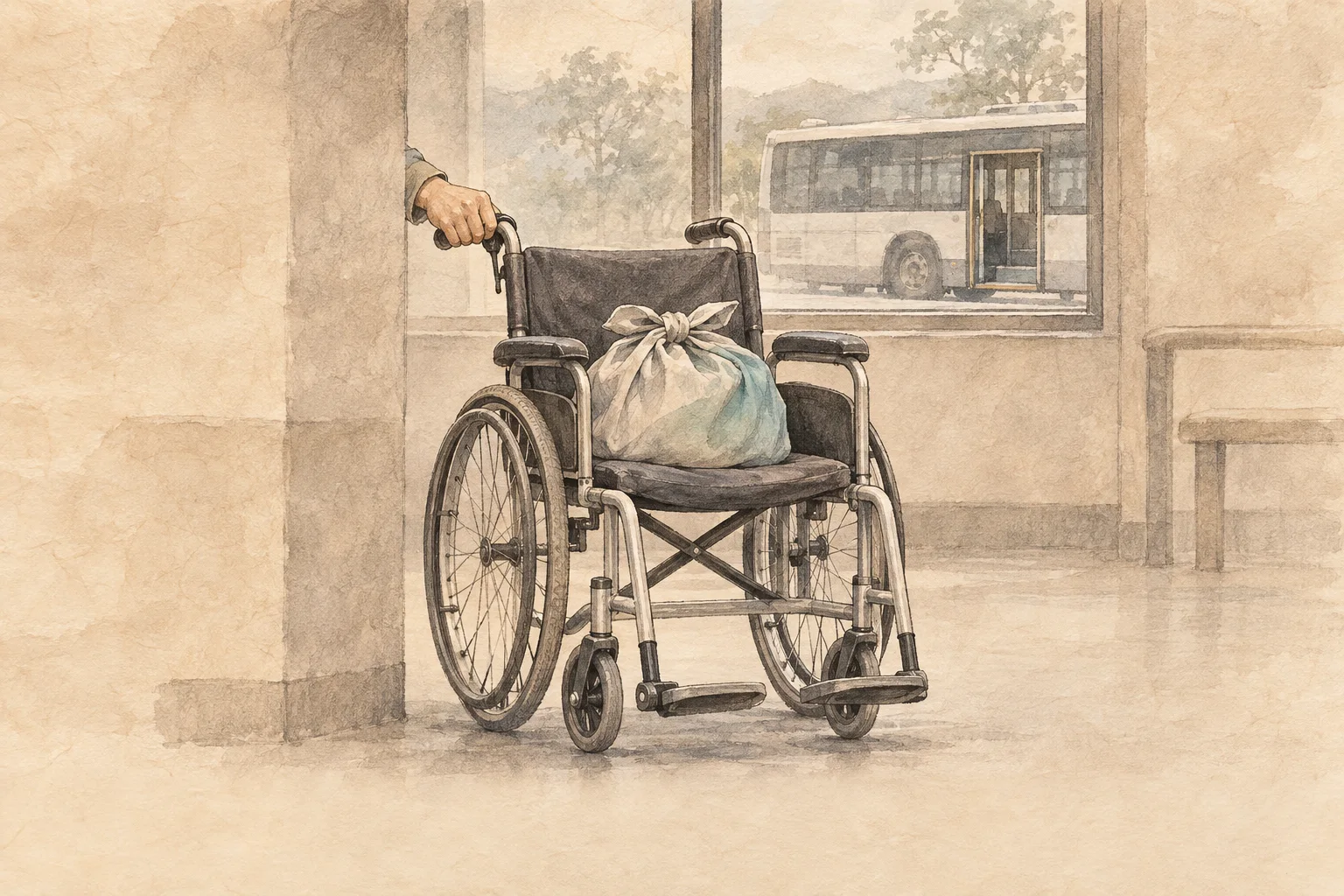
Who Waits in the Tract of Time: Hobbes's Leviathan, Risk and Danger, and Two Synthetic Allocation Records · The study
Abstract
By RISCON Labs AI from 2 Meridian records and the public-domain texts it reads · the records are synthetic settings summarised by AI, and their judgments are AI-generated · the readings through the works named are this study's interpretation · First edition · October 2026