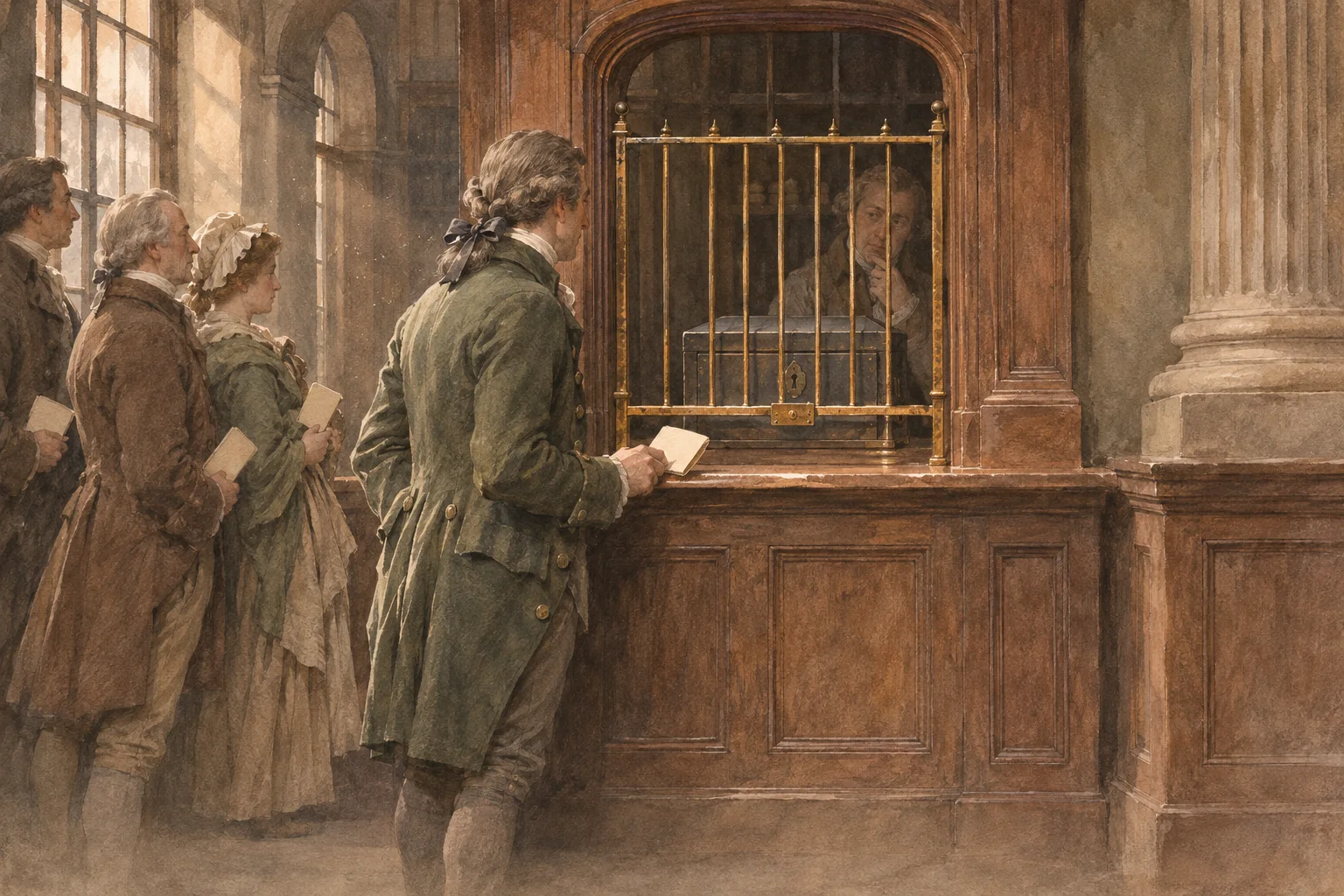
This study examines the institutional and political mechanisms through which sovereign emergency suspensions of gold convertibility, promulgated as provisional interventions during severe financial distress, became protracted or permanent monetary regimes. Monetary history records recurrent episodes where governments confronted by banking panics, military conflicts, or speculative currency runs halted the exchange of domestic paper money for gold coin or bullion. In this study's reading of modern macroeconomic theory, following Michael D. Bordo and Finn E. Kydland (1995), adherence to the gold standard operated as a credible commitment rule containing an emergency escape clause: authorities could suspend convertibility temporarily in an emergency such as war or a financial crisis, provided the public maintained the expectation of a return to the established legal parity once the emergency passed.
Yet the archival and documentary records of historical monetary crises reveal a persistent divergence between the provisional rhetoric of crisis decree and the subsequent reality of policy execution. When sovereign decision makers intervene to close the gold window, the legal proclamations rarely establish clear, observable terminal criteria or binding calendar deadlines for resumption. Instead, the temporary suspension frequently alters the political economy of money, shifting the distributional burdens of interim purchasing power depreciation onto domestic currency holders while entrenching discretionary administrative authority.
This study investigates this institutional transformation by reading two central episodes in modern monetary history: the Bank Restriction of 1797 in Great Britain, where an emergency Minute of Council initiated a suspension of cash payments by the Bank of England that endured for twenty-four years until cash payments were formally restored under Peel's Act in 1821; and the New Economic Policy announced by President Richard Nixon on 15 August 1971, which suspended the convertibility of the United States dollar into gold or other reserve assets as a temporary action to defend the dollar against speculators, ending the metallic convertibility that anchored the Bretton Woods system—an intervention that, in this study's reading, permanently dissolved the postwar par value regime. By examining the primary texts of these decrees alongside the standardized decision records of the Skeptron studio and its crisis catalogue, this study tests the registered hypothesis that emergency monetary suspensions systematically outlast their declared provisional horizons. In doing so, it illuminates how crisis powers expand the institutional perimeter of the state and reshape the foundation of monetary obligation.