14 days of food left: open up the last wilderness?
2094The far futureDeadline · 14 days of current food stocks remaining
A leap assumed
All people, institutions, events, figures, and future technologies in every issue are a synthetic premise. Background documents are sources for topic discovery and are not evidence of future facts or probabilities.
The question to decide
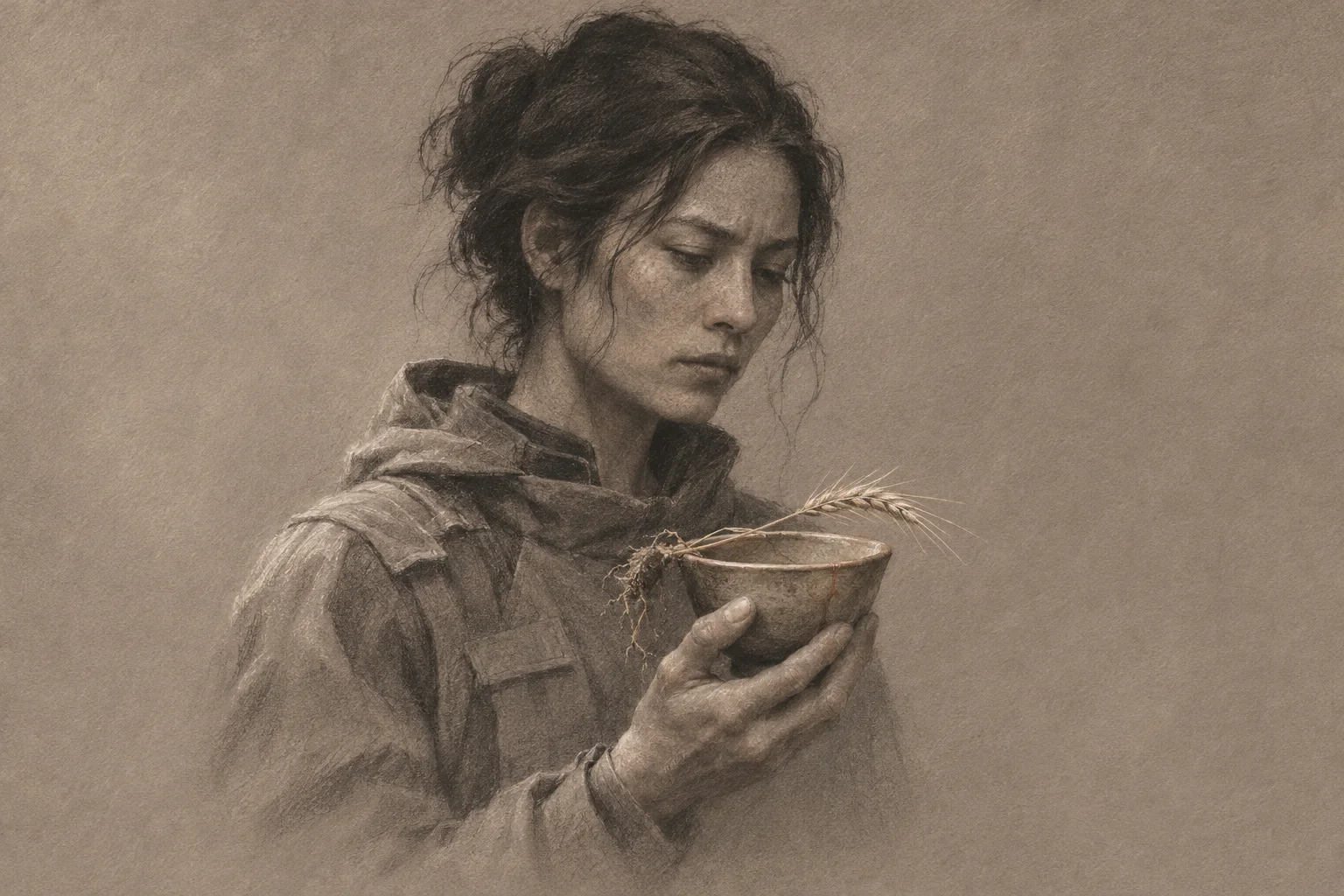
Food for 50,000 people is down to 14 days, and how much food can be taken from the last intact wilderness preserve without preventing ecosystem recovery is disputed. Migration and outside resupply also carry costs and risks of failure. How should the joint committee choose or combine the use of the preserve with migration and resupply to survive the next 90 days?
Who decidesJoint survival and ecology committee of the protected domain
What the AI judgments chose
Reading the judgment record…
The options
The order shown is not a ranking of preference.
The situation as it stands
There is room to choose movement and supply routes only while 14 days of stock remain.
A fictional remaining-ecosystem protection right · long-term food crisis
- Premise 1Crop supply around the protection right has been cut off, and the food of its 50,000 residents has 14 days left.
- Premise 2The protection right includes several species and soil systems with no confirmed alternative habitat, and the recoverable range of emergency use volumes is disputed.
- Premise 3Another residential right has offered to accept 20,000 people temporarily, but round-trip movement and settlement costs exceed the current budget.
Where it holdsDecide on 90 days of emergency use and external supply contracts. It does not decide on permanent ownership of protected species or the dismantling of the protection right.
What can be lost
- Loss of life left behind by food shortages and forced movement
- Damage that permanently loses species and soil functions by exceeding the recovery capacity of the remaining ecosystem
What is still unknown
- Unknown 1The actual impact of use pressure on food webs and soil recovery
- Unknown 2The capacity of host areas and supply routes to sustain it
Signals to decide again
- Field monitoring confirms an overlap between irreplaceable breeding and soil areas and the scope of use.
- Actual external supply or the number of people accepted deviates from the approved plan.
Where the paths partNot answers — paths that part from the same starting point
An independent field survey confirms that the temporary-use zone overlaps the only breeding route of a particular species.
The external alliance secures 30 days of food but notifies that transport will start in 12 days.
Material and rootsThe frame, the values and the background documents
How can the intent of nature that people speak for be reviewed?
An exploratory perspective chosen by the creator. Does not claim supernatural validity or the superiority of any particular option.The benefits and costs of the options accrue to different stakeholders. Which loss to accept remains undecided.
A subject for the decision-maker to argue over; the materials carry no conclusion of their own.Original quotation: A nonhuman-centered ethics execution system Reworked: The original, which called for intervention on the basis of planetary balance alone, was reframed as a limited-use decision between the food of current survivors and the survival of an irreplaceable ecosystem.
The root of the problem-finding. The original's future events and formulations are not treated as verified facts.The record of this question
- Question
FSP-ECOLOGY-08· version 1.2.0- Content identity, SHA-256
eaca9f185137d80160133a230185427ae1165dac1092432b5fed2fa8caf19d3e- Input files
- Question input JSON · What followed, JSON