Who is responsible for the old connections of a forked specification
2180The deep futureDeadline · 18 months until the joint maintenance fund recommitment
Synthetic question assuming future conditions
All institutions, events, figures, and future technology are synthetic premises for exploring the question. Present-day material is likewise not a report of real events. The timeline link is a conditional exploration hypothesis and assumes neither the actual judgment of the previous question nor the occurrence of future events.
The question to decide
Within 18 months before the joint maintenance fund is re-contracted, which specification succession agreement will the Long-Life Facility Specification Community Separation Meeting adopt? Decide on a method that allocates the connection liability for long-life facilities and the regional right of change, among single-specification joint maintenance, complete regional separation with asset division, and joint management of the minimal access layer.
Who decidesLong-Life Facility Standards Community Separation Agreement Meeting
What the AI judgments chose
Reading the judgment record…
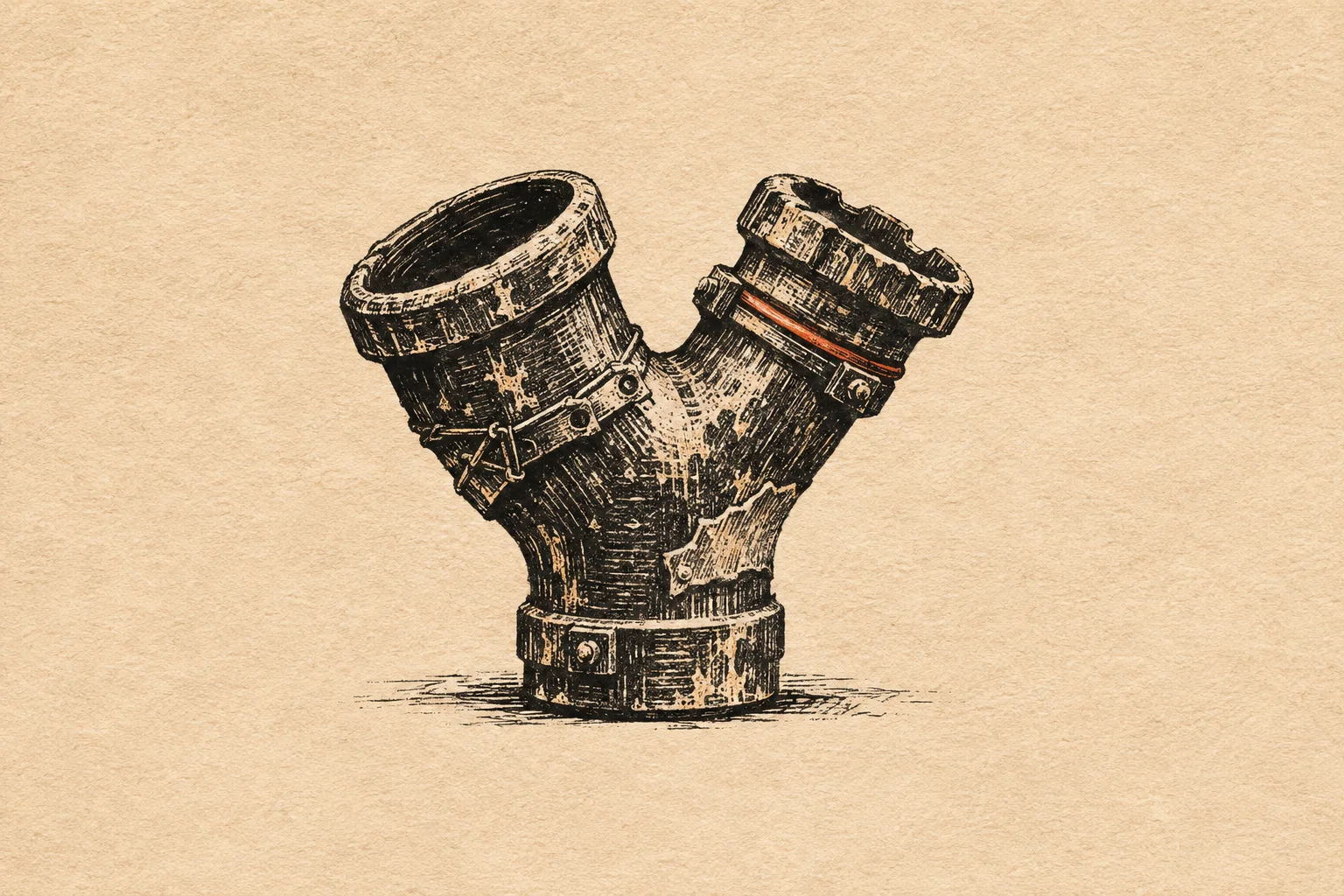
The options
The order shown is not a ranking of preference.
The situation as it stands
If responsibility allocation is not settled at re-commitment, the maintenance team cannot sign staffing contracts for the next operating period, and each region begins replacement or independent development investment without knowing the succession conditions.
A fictional long-life facility standards community and member regions using different facility generations
- Premise 1In the synthetic premise, long-lived shared facilities use control devices from different generations, and some regions demand a specification branch suited to the new structure. The current joint fund supports testing and repair of the legacy access layer, and the succession rules for separation are blank.
- Premise 2The Separation Agreement Meeting has been delegated the allocation of shared test assets and the maintenance fund but has no resources to replace regional facilities in bulk. The initial patents are set to have expired, but the usage rights of follow-on implementation tools and the technical personnel vary by region, so dividing assets alone does not guarantee maintenance.
- Premise 3New-generation facility regions want to change the specification without other regions' approval, while legacy facility regions fear that separation will shift the repair burden onto them. A joint operator of facilities spanning regions worries about gaps in responsibility at the boundary between different specifications.
Where it holdsWithin the scope delegated by member regions, choose the accord on separating specifications and on succession of shared assets and maintenance obligations.
What can be lost
- New-generation facility regions may lose the benefits of new facilities through delayed revisions or bear independent maintenance costs after separation.
- Legacy facility regions may lose remaining facility life and repair capability if shared support shrinks.
- Operators of facilities spanning regions may be left carrying the cost of coordination for downtime losses and failures whose causes are judged differently.
What is still unknown
- Unknown 1It is unknown whether the regions receiving the shared test assets can reproduce and repair the legacy access layer without the original maintenance team.
- Unknown 2It has not been confirmed how far responsibility boundaries in cross-region failures can be distinguished by the shared access layer.
- Unknown 3It has not been settled to what extent negotiations to transfer follow-on tool usage rights to a separated organization can succeed.
Signals to decide again
- Regional maintenance audit teams check every half year the success of independent repairs and unresolved work volume by region, and reopen the decision if the gap between inherited capability and actual performance persists.
- The joint failure coordination office tallies every quarter disagreements among regions in judging failure causes, and reopens the decision if cases with no identified responsible party accumulate.
- The joint fund trustee reconciles every year the payment of cost shares with the remaining obligation to support legacy facilities, and reopens the decision if the resources needed to perform those obligations become insufficient.
Where the paths partNot answers — paths that part from the same starting point
Independent follow-up thread A: An independent team in a legacy facility region reproduces repairs using the transferred test assets, but in cross-region connection tests submits failure-cause findings different from those of the existing joint team.
Independent follow-up thread B: A major operator of facilities spanning regions presents long-term operating costs for its own conversion network and states its intention to join individual connection contracts instead of the shared access layer fund.
Material and rootsThe frame, the values and the background documents
Who can change the shared language?
An exploratory perspective chosen by the creator. Does not claim supernatural validity or the superiority of any particular option.The benefits and costs of the options accrue to different stakeholders. Which loss to accept remains undecided.
A subject for the decision-maker to argue over; the materials carry no conclusion of their own.- OECD · Strategic Foresight 2026-09-10 overview of publication method viewed
- W3C · Web Standards 2026-09-10 Official overview reviewed
The record of this question
- Question
FSP-FI-INTEROP-03· version 1.7.0- Content identity, SHA-256
aee4535aa51356ee27307f58804688835c1075c1f7fc545acc2b153a98dafb9b- Input files
- Question input JSON · What followed, JSON