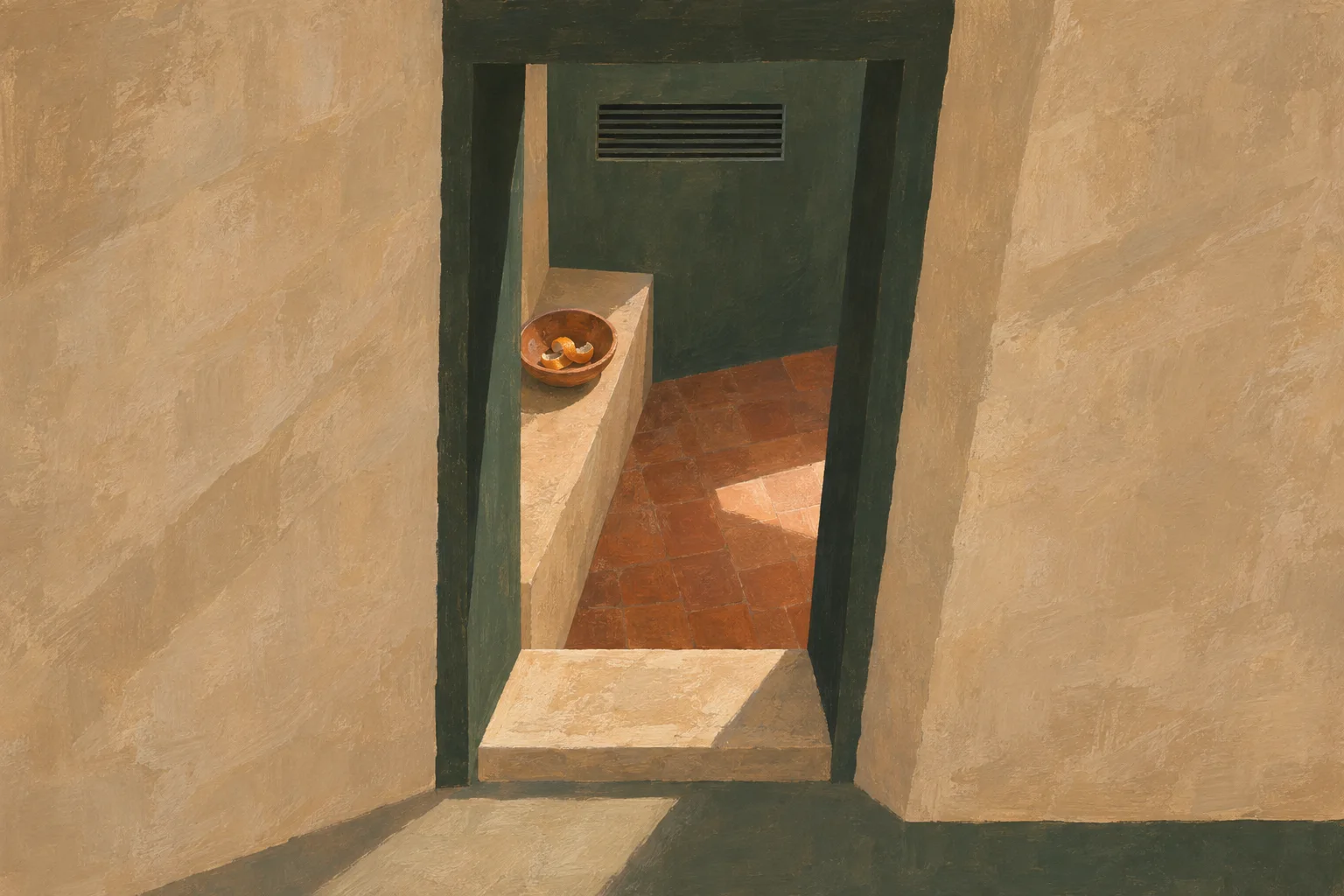
The place-ness of a room with its scent removed
2026NowDeadline · 30 days until the reopening facility order
Present-tense synthetic question
All institutions, events, figures, and future technology are synthetic premises for exploring the question. Present-day material is likewise not a report of real events. The timeline link is a conditional exploration hypothesis and assumes neither the actual judgment of the previous question nor the occurrence of future events.
The question to decide
Within 30 days before the reopening equipment is issued, how will the Environmental Design Committee of the Living Exhibition Hall set the scent environment of the exhibition rooms where visitors stay together? Will it adopt one of these as the base design: maintaining scent per location, reducing scent in every room while providing cues for other locations, or operating zones with different scents at the same time?
Who decidesLiving Exhibition Hall Environment Design Committee
What the AI judgments chose
Reading the judgment record…
The options
The order shown is not a ranking of preference.
The situation as it stands
If the ordering is not settled, the reopening date cannot be confirmed, and the existing scent installations, still in place, become the base environment of the next operating period without a separate resolution.
The shared exhibition hall of the fictional Corner Life Museum. The visitors' physical and sensory characteristics and the facility and operating settings are all synthetic.
- Premise 1Synthetic situation: ahead of the reopening of a life museum, some visitors state that they remember places by the different scent of each room, while other visitors state that they would stay longer if the scent were reduced. These are visitor statements, not verified findings about general sensory effects.
- Premise 2Synthetic resources and authority: the committee has the budget and operating authority to order any one design: keeping the scent installations, reducing scent across all rooms while adding surface and lighting cues, or creating scent-separated ventilation zones. It cannot afford all designs at once, and changing after ordering requires another closure.
- Premise 3Synthetic conflict: visitors who use scent as a place cue say that reducing scent erases the familiar rooms, while visitors who want less scent say the current state makes their stay difficult. Shared gathering facilitators worry that separating zones will reduce the experience of meeting by chance.
Where it holdsFinalize the scent environment of the exhibition hall and the wayfinding and operating formats required for it, within the approved renovation budget.
What can be lost
- Visitors who use scent as a place cue: they may lose the continuity of recognizing a familiar room and the experience of explaining it to others.
- Visitors who want reduced scent: they may lose the opportunity to stay long in a shared space or to view at the same pace as their companions.
- Shared gathering facilitators: they may lose room for accidental encounters and joint activity as space shrinks or visitors disperse.
What is still unknown
- Unknown 1It is not known whether the surface and lighting cues provided after scent is reduced will be enough for existing visitors to distinguish places.
- Unknown 2It is not known whether preferences expressed early in the opening period will hold after repeat visits and changes in the composition of one's party.
- Unknown 3It is not known whether, after zones are separated, visitors will move between them and meet, or stay within each zone and interact less.
Signals to decide again
- The visitor support team checks each month after opening whether voluntary anonymous statements about having confused places keep recurring.
- The operations team checks each month for changes in voluntary anonymous statements that scent caused a shorter stay.
- The space manager checks each quarter the reasons for cancellation or relocation of shared gatherings by zone.
Where the paths partNot answers — paths that part from the same starting point
Independent follow-up branch A: some visitors who had requested scent reduction in a separate model experience state that what bothered them was not the scent itself but the blending of scent from adjacent rooms. It has not been confirmed whether this represents the original requests.
Independent follow-up branch B: the installation contractor submits revised drawings showing that the common gathering space must shrink to allow the corridors needed for zone separation. Gathering facilitators ask for a re-review of whether they can run activities with the same number of participants.
Material and rootsThe frame, the values and the background documents
Is a space empty for one person also empty for another?
An exploratory perspective chosen by the creator. Does not claim supernatural validity or the superiority of any particular option.The benefits and costs of the options accrue to different stakeholders. Which loss to accept remains undecided.
A subject for the decision-maker to argue over; the materials carry no conclusion of their own.- OECD · Strategic Foresight 2026-09-10 overview of publication method viewed
The record of this question
- Question
FSP-FI-SENSORY-01· version 1.10.0- Content identity, SHA-256
68976352ccc94f7a2de80dbc2bb1819dcbec44e0b8e594936e838685c5df8bcf- Input files
- Question input JSON · What followed, JSON