An observation network that looks beyond project boundaries
2026NowDeadline · 60 days until the 2026 joint observation network order deadline
Present-tense synthetic question
All institutions, events, figures, and future technology are synthetic premises for exploring the question. Present-day material is likewise not a report of real events. The timeline link is a conditional exploration hypothesis and assumes neither the actual judgment of the previous question nor the occurrence of future events.
The question to decide
Within 60 days before the 2026 deadline for issuing the joint observation network contract, to which observation network will the Investment Committee of the Strata Sharing Cooperative commit its budget? It must choose one of three: boundary observation per project, joint observation linking zones, or baseline observation of unused strata, weighing both the evidence to leave for future interference determinations and the current monitoring gaps.
Who decidesUnderground Commons Association Investment Committee
What the AI judgments chose
Reading the judgment record…
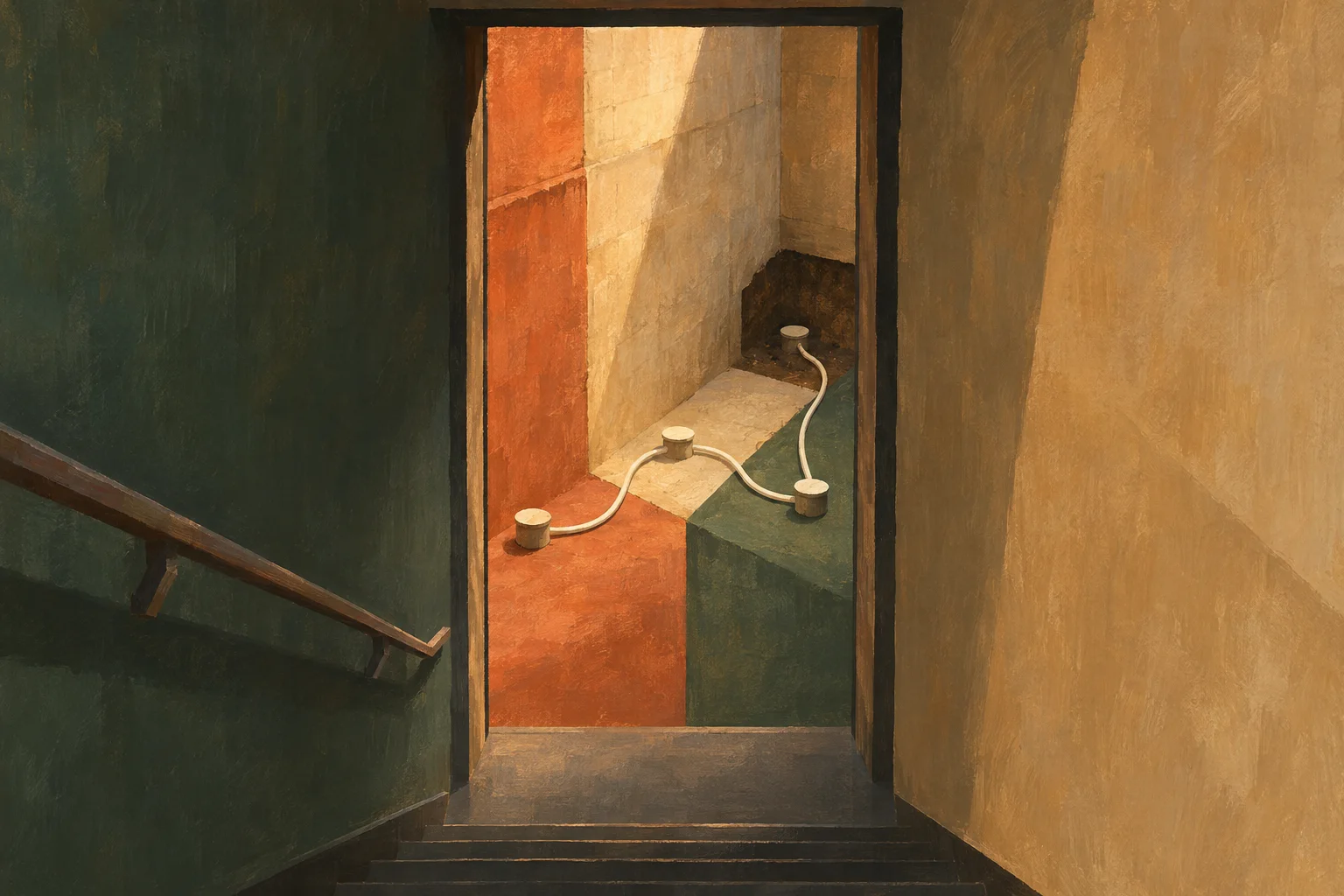
The options
The order shown is not a ranking of preference.
The situation as it stands
If the procurement deadline passes, each operator will buy its own equipment first, the observation standards will diverge, and the chance to secure a baseline before operations begin will shrink.
The Haedam Underground Shared Zone, a fictional local zone operated by the fictional Subsurface Sharing Cooperative
- Premise 1Synthetic premise: aquifer facilities, a geothermal project, and an underground storage project want to procure a joint observation network. Existing records are concentrated within each project's boundary, and there is no common baseline for comparing reported changes received from outside the boundaries.
- Premise 2Synthetic premise: the joint budget cannot observe every candidate site at the same density. The investment committee can commit only to installation and maintenance costs within the cooperative's zone, and observing outside the zone requires a separate access agreement with the adjacent cooperative.
- Premise 3Synthetic premise: the operating operators want to detect anomalies around their facilities quickly, while adjacent communities ask for changes between the zones to be observed first. Prospective users of subsurface that has not yet been used worry that without pre-development records they may be left holding liability later.
Where it holdsApprove the spatial scope of the observation network to be installed with the cooperative's joint budget and the cost-maintenance commitments.
What can be lost
- Operating operators: if observation around their facilities is inadequate, responses to anomalies will be delayed and disputes over liability unrelated to the cause will generate costs.
- Adjacent communities: if changes outside the boundary are not recorded, it will be hard to obtain evidence to claim losses to their living foundations.
- Future subsurface users: without pre-development data, they cannot distinguish the effects of existing use from the effects of new use, and may lose access opportunities or funding.
What is still unknown
- Unknown 1It has not been confirmed whether a reported change is the effect of a particular project, a combination of multiple uses, or a fluctuation unrelated to any project.
- Unknown 2It is unknown how much of the change extending beyond the zone the current candidate observation points will capture.
- Unknown 3Whether maintenance payments and the interpretation of records will continue after a project ends or the cooperative withdraws has not been settled.
Signals to decide again
- The cooperative's observation lab cross-checks every month whether reported changes outside the boundary and the scope of observation are diverging, and reports to the investment re-review.
- An independent data steward checks each quarter whether the share of records that cannot be compared under common standards is rising.
- The cooperative's accounting audit checks every half year whether withdrawals or closures leave gaps in the maintenance cost commitments.
Where the paths partNot answers — paths that part from the same starting point
Independent follow-up A: the adjacent cooperative sends a proposal allowing access to observation points between the zones, on the condition that the joint budget also covers the maintenance costs of its own zone.
Independent follow-up B: past observation records are found in the unused subsurface, but it is not confirmed whether they can be linked to new records, since the measurement standards and the missing periods differ.
Material and rootsThe frame, the values and the background documents
Who jointly rules on the rights of use that meet below the boundary line?
An exploratory perspective chosen by the creator. Does not claim supernatural validity or the superiority of any particular option.The benefits and costs of the options accrue to different stakeholders. Which loss to accept remains undecided.
A subject for the decision-maker to argue over; the materials carry no conclusion of their own.- OECD · Strategic Foresight 2026-09-10 overview of publication method viewed
The record of this question
- Question
FSP-FI-SUBSURFACE-01· version 1.7.0- Content identity, SHA-256
869a0d0eee38cfdb188414f7cd75950081451141f32f2dd79adc5ed7d8f7d05c- Input files
- Question input JSON · What followed, JSON