Between domestic stockpiles and the neighbors' meals, 72 hours
2046The middle futureDeadline · 72 hours until port loading approval
An extension of it
All people, institutions, events, figures, and future technologies in every issue are a synthetic premise. Background documents are sources for topic discovery and are not evidence of future facts or probabilities.
The question to decide
Honoring export commitments after two failed harvests would cut domestic stockpiles from 100 days to 65 days. Three importing countries have no alternative ports, and children's school meals are at stake. What choice should the food cabinet make over the next 90 days: halt exports, keep minimum supply, or share the shortfall through joint distribution and guaranteed contracts?
Who decidesEmergency food cabinet of the major exporting country
What the AI judgments chose
Reading the judgment record…
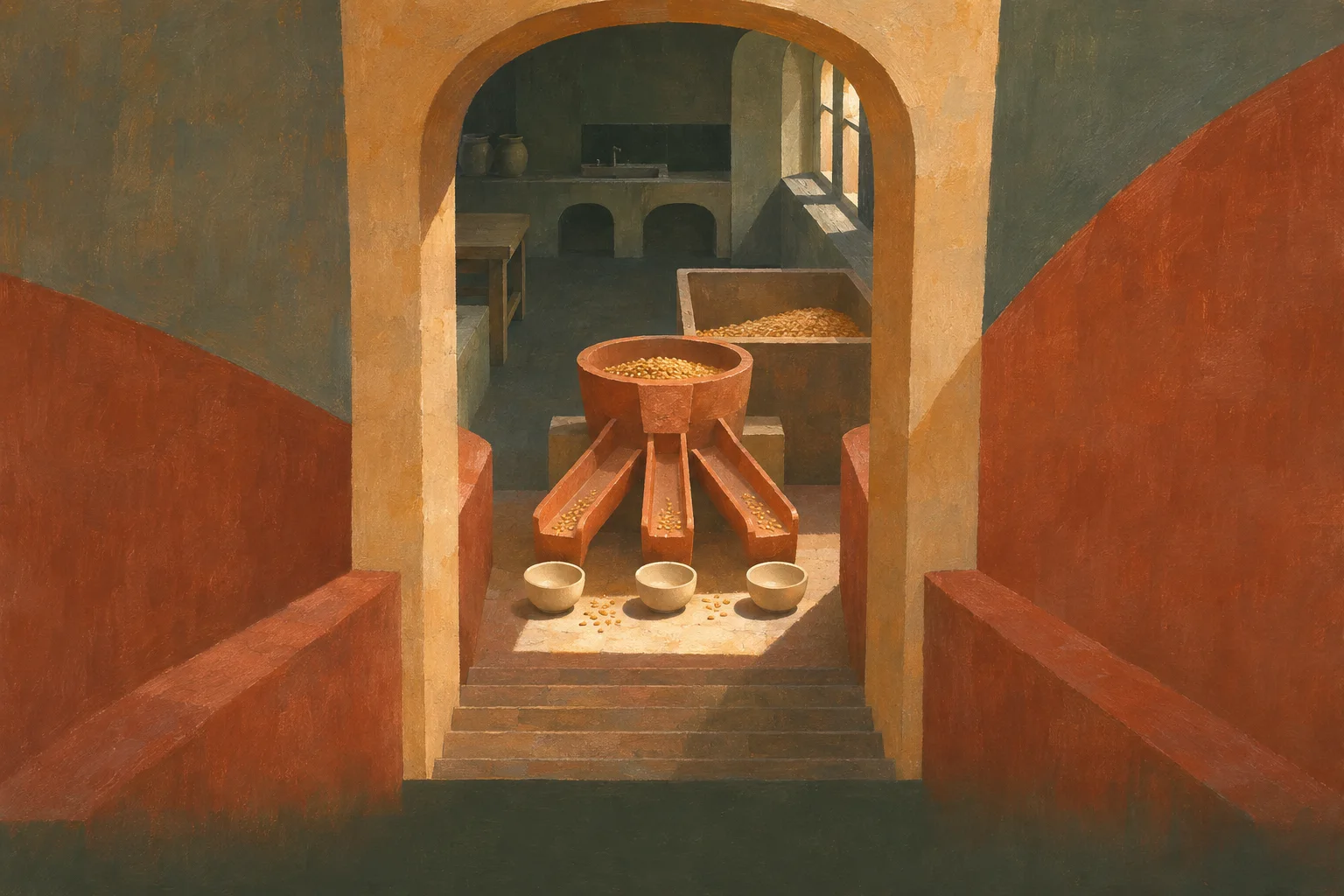
The options
The order shown is not a ranking of preference.
The situation as it stands
If this shipment is halted, the existing school meal contracts with three countries cannot be restored on the same schedule.
Fictional continent grain convention · after two consecutive crop failures
- Premise 1After two crop failures, the national grain reserve stands at 100 days at present consumption levels, and next season's harvest is undetermined.
- Premise 2Honoring the existing export commitment would cut the national reserve to 65 days, and the three importing countries have not secured alternative ports.
- Premise 3Domestic regional governments demand releases because of food prices, and the importing countries set a deadline for halting children's meals.
Where it holdsCoordinates 90-day export contracts and releases from national reserves. It cannot directly control other countries' rationing standards or private holdings.
What can be lost
- Permanent health damage to children and vulnerable populations from a food cutoff
- A structure in which, once the joint supply pact collapses, no one receives support in the next crop failure
What is still unknown
- Unknown 1Country-by-country differences between actual consumption and stock records
- Unknown 2The possibility of alternative imports and restored logistics before the next harvest
Signals to decide again
- The physical stock available to cover minimum survival rations changes in a joint inspection.
- The feasibility of the next harvest or an alternative transport plan changes through an independent investigation.
Where the paths partNot answers — paths that part from the same starting point
A joint inspection confirms that one member state's reported reserve differs greatly from the physical stock in its warehouses.
An independent meteorological and agricultural survey reports that the damage to the next harvest is wider than the existing plan assumed.
Material and rootsThe frame, the values and the background documents
How is today's harvest traded for next season's options?
An exploratory perspective chosen by the creator. Does not claim supernatural validity or the superiority of any particular option.The benefits and costs of the options accrue to different stakeholders. Which loss to accept remains undecided.
A subject for the decision-maker to argue over; the materials carry no conclusion of their own.Original quote: attempts at different decision-making Reprocessing: reframed the source's problem of conflicting survival principles in a climate collapse into a grain export contract covering national reserves and school meals for neighboring countries.
The root of the problem-finding. The original's future events and formulations are not treated as verified facts.- FAO · New food sources and production systems 2025
- UNEP · Navigating New Horizons 2024
- [Scenario 43: Colliding ethical choice paths of AGI systems in a climate collapse] Created scenario · 2026-09-07 viewed
The record of this question
- Question
FSP-FOOD-07· version 1.2.0- Content identity, SHA-256
41e7fff6c7e55a9f45f3feee791a0a740a25481b8d75525f70d71449bd94ccdd- Input files
- Question input JSON · What followed, JSON