A game built from testimony, fiction remembered as history
2044The middle futureDeadline · 60 days until the worldwide simultaneous exhibition contract
A leap assumed
All people, institutions, events, figures, and future technologies in every issue are a synthetic premise. Background documents are sources for topic discovery and are not evidence of future facts or probabilities.
The question to decide
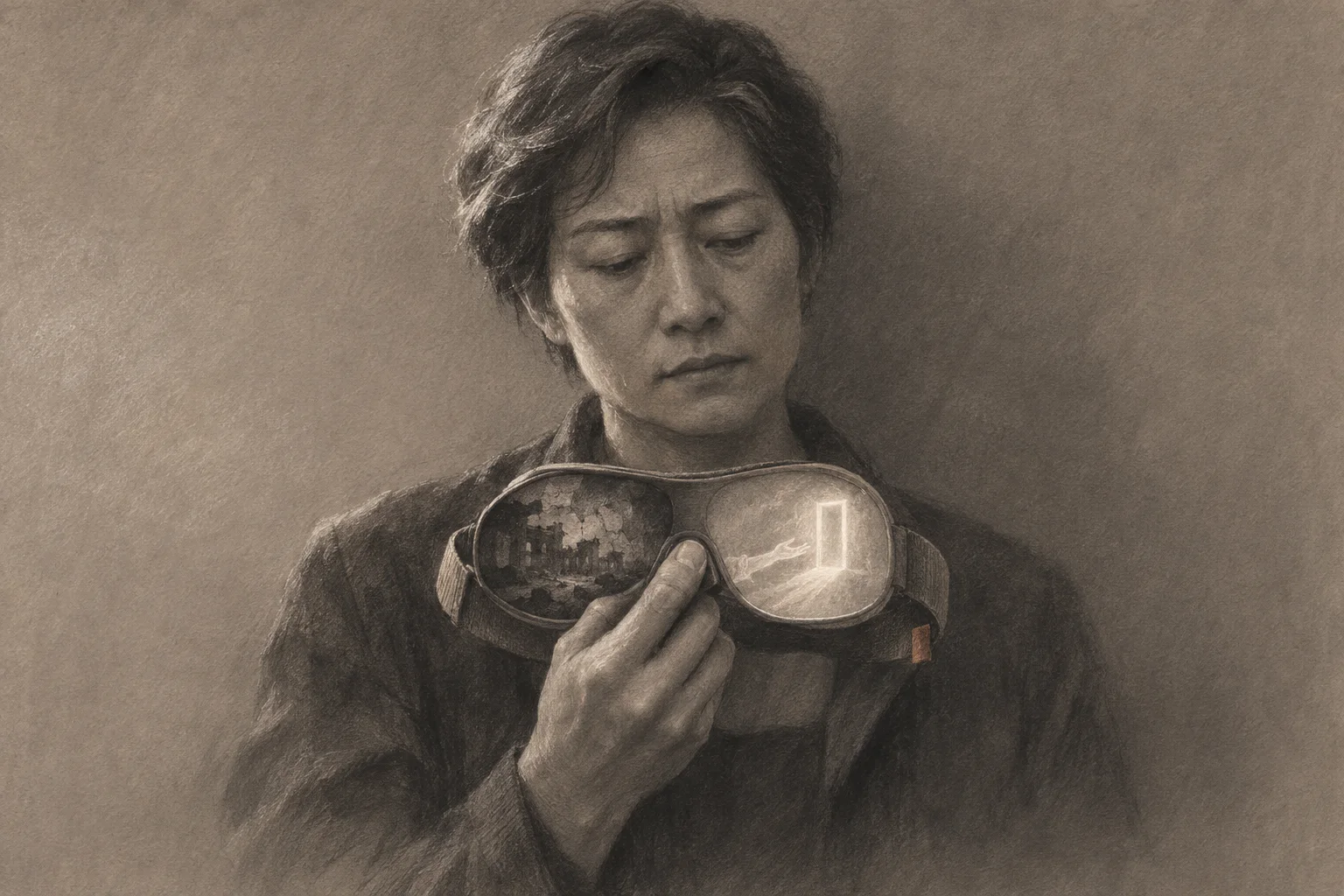
A game adapted from a massacre survivor's testimony held test audiences longer, but many remembered a largely invented rescue scene as real history. The family's consent is divided, and the revenue contract requires scenes to be automatically revised in response to audience reaction. Will the committee release the current experience, release the factual record and the invented experience separately, or cancel the experience exhibition?
Who decidesFamily, records custodian, and exhibition joint committee
What the AI judgments chose
Reading the judgment record…
The options
The order shown is not a ranking of preference.
The situation as it stands
Scenes replicated after a world premiere cannot be recalled even if they are cancelled or revised.
Fictional International Memory Museum · Immersive public exhibition
- Premise 1This is a synthetic exhibition in which AGI has adapted survivors' testimony into an immersive experience, and real testimony is mixed with new scenes.
- Premise 2Test audiences stayed engaged longer, but a considerable number remembered the created rescue scenes as real history.
- Premise 3Consent differs among groups of the bereaved families, and the revenue contract automatically revises scenes based on audience response.
Where it holdsDecide on permission to use the materials and on the exhibition format. Do not substitute box-office figures for the scope of the bereaved families' consent.
What can be lost
- A fictional success narrative can erase the public memory of actual harm and accountability.
- If the release of the records stops, the chance for the last generation to hear survivors' testimony shrinks.
What is still unknown
- Unknown 1Whether source attribution reduces confusion in actual historical memory
- Unknown 2Whether automatic adaptation stays within the scope of the exhibition first consented to
Signals to decide again
- A route by which created scenes are cited as fact is observed.
- The actual outcomes for comprehension and access of a new exhibition that stays within the scope of consent are confirmed.
Where the paths partNot answers — paths that part from the same starting point
A follow-up investigation confirms educational materials that cite the rescue scenes as real fact.
In a trial of the separated exhibition, access to the records is maintained while the share of fictional memory declines.
Material and rootsThe frame, the values and the background documents
When play becomes the center of life, who has the right to change the rules?
An exploratory perspective chosen by the creator. Does not claim supernatural validity or the superiority of any particular option.The benefits and costs of the options accrue to different stakeholders. Which loss to accept remains undecided.
A subject for the decision-maker to argue over; the materials carry no conclusion of their own.Original quote: No semantic representation is retained Reprocessing: Restructured the original text, in which meaning is stripped away, into a decision between an immersive adaptation of historical testimony and a revenue contract.
The root of the problem-finding. The original's future events and formulations are not treated as verified facts.The record of this question
- Question
FSP-PLAY-07· version 1.2.0- Content identity, SHA-256
fd4fcde7f622354702214cbe263dd2a22c6cdfac7ceda95354abf598d85746db- Input files
- Question input JSON · What followed, JSON