If we change measuring devices, can we still compare a hundred years?
2055The far futureDeadline · Within 9 months until the equipment contract
A leap assumed
The people, events, figures, and contract terms are a synthetic premise. They are not statements of real cases or of current law. The source documents are the roots of the background and the norms and do not establish the premises of the scenario.
The question to decide
The new measuring device detects small changes better, but whether it can be compared on the same standard as a hundred years of records is unconfirmed. The existing equipment faces growing failure risk, and running both systems would mean giving up the budget for one new study. Which measurement system should be chosen for more sensitive observation and continuity of the record?
Who decidesFictional long-term observatory operations meeting
What the AI judgments chose
Reading the judgment record…
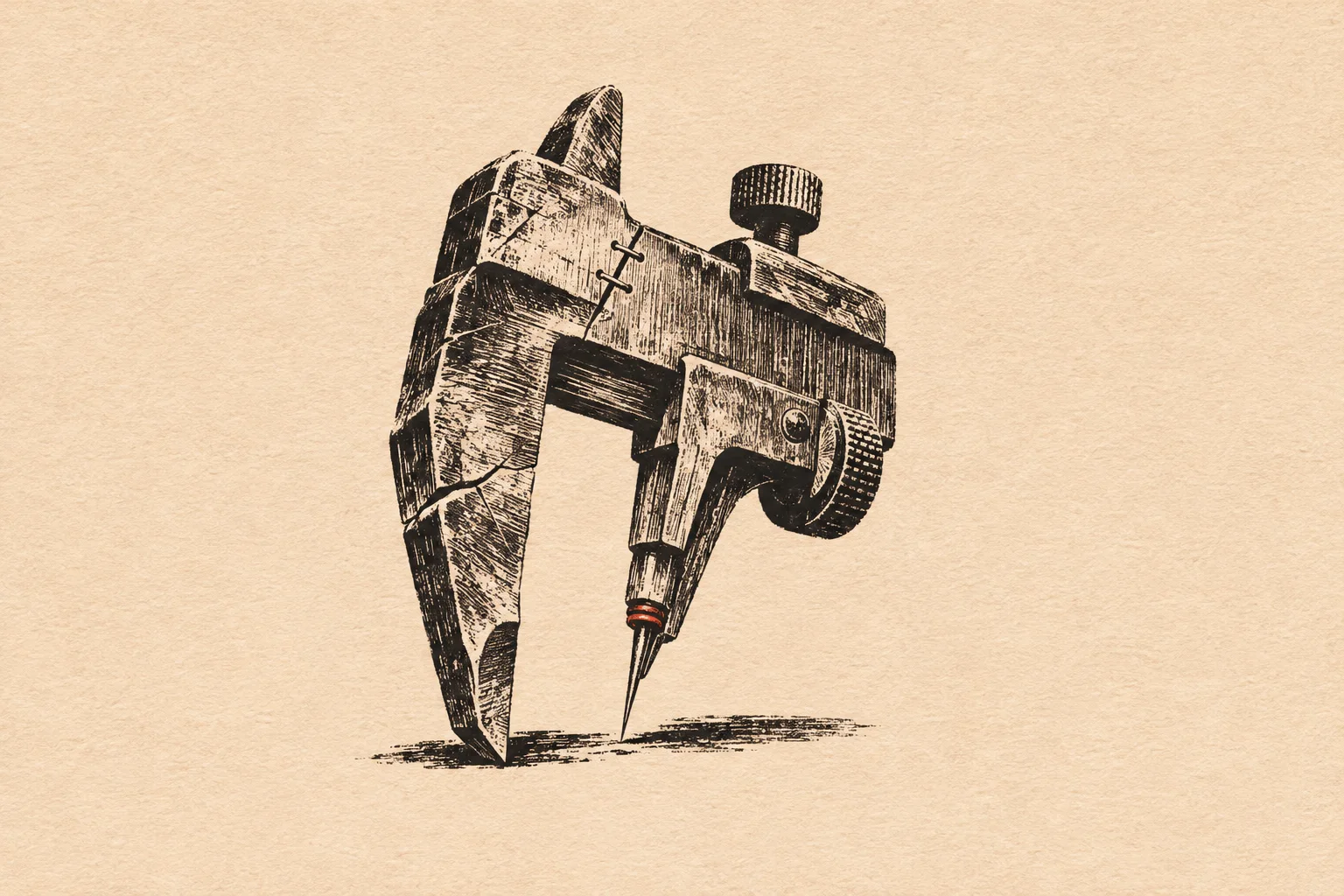
The options
The order shown is not a ranking of preference.
The situation as it stands
The new instrument is more sensitive to small changes, but it is not fully confirmed whether it gives the same values as the existing century of data. Decision deadline: within nine months, by the equipment contract.
A synthetic scenario in the future, 2055 · Replacing old instruments that carry a century of observations. The events, figures, technology, and nature of the civilization are assumptions for the sake of the question, not predictions of what is to come or statements of observed fact.
- Premise 1The new instrument is more sensitive to small changes, but it is not fully confirmed whether it gives the same values as the existing century of data.
- Premise 2Running observations in parallel costs enough to give up the budget for one new study.
- Premise 3Some parts of the existing equipment cannot be made again, and the risk of an interruption in observation grows.
Where it holdsObservation equipment · Cross-measurement · Continuity of records
What is still unknown
- Unknown 1The conditions under which the two instruments respond differently
- Unknown 2The range of independent variation needed for cross-observation
- Unknown 3How long the existing equipment can actually be kept running
Signals to decide again
- Decide what observations, responsible persons, and confirmation windows will verify the conditions under which the two instruments respond differently, and re-judge when new verification changes the trade-offs of the options.
- Decide what observations, responsible persons, and confirmation windows will verify the range of independent variation needed for cross-observation, and re-judge when new verification changes the trade-offs of the options.
- Decide what observations, responsible persons, and confirmation windows will verify how long the existing equipment can actually be kept running, and re-judge when new verification changes the trade-offs of the options.
Where the paths partNot answers — paths that part from the same starting point
The difference between the two instruments appeared mainly in one particular season.
The maker of the new instrument offered long-term support for auxiliary sensors using the old method.
Material and rootsThe frame, the values and the background documents
Does the expectation of achievement change how limits are observed?
An exploratory perspective chosen by the creator. Does not claim supernatural validity or the superiority of any particular option.The benefits and costs of the options accrue to different stakeholders. Which loss to accept remains undecided.
A subject for the decision-maker to argue over; the materials carry no conclusion of their own.- OECD · Strategic Foresight Toolkit 2025
- WHO · Foresight Standing reference
The record of this question
- Question
FSP-SCIENCE-14· version 1.5.0- Content identity, SHA-256
58f3f98f59a41d8a6077cbf6cbaea9e697b2557ab84ddeff8a386fa57de61a1e- Input files
- Question input JSON · What followed, JSON