A thousand years of simulation, one month of observation
2080The far futureDeadline · Within 2 years until the demonstration project approval
A leap assumed
The people, events, figures, and contract terms are a synthetic premise. They are not statements of real cases or of current law. The source documents are the roots of the background and the norms and do not establish the premises of the scenario.
The question to decide
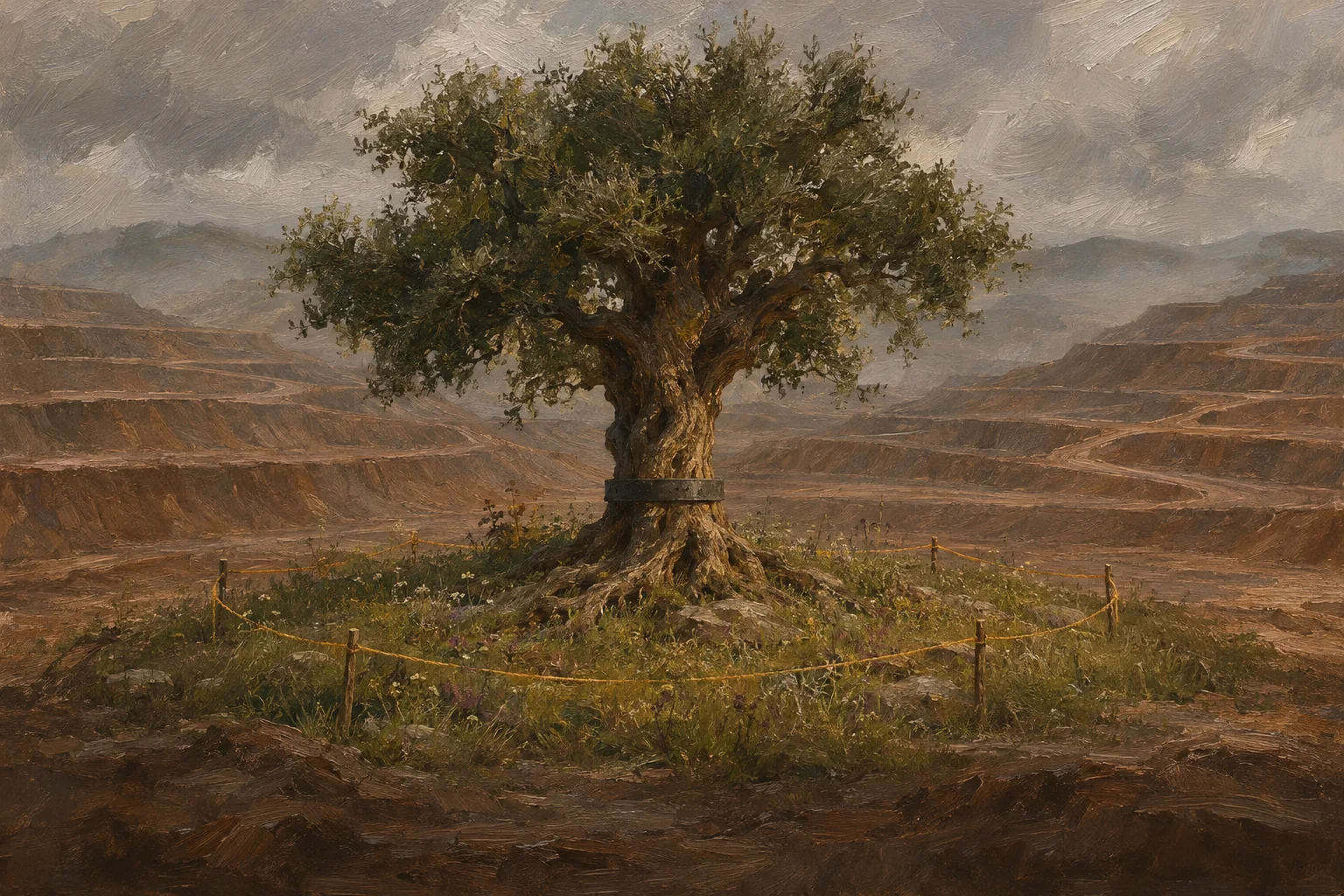
A model simulating a thousand years of ecological change reproduces known changes, but it has simplified some relationships and field observation lasts only one month. Waiting for verification could mean losing the experimental site to development. How far can a project be expanded on the basis of this model? What price comes with waiting for more observation or leaving a restricted zone open for experiments?
Who decidesFictional long-term environmental research committee
What the AI judgments chose
Reading the judgment record…
The options
The order shown is not a ranking of preference.
The situation as it stands
In the fictional computing environment a thousand years of ecological change can be simulated, but there is only one month of field observation. Decision deadline: within two years, by the approval of the demonstration program.
A synthetic scenario in the future, 2080 · A thousand years of simulation collides with one observed month. The events, figures, technology, and nature of the civilization are assumptions for the sake of the question, not predictions of what is to come or statements of observed fact.
- Premise 1In the fictional computing environment a thousand years of ecological change can be simulated, but there is only one month of field observation.
- Premise 2The model reproduces known changes, but simplifies rare relationships and migrating species.
- Premise 3While waiting, the target area may change through other development and the same field experiment may no longer be possible.
Where it holdsResources and approvals for long-term simulation and field experiments
What is still unknown
- Unknown 1The core model assumptions on which the decision depends
- Unknown 2Signals that can be falsified in the short window
- Unknown 3The degree to which the preserved zone represents the whole
Signals to decide again
- Decide what observations, responsible persons, and confirmation windows will verify the core model assumptions on which the decision depends, and re-judge when new verification changes the trade-offs of the options.
- Decide what observations, responsible persons, and confirmation windows will verify the signals that can be falsified in the short window, and re-judge when new verification changes the trade-offs of the options.
- Decide what observations, responsible persons, and confirmation windows will verify the degree to which the preserved zone represents the whole, and re-judge when new verification changes the trade-offs of the options.
Where the paths partNot answers — paths that part from the same starting point
The simplified relationships among species differed greatly in the early field data.
The developer offered to preserve the experimental zone long term, but demanded exclusive rights to the data.
Material and rootsThe frame, the values and the background documents
Does the expectation of achievement change how limits are observed?
An exploratory perspective chosen by the creator. Does not claim supernatural validity or the superiority of any particular option.The benefits and costs of the options accrue to different stakeholders. Which loss to accept remains undecided.
A subject for the decision-maker to argue over; the materials carry no conclusion of their own.- OECD · Strategic Foresight Toolkit 2025
- WHO · Foresight Standing reference
The record of this question
- Question
FSP-SCIENCE-15· version 1.5.0- Content identity, SHA-256
b1434eae504cf0bb1d0033f13d562a0de64635cc6f5ebc34b161d723c30fc8b8- Input files
- Question input JSON · What followed, JSON