1.1The question of reversibility
When an administrative authority makes a contested commitment under severe pressure, the formal record often treats the choice as a provisional resolution subject to subsequent review. Policy frameworks frequently promise that institutional procedures can be reopened if underlying assumptions prove flawed. In practice, however, many public decisions alter human lives, physical assets, and contractual commitments in ways that cannot be undone.
This monograph interrogates whether growing difficulties of revocation systematically widen the gap between deliberative actors and the parties carrying the real-world liabilities. When an administrative choice is readily corrigible, error costs remain manageable because policy can be altered without catastrophic penalties. When an intervention is irreversible or exceedingly costly to reverse, the burdens of policy error, institutional delay, and unintended consequence shift away from the deliberating body toward third parties who lack voting authority.
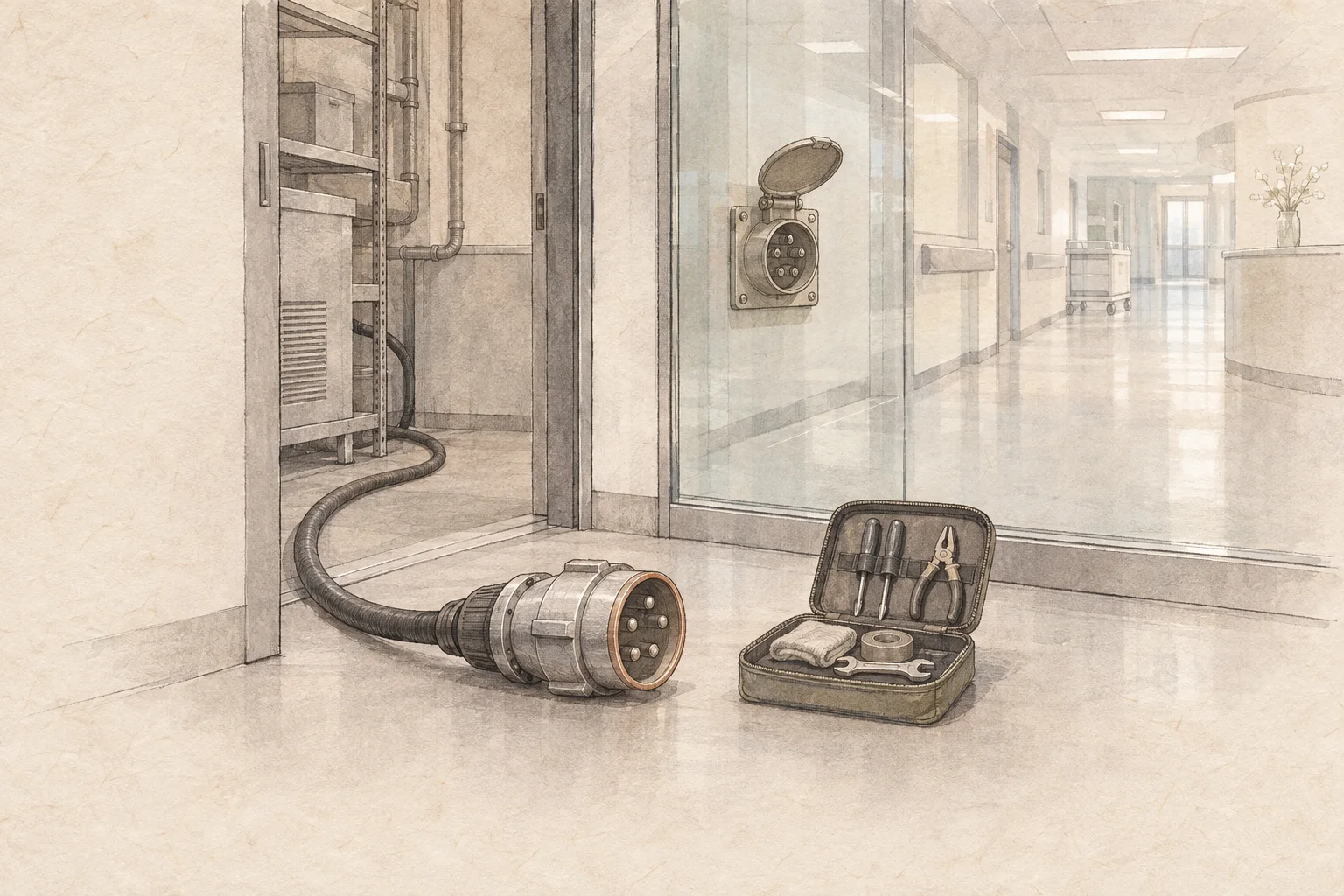
To inspect how governance protocols articulate this cleavage, the study scrutinizes two artificial decision dossiers cataloged in Meridian's repository. The first record addresses the financial and occupational liability surrounding private repair personnel deployed to restore essential medical power infrastructure:
By February 19, 2033, 17:00, how should the Ose Repair Access Committee decide on one responsibility structure for the restoration contract—public guarantee, operator responsibility, or temporary public employment—so as to protect both the right of private repair workers to refuse work and the essential services of medical users?
The second record addresses the allocation of living recovery support packages to individuals who return home following long-term disappearance:
The Virtual Harum Return Support Committee, before finalizing the support budget on October 15, 2047, will decide in what package to provide initial living recovery support to returnees whose identity has been verified after a long-term disappearance. The autonomy of returnees, the existing living foundation of the families, and the shares of other support recipients in waiting must be addressed together, but identity verification must not be equated with the restoration of family relationships.
1.2Theoretical traditions and classical lenses
To interpret these administrative dilemmas, the study brings the records into conversation with two modern traditions of decision theory and one classical literary archetype. In the philosophy of technology, David Collingridge (1980) formulated the dilemma of control: during early developmental phases, the social consequences of a technology cannot easily be predicted; by the time those consequences become manifest, the technology has grown entrenched and difficult to change. Collingridge therefore argued that decision systems must maintain corrigibility by preserving open options and monitoring performance. In an adjacent register, Hans Jonas (1984) proposed that the vast temporal reach of modern technological power demands an ethics of responsibility. Jonas argued for giving the bad prognosis priority over the good through a heuristics of fear whenever decisions threaten irreversible harm to future generations.
These modern perspectives find an ancient narrative counterpart in Homer's Odyssey. When Odysseus returns to Ithaca after twenty years away, his household has waited across an entire generation. His physical return does not automatically recreate the domestic and political relationships that existed before the Trojan expedition. In Book XXIII of Samuel Butler's translation, Penelope tests Odysseus with the secret knowledge of their immovable bridal bed, asking who could have shifted the frame constructed upon an olive stump rooted in the palace bedrock. The hero explains the craftsmanship of the immovable furniture, showing that no mortal artisan could displace the post without chopping through living roots. The rooted bed serves as an enduring metaphor for irreversible temporal entrenchment. Just as Odysseus cannot recover the twenty lost years of domestic life or compel his household to resume past routines without friction, administrative committees cannot assume that restoring physical power grids or establishing identity rosters restores communities to their prior status quo.
1.3Contributions and structure
This study makes three specific contributions: 1. It reads Collingridge's dilemma of control and Jonas's heuristics of fear through modern administrative records, demonstrating how contractual liability and public employment structures attempt to navigate technological entrenchment. 2. It examines the archetype of the returned Odysseus beside contemporary missing-person and reintegration records, demonstrating that administrative identity verification cannot be equated with social and familial restoration. 3. It assesses structured propositions codified in the defense ledger, demonstrating how operational irreversibility separates voting bodies from affected communities.
The study proceeds in six chapters. Chapter 2 reviews the theoretical literatures on technological entrenchment, responsibility under uncertainty, and sociological attribution of risk. Chapter 3 outlines the empirical methodology, the classical source texts, the synthetic records, and the decision ledger. Chapter 4 analyzes Case One, examining the contractual disputes over repair access and medical power in Ose. Chapter 5 analyzes Case Two, exploring the allocation of support packages to returnees in Harum. Chapter 6 synthesizes these findings, evaluates Hypothesis H4 against the broader 50-case corpus, and explores the institutional implications of irreversible action.