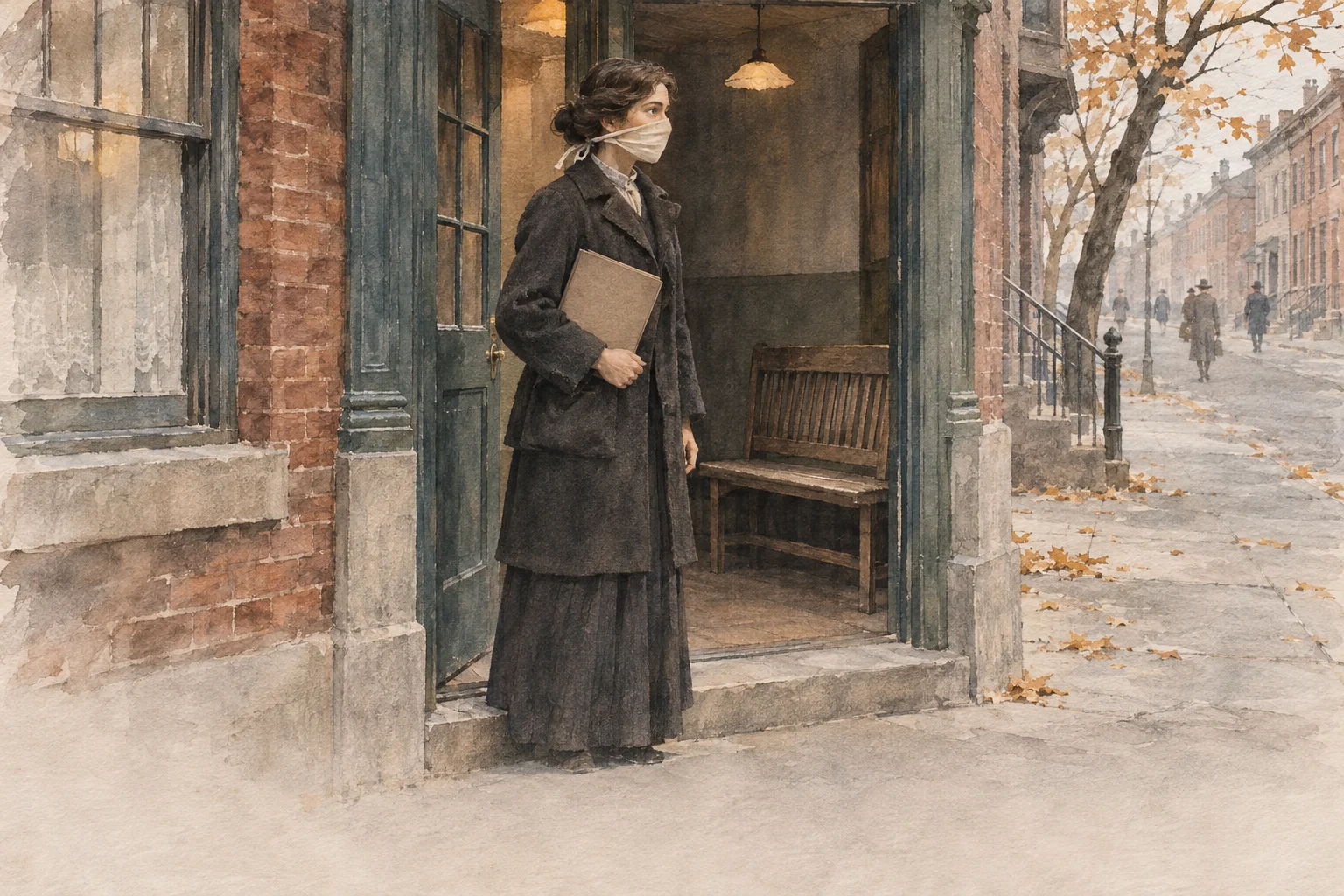
Two federal reports, written a century apart, describe an epidemic while it was still arriving. The weekly Public Health Reports of 27 September, 4 October, 11 October and 18 October 1918 summarised, state by state, the telegrams the federal Public Health Service received about influenza, in the weeks when Philadelphia went from a city the reports did not name to the place where most of Pennsylvania's registered deaths had occurred. The Morbidity and Mortality Weekly Report of 7 February 2020 set out the initial response of the Centers for Disease Control and Prevention to the novel coronavirus between 31 December 2019 and 4 February 2020. This article asks what each report said it knew when authorities acted, and what, in its own words, would make the action change, and sets beside the two texts the modern summaries that Skeptron, a history studio of the RISCON family, wrote for its platform on Philadelphia in 1918 and on the World Health Organization's characterisation of COVID-19 as a pandemic on 11 March 2020. Two debates are joined: over the timing of measures in 1918, where comparisons of cities by Hatchett and by Markel and their colleagues meet warnings about counts made mid-outbreak; and over acting before proof, where Sunstein's critique of strong precaution meets the late lessons Harremoës and colleagues drew from ignored warnings. The 1918 reports record prevalence, not orders, and say nothing of when any city acted. The 2020 report sorts the known from the unclear, names its assumption, admits its measures may fail, and promises revision without naming what would trigger it. Neither settles either debate; each shows what a later argument about timing must supply for itself.
Skeptron's records hold one case on COVID-19, the World Health Organization's statement of 11 March 2020; lockdowns, vaccines and national responses are not in them, and this study does not use them as evidence.