Whose intention completes a work of a hundred years?
2125The deep futureDeadline · Decision deadline: 6 months until the property contribution contract
Civilisational assumption
The people, events, figures, and technology in this matter are stated assumptions. They are not to be treated as information about real individuals or as observed events. Background documents are separate sources, and symbolic interpretations are recorded as discovery paths.
The question to decide
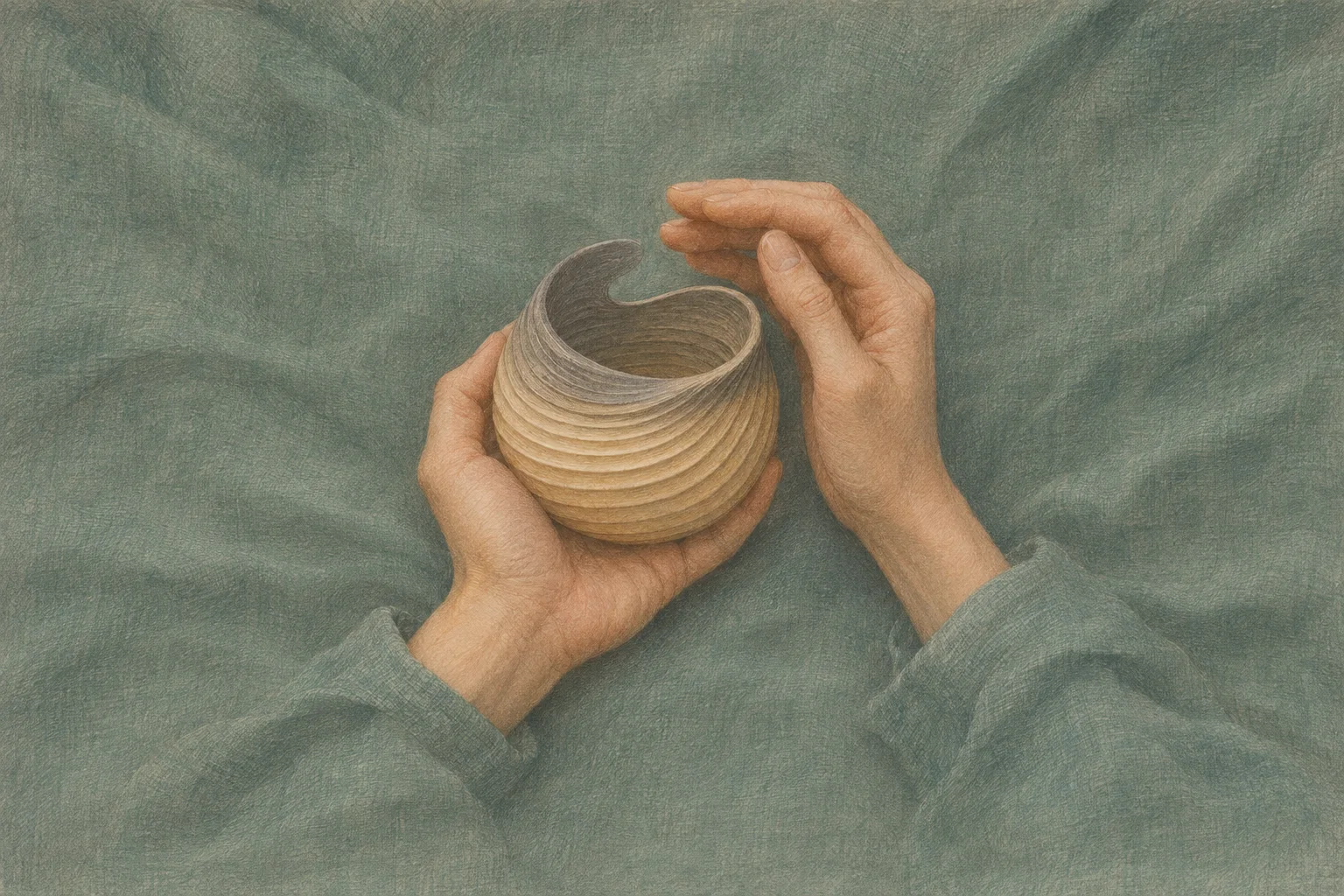
In a work that takes a hundred years to complete, changes by later generations can weaken the work's identity but can also deepen the desire to participate. Will the arts trust begin the work? If it begins, will it bind the work to the first design, or leave a path open for reinterpretation by each generation or for a series of independent works?
Who decidesAn arts trust planning a work spanning generations
What the AI judgments chose
Reading the judgment record…
The options
The order shown is not a ranking of preference.
The situation as it stands
Because the fictional work's space and materials must change slowly as each generation participates, the founders will not see its completion. Decision deadline: 6 months until the property contribution contract.
A fictional premise set in 2125 · A work that takes a hundred years to finish leaves a name behind. The people, organizations, figures, and events are a synthetic premise constructed for comparison.
- Premise 1Because the fictional work's space and materials must change slowly as each generation participates, the founders will not see its completion.
- Premise 2If later generations change the design, the identity of the original work weakens, but the motivation to participate may grow.
- Premise 3The premise is that the fund is sufficient for upkeep, but the cost of being unable to use a good site for other activities remains.
Where it holdsSpace, funds, and copyright contributed voluntarily by participants
What is still unknown
- Unknown 1The procedure by which a generation that does not participate gets the site back
- Unknown 2The minimum elements that make up the work's identity
- Unknown 3The difference between stewardship by later generations and participating in the creation
Signals to decide again
- Decide what observation, owner, and confirmation window will establish “the procedure by which a generation that does not participate gets the site back,” and re-judge when a new finding changes the tradeoffs among the options.
- Decide what observation, owner, and confirmation window will establish “the minimum elements that make up the work's identity,” and re-judge when a new finding changes the tradeoffs among the options.
- Decide what observation, owner, and confirmation window will establish “the difference between stewardship by later generations and participating in the creation,” and re-judge when a new finding changes the tradeoffs among the options.
Where the paths partNot answers — paths that part from the same starting point
The first succession group asked that the materials be preserved while the work's purpose be changed into a shared space of remembrance.
New preservation technology made it possible to restore an intermediate state without occupying the space continuously.
Material and rootsThe frame, the values and the background documents
How do we distinguish the value of a challenge from the losses of others that the challenger cannot decide?
An exploratory perspective chosen by the creator. Does not claim supernatural validity or the superiority of any particular option.The benefits and costs of the options accrue to different stakeholders. Which loss to accept remains undecided.
A subject for the decision-maker to argue over; the materials carry no conclusion of their own.- ICA · Cooperative identity, values and principles accessed 2026-09-08
- UNESCO · Universal Declaration on Bioethics and Human Rights 2005-10-19
The record of this question
- Question
FSP-CREATION-03· version 1.4.0- Content identity, SHA-256
840c2b54792c01f11720d9b943e33386d3b1d3a79bd03873b380993c1e66b126- Input files
- Question input JSON · What followed, JSON