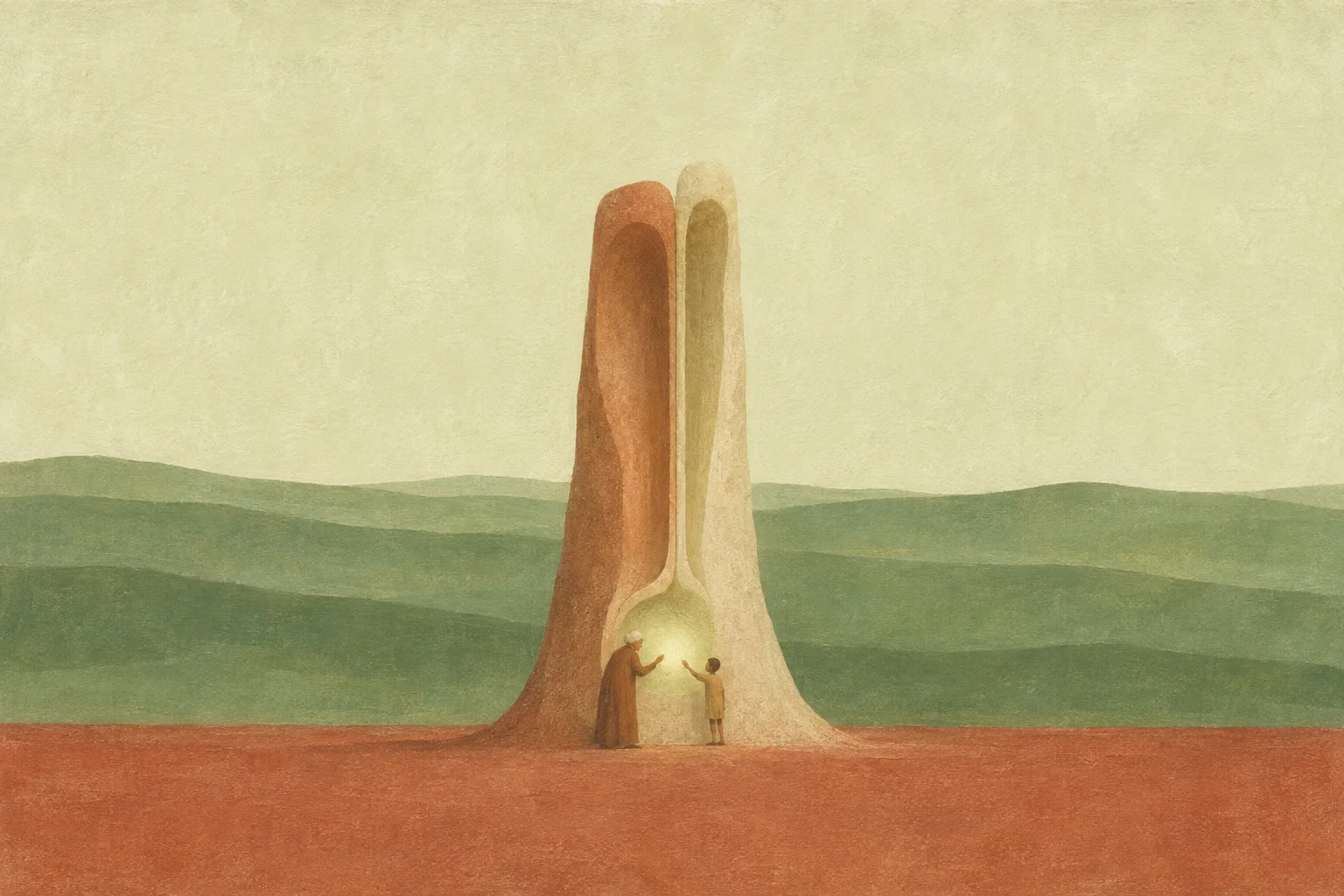
If we learn in the new language, how will we speak with the older generation?
2400The deep futureDeadline · Decision deadline: 2 years until the education language commitment
Civilisational assumption
The people, events, figures, and technology in this matter are stated assumptions. They are not to be treated as information about real individuals or as observed events. Background documents are separate sources, and symbolic interpretations are recorded as discovery paths.
The question to decide
A new language created by the community makes new experiences easy to express, but that language alone cannot read the old records, and dialogue across generations may depend on translation. If teaching both languages also takes time and staff, how deeply should the new language be brought into education and daily life?
Who decidesA migrant community testing a new language across generations
What the AI judgments chose
Reading the judgment record…
The options
The order shown is not a ranking of preference.
The situation as it stands
A fictional constructed language makes it easy to express the community's new experience, but old records and outside knowledge cannot be read as they are. Decision deadline: 2 years until the educational language commitment.
2400 fictional matter · A community that created a new language sets the old language aside. The people, organizations, figures, and events are a synthetic premise composed for comparison.
- Premise 1A fictional constructed language makes it easy to express the community's new experience, but old records and outside knowledge cannot be read as they are.
- Premise 2The younger generation may prefer to use the new language, while elderly residents may come to rely on real-time translation.
- Premise 3Even with translation tools, there is no guarantee that jokes, rituals, and subtle emotions come across in the same way.
Where it holdsSupport for schools, shared records, and translation across generations
What is still unknown
- Unknown 1Meaning and relationships hard to preserve through translation
- Unknown 2The people and time needed to continue education in both languages
- Unknown 3The language the next generation moving abroad will need
Signals to decide again
- Decide what observation, responsible person, and confirmation window will verify "meaning and relationships hard to preserve through translation", and if the new verification changes the tradeoffs of the options, judge again.
- Decide what observation, responsible person, and confirmation window will verify "the people and time needed to continue education in both languages", and if the new verification changes the tradeoffs of the options, judge again.
- Decide what observation, responsible person, and confirmation window will verify "the language the next generation moving abroad will need", and if the new verification changes the tradeoffs of the options, judge again.
Where the paths partNot answers — paths that part from the same starting point
Children who grew up with the new language asked to learn the old songs directly.
Translation tool supply was cut off, so shared resources became newly needed for access to outside records.
Material and rootsThe frame, the values and the background documents
How do we distinguish the value of a challenge from the losses of others that the challenger cannot decide?
An exploratory perspective chosen by the creator. Does not claim supernatural validity or the superiority of any particular option.The benefits and costs of the options accrue to different stakeholders. Which loss to accept remains undecided.
A subject for the decision-maker to argue over; the materials carry no conclusion of their own.- ICA · Cooperative identity, values and principles accessed 2026-09-08
- UNESCO · Universal Declaration on Bioethics and Human Rights 2005-10-19
The record of this question
- Question
FSP-CREATION-09· version 1.4.0- Content identity, SHA-256
0b9647b2b2eea72dfaf43d63cf6556a514196534d631a77a61dca68718028de9- Input files
- Question input JSON · What followed, JSON