Written in two scripts, it reaches fewer places
1447The past, rebuiltDeadline · Within 20 days until the next notice is distributed
Reconstruction of the past
The reference date for materials is 1447-01-01. Only the explicit original texts of that time are used as background; the three situational premises and the later branches are fictional. Real outcomes, revised systems, and success cases known later are not used as facts of the initial input. This is a modern retrospective question setup and is not a claim that people of that time made this decision.
The question to decide
Using both the existing script and the new script in a notice widens the pool of readers, but reduces how many can be made with the same materials and labor. Using only one script may leave readers of the other asking someone else to read it to them. Who should be able to read the next notice on their own, and how far should it reach?
Who decidesFictional joint notice production group
What the AI judgments chose
Reading the judgment record…
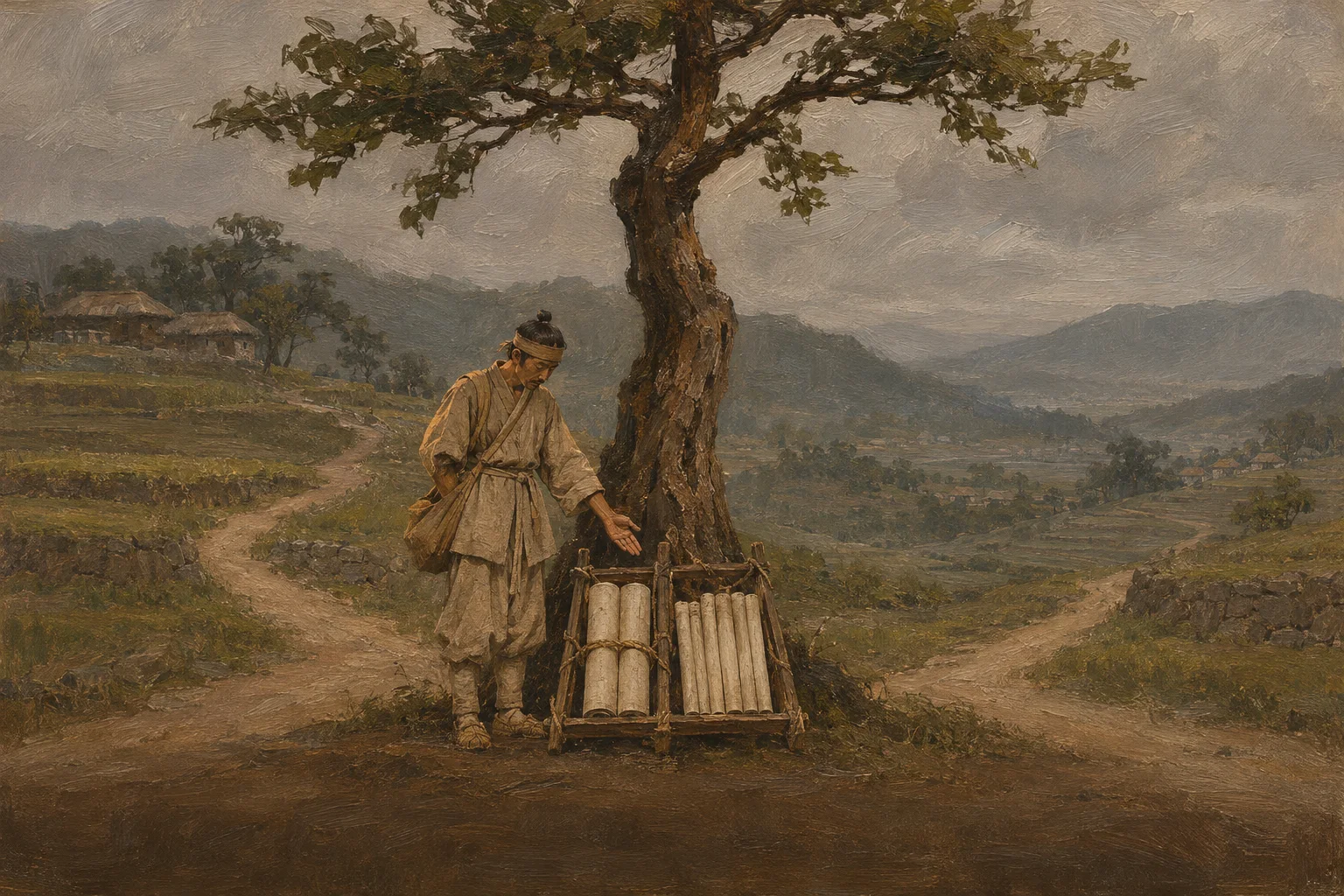
The options
The order shown is not a ranking of preference.
The situation as it stands
The reconstructed group wants to send notices also to people who have learned the new script, but its material and labor are limited. Decision deadline: within 20 days until the next notice distribution.
Reconstruction of the past as of 1447-01-01 · Writing the same notice in two scripts reduces the number that can be sent. A fictional case newly built from the principles of documents of that time. The organizations, people, figures, and events that appear are not real Decision-making records.
- Premise 1The reconstructed group wants to send notices also to people who have learned the new script, but its material and labor are limited.
- Premise 2Writing in two scripts lets more readers read, but reduces the number of notices made from the same resources.
- Premise 3If only the new script is used, existing readers who have not yet learned it will need help.
Where it holdsNew script · existing readers · distribution cost
What is still unknown
- Unknown 1The range of people who can read each script on their own
- Unknown 2The loss that arises when a notice does not reach someone
- Unknown 3The staff needed to align the meaning of the two scripts
Signals to decide again
- Decide what observation, responsible person, and confirmation window can verify "the range of people who can read each script on their own", and re-judge when a new verification changes the tradeoffs of the options.
- Decide what observation, responsible person, and confirmation window can verify "the loss that arises when a notice does not reach someone", and re-judge when a new verification changes the tradeoffs of the options.
- Decide what observation, responsible person, and confirmation window can verify "the staff needed to align the meaning of the two scripts", and re-judge when a new verification changes the tradeoffs of the options.
Where the paths partNot answers — paths that part from the same starting point
In the same notice written in two scripts, the deadline expression was read differently.
In the villages where the notice was distributed less, conditions dropped out of the process of hearing its contents.
Material and rootsThe frame, the values and the background documents
Can we read the effects of an act of belief without treating a prophecy as fact?
An exploratory perspective chosen by the creator. Does not claim supernatural validity or the superiority of any particular option.The benefits and costs of the options accrue to different stakeholders. Which loss to accept remains undecided.
A subject for the decision-maker to argue over; the materials carry no conclusion of their own.The record of this question
- Question
FSP-CULTURE-35· version 1.5.0- Content identity, SHA-256
e1a8f176cce61848698e55c76360e04f5eb4f431a76fc9799e348f9a2a7c478c- Input files
- Question input JSON · What followed, JSON