The waste and labor priced into appearance
2026NowDeadline · Within 21 days until the new product contract
Realistic synthesis
The people, events, figures, and contract terms are a synthetic premise. They are not statements of real cases or of current law. The source documents are the roots of the background and the norms and do not establish the premises of the scenario.
The question to decide
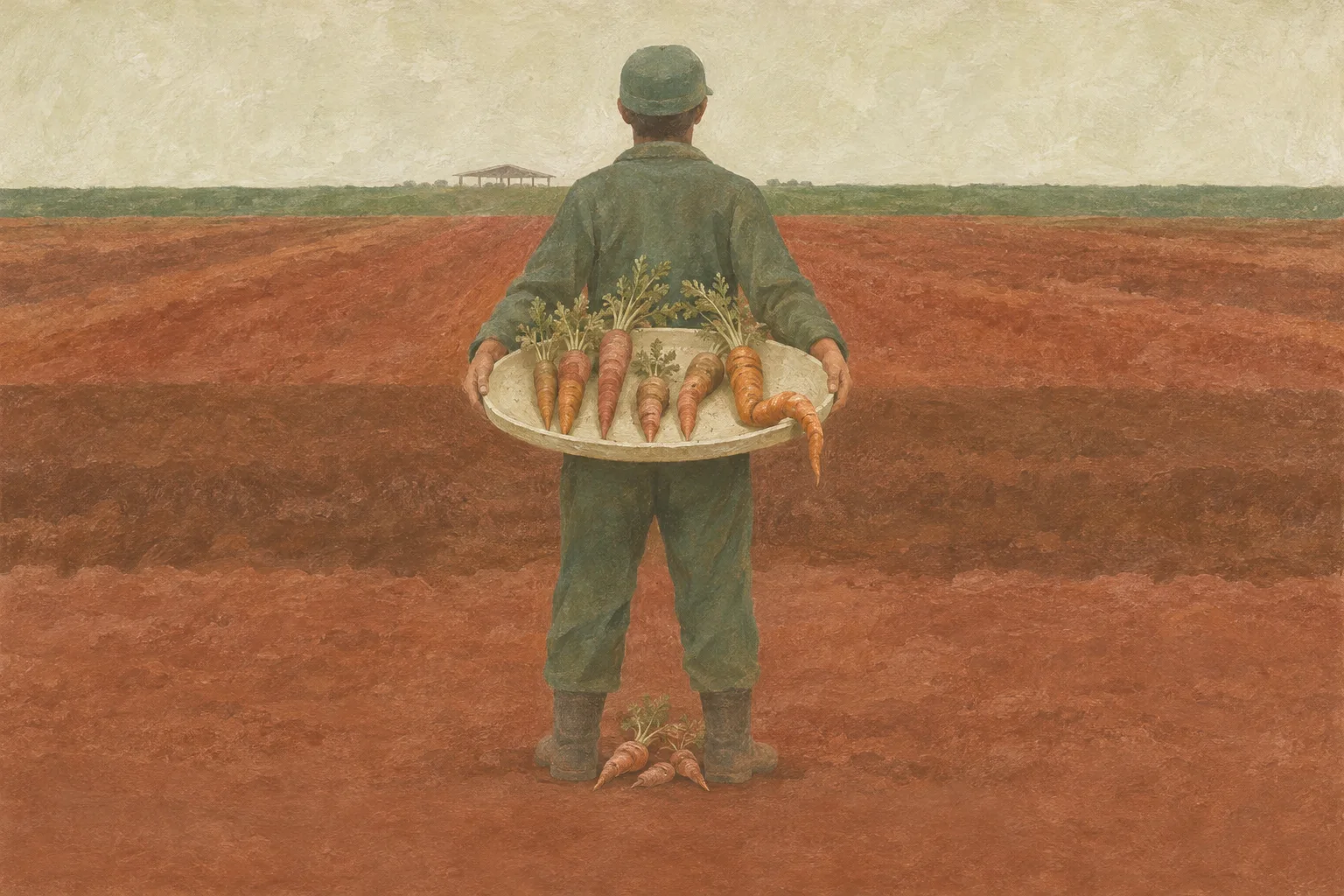
Produce confirmed safe and fit to eat still goes unsold and is left over because of its shape. But some households put extra labor and materials into good appearance, and mixed products may differ from what buyers expect. Should the marketing cooperative narrow or keep the price gap by appearance, and what effects on waste and farm household compensation is it willing to accept?
Who decidesFictional agricultural products marketing cooperative meeting
What the AI judgments chose
Reading the judgment record…
The options
The order shown is not a ranking of preference.
The situation as it stands
Among produce confirmed safe and fit for eating, volumes that differ only in appearance go unsold. Deadline: within 21 days, before the new product contract.
2026 synthetic case · selling differently shaped produce at the same price. The people, organizations, figures, and events are fictional.
- Premise 1Among produce confirmed safe and fit for eating, volumes that differ only in appearance go unsold.
- Premise 2Some households have been investing more labor and materials for better appearance.
- Premise 3A blended sale at one price can reduce waste, but the composition may differ from what buyers expected.
Where it holdsAppearance grading, blended sales, and household settlement
What is still unknown
- Unknown 1The quality buyers actually value
- Unknown 2Labor and material costs of improving appearance
- Unknown 3The degree to which a low-price product creates new demand
Signals to decide again
- Decide what observation, owner, and confirmation window can verify the "quality buyers actually value"; if the new confirmation changes the cost of the options, make a new judgment.
- Decide what observation, owner, and confirmation window can verify the "labor and material costs of improving appearance"; if the new confirmation changes the cost of the options, make a new judgment.
- Decide what observation, owner, and confirmation window can verify the "degree to which a low-price product creates new demand"; if the new confirmation changes the cost of the options, make a new judgment.
Where the paths partNot answers — paths that part from the same starting point
A restaurant buyer stated that it wants a more consistent supply volume more than appearance.
After the blended product went on sale, orders for the existing premium product fell sharply.
Material and rootsThe frame, the values and the background documents
How is today's harvest traded for next season's options?
An exploratory perspective chosen by the creator. Does not claim supernatural validity or the superiority of any particular option.The benefits and costs of the options accrue to different stakeholders. Which loss to accept remains undecided.
A subject for the decision-maker to argue over; the materials carry no conclusion of their own.The record of this question
- Question
FSP-FOOD-11· version 1.5.0- Content identity, SHA-256
644135aa9ee6daaac539e60cd5d16083cabc81add8d10ca2a7ffb4524a0db846- Input files
- Question input JSON · What followed, JSON