How many generations does the planter's right last
2178The deep futureDeadline · Within 2 years until the new food forest agreement
Civilisational assumption
The people, events, figures, and contract terms are a synthetic premise. They are not statements of real cases or of current law. The source documents are the roots of the background and the norms and do not establish the premises of the scenario.
The question to decide
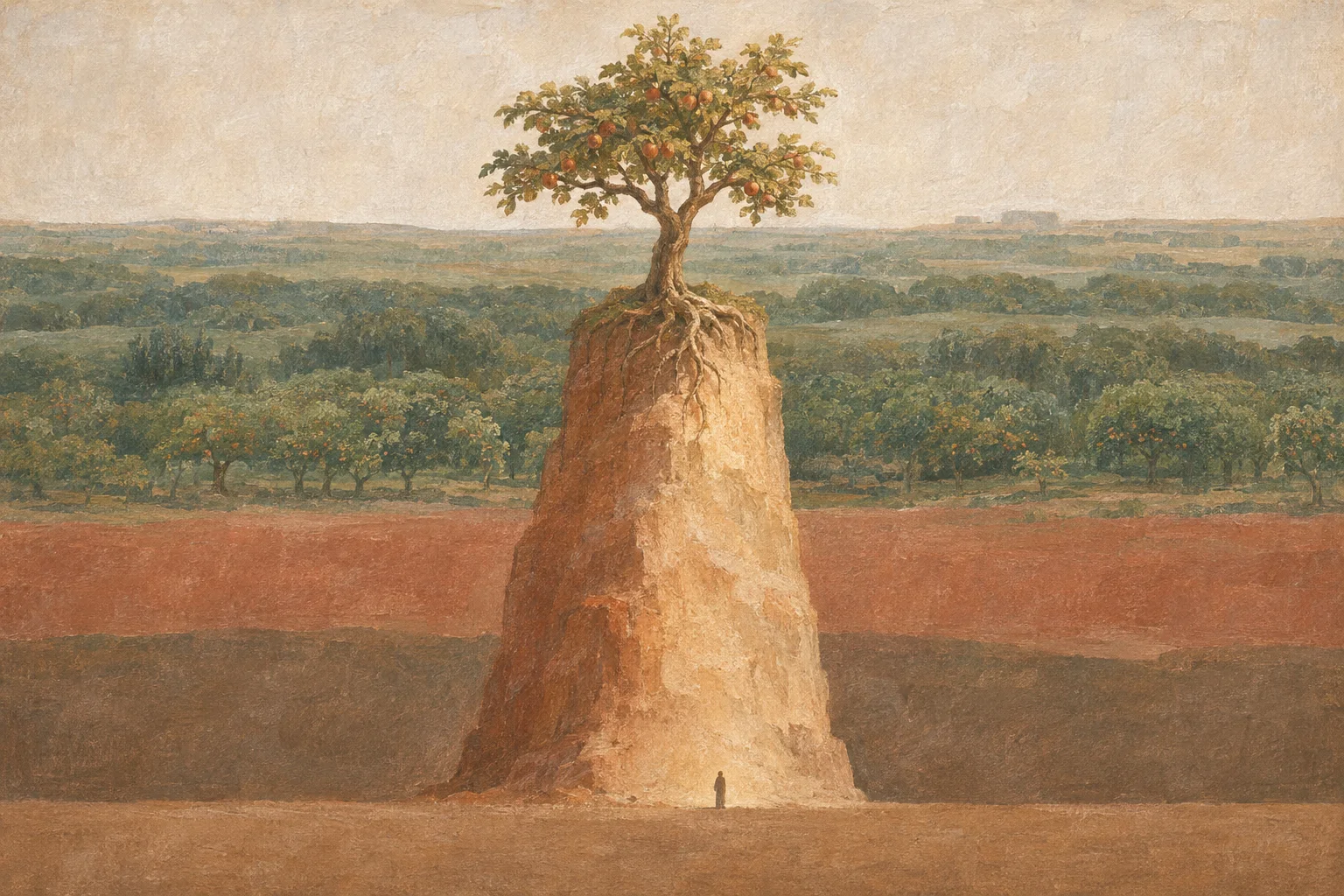
A food forest that can be harvested for a long time is also costly to convert to other uses. Guaranteeing planters a long harvest right stabilizes investment and supply, but binds the next generation's foodways and choice of land use. How should stable harvesting and future room for change be written into the food forest's use agreement?
Who decidesFictional long-term food land meeting
What the AI judgments chose
Reading the judgment record…
The options
The order shown is not a ranking of preference.
The situation as it stands
The assumed crop provides harvests from the same land for a very long time, but the cost of converting it to another use is high. Decision deadline: within 2 years, by the new food forest agreement.
2178 future synthetic scenario · After the planters have left, a food forest keeps producing the same fruit for a hundred years. The events, figures, technology, and the nature of the civilization are assumptions for the sake of the question, not predictions of the future or observed facts.
- Premise 1The assumed crop provides harvests from the same land for a very long time, but the cost of converting it to another use is high.
- Premise 2The original investors want long rights, while the next generation has not yet decided its own dietary and land needs.
- Premise 3Leaving some areas open for change increases the options but reduces the scale of the initial harvest plan.
Where it holdsAssumed perennial crops, land agreements, and changes in diet
What is still unknown
- Unknown 1The cost of continuing the harvest and the conversion cost
- Unknown 2The actual authority of the next generation to change the agreement
- Unknown 3Remaining unknowns from long-term dependence on the same crop
Signals to decide again
- Decide what observation, responsible party, and confirmation channel can establish the 「cost of continuing the harvest and the conversion cost」, and re-judge if a new confirmation changes the tradeoffs of the options.
- Decide what observation, responsible party, and confirmation channel can establish the 「actual authority of the next generation to change the agreement」, and re-judge if a new confirmation changes the tradeoffs of the options.
- Decide what observation, responsible party, and confirmation channel can establish the 「remaining unknowns from long-term dependence on the same crop」, and re-judge if a new confirmation changes the tradeoffs of the options.
Where the paths partNot answers — paths that part from the same starting point
A proposal came in that part of the fruit, which does not fit the new diet, could be used for another purpose.
After the initial investors left, the people holding only harvest rights did not pay the management costs.
Material and rootsThe frame, the values and the background documents
How is today's harvest traded for next season's options?
An exploratory perspective chosen by the creator. Does not claim supernatural validity or the superiority of any particular option.The benefits and costs of the options accrue to different stakeholders. Which loss to accept remains undecided.
A subject for the decision-maker to argue over; the materials carry no conclusion of their own.The record of this question
- Question
FSP-FOOD-26· version 1.5.0- Content identity, SHA-256
63b080852203384fc5d60b72682647e19d647995d9fdda9877426b9b9b4625a2- Input files
- Question input JSON · What followed, JSON