The same amount of food falls short for some
2189The deep futureDeadline · Within 120 days until the new joint allocation
Civilisational assumption
The people, events, figures, and contract terms are a synthetic premise. They are not statements of real cases or of current law. The source documents are the roots of the background and the norms and do not establish the premises of the scenario.
The question to decide
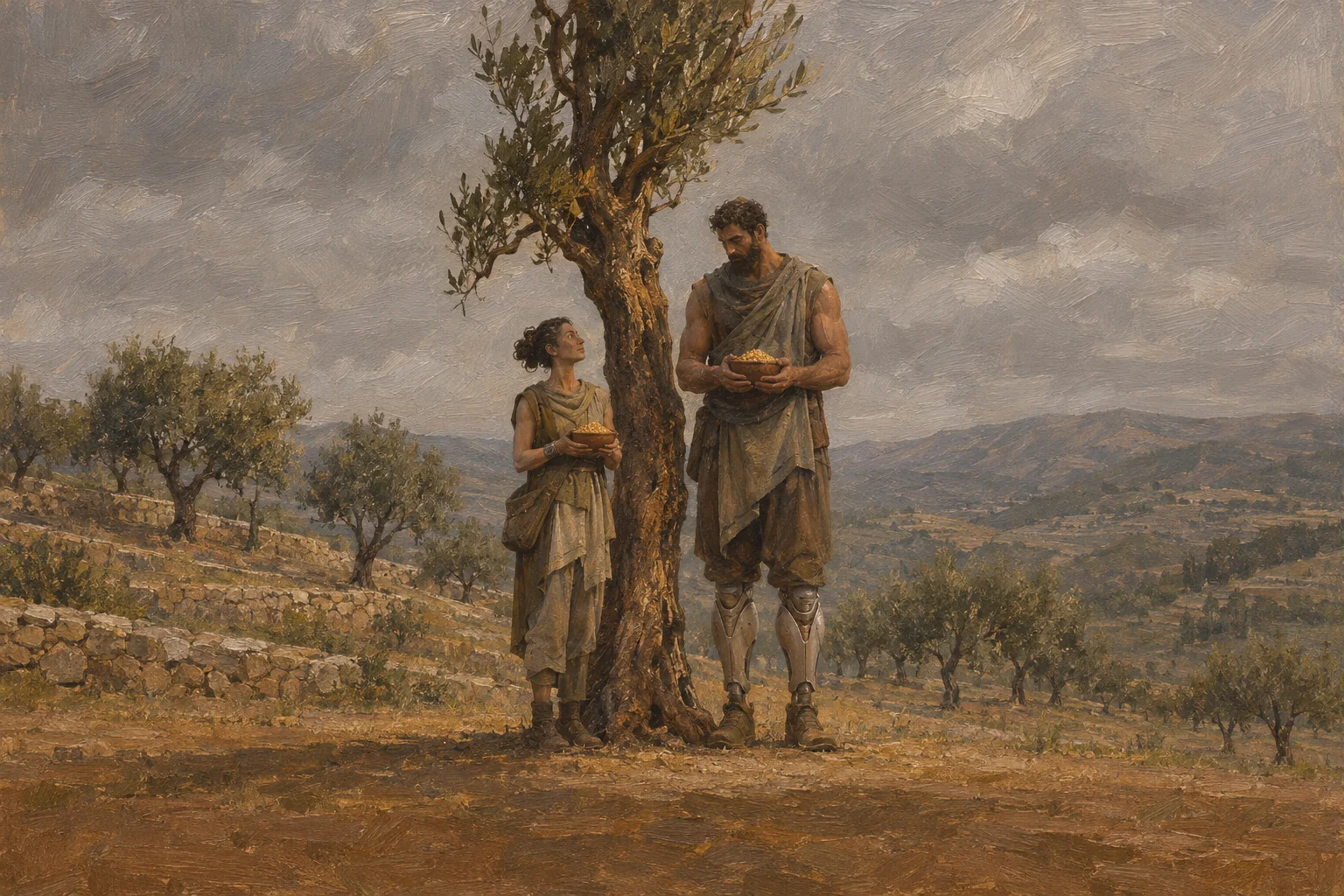
Giving citizens with different bodies the same amount of food leaves some short and some with surplus. The same amount is easy to calculate, but allocation by need requires comparing needs and setting a limit on how far the costs of the chosen bodies will be shared. On what principle should each person's share of communal food be set?
Who decidesFictional diverse bodies food meeting
What the AI judgments chose
Reading the judgment record…
The options
The order shown is not a ranking of preference.
The situation as it stands
The assumed citizens live in different physical forms, and the materials and quantities needed to maintain the same life also differ. Decision deadline: within 120 days until the new common allocation.
Synthetic future scenario set in 2189 · When bodies take different forms, the same food ration does not produce the same life. The events, figures, technology, and nature of the civilization are assumptions for the question, not predictions or observed facts.
- Premise 1The assumed citizens live in different physical forms, and the materials and quantities needed to maintain the same life also differ.
- Premise 2If everyone receives the same amount, some bodies will not have their needs met while others will have leftovers.
- Premise 3If required amounts serve as the standard, it must be decided how far the cost of a chosen body is shared in common.
Where it holdsUnits for assumed different bodies, required amounts, and allocation
What is still unknown
- Unknown 1The distinction between materials required for essential living and those for optional activities
- Unknown 2The conditions of people who cannot freely change their physical form
- Unknown 3The minimum data needed to confirm needs without disclosure
Signals to decide again
- Define what observation, responsible party, and confirmation window can verify 「the distinction between materials required for essential living and those for optional activities」, and rejudge if new verification changes the cost of the options.
- Define what observation, responsible party, and confirmation window can verify 「the conditions of people who cannot freely change their physical form」, and rejudge if new verification changes the cost of the options.
- Define what observation, responsible party, and confirmation window can verify 「the minimum data needed to confirm needs without disclosure」, and rejudge if new verification changes the cost of the options.
Where the paths partNot answers — paths that part from the same starting point
Cases emerged in which the required amount increased due to a body change the person did not choose.
Citizens receiving the same amount began informally trading their leftover materials.
Material and rootsThe frame, the values and the background documents
How is today's harvest traded for next season's options?
An exploratory perspective chosen by the creator. Does not claim supernatural validity or the superiority of any particular option.The benefits and costs of the options accrue to different stakeholders. Which loss to accept remains undecided.
A subject for the decision-maker to argue over; the materials carry no conclusion of their own.The record of this question
- Question
FSP-FOOD-34· version 1.5.0- Content identity, SHA-256
594ec5da1a103f53bed8c2c6079b9637e115a0b8599c817f60df2ca23f1aa470- Input files
- Question input JSON · What followed, JSON