Four spots in front of the station—for whom, and for how long
2026NowDeadline · Within 35 days until the plaza is rearranged
Realistic synthesis
The people, events, figures, and contract terms are a synthetic premise. They are not statements of real cases or of current law. The source documents are the roots of the background and the norms and do not establish the premises of the scenario.
The question to decide
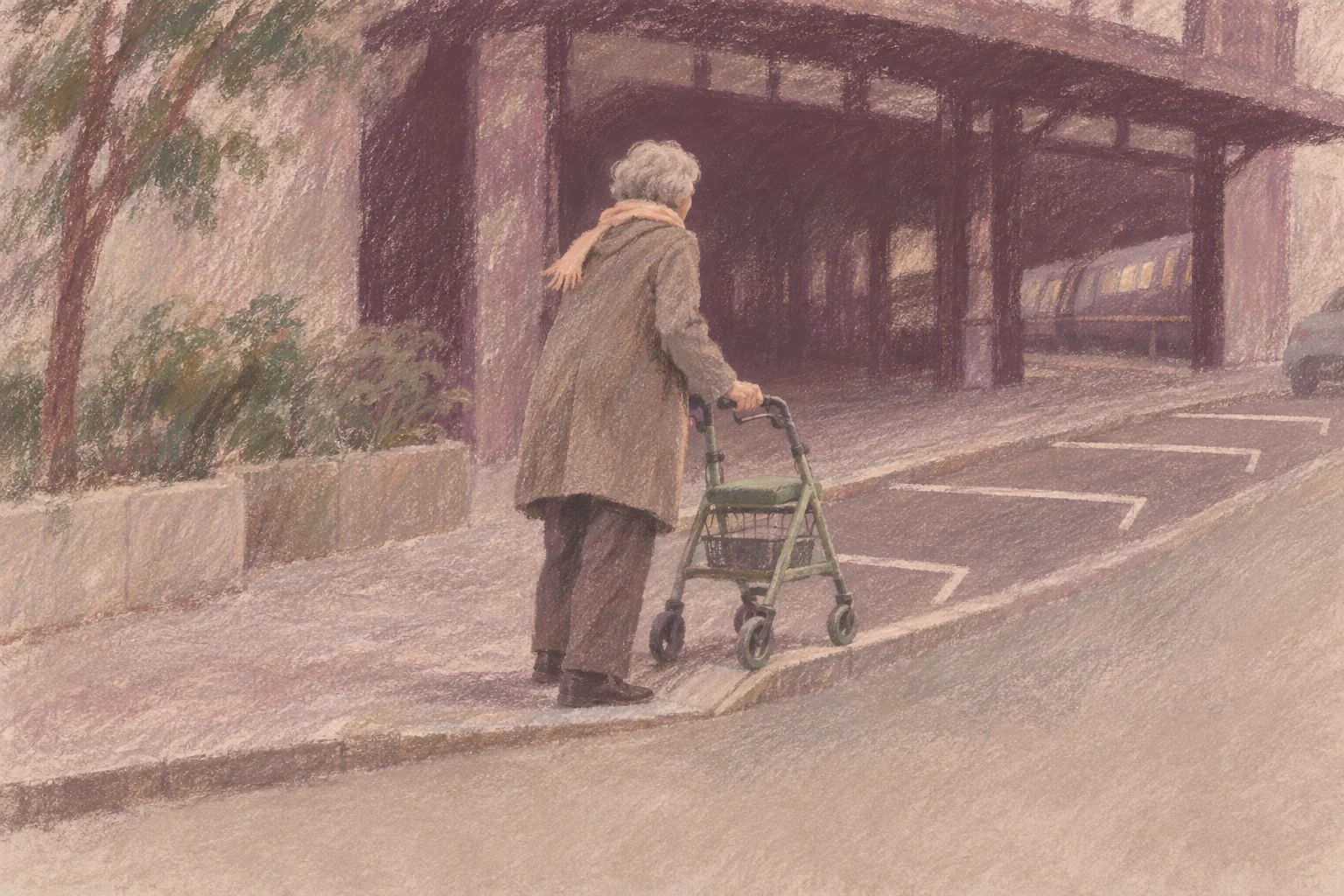
In front of the station entrance there is room to park four cars. Giving everyone a short time speeds turnover, but passengers with limited movement or care needs may find it hard to use. Taking into account the burden of proving need or booking in advance, how much access to these four spots should be granted to whom?
Who decidesFictional Station Access Operations Council
What the AI judgments chose
Reading the judgment record…
The options
The order shown is not a ranking of preference.
The situation as it stands
The space near the station entrance fits only four vehicles, and a long wait leaves the next vehicle in the roadway. Decision deadline: within 35 days, before the plaza reallocation.
2026 synthetic scenario · Assign the drop-off and pick-up space in front of the station to care vehicles first. The people, organizations, figures, and events are fictional.
- Premise 1The space near the station entrance fits only four vehicles, and a long wait leaves the next vehicle in the roadway.
- Premise 2Care companions and passengers with limited mobility find it hard to keep to a short drop-off and pick-up, but also bear the burden of explaining their needs each time.
- Premise 3A reservation system can create order, but differences in train delays and access to the reservation tool remain.
Where it holdsDrop-off and pick-up area, waiting time, eligibility for access
What is still unknown
- Unknown 1Access needs that can be confirmed without a burden of explanation
- Unknown 2Train delays and the distribution of drop-off and pick-up times
- Unknown 3Whether movement is actually possible at the detour locations
Signals to decide again
- Once you determine what observations, staff, and confirmation channels can confirm the access needs that can be verified without a burden of explanation, and a new confirmation changes the trade-offs among the options, re-judge.
- Once you determine what observations, staff, and confirmation channels can confirm train delays and the distribution of drop-off and pick-up times, and a new confirmation changes the trade-offs among the options, re-judge.
- Once you determine what observations, staff, and confirmation channels can confirm whether movement is actually possible at the detour locations, and a new confirmation changes the trade-offs among the options, re-judge.
Where the paths partNot answers — paths that part from the same starting point
It was confirmed that most users who exceeded the short-time standard were traveling with a care companion or moving an assistive device.
Days occurred on which train delays made reservation times fall out of sequence one after another.
Material and rootsThe frame, the values and the background documents
Which movements require permission, and who guards that door?
An exploratory perspective chosen by the creator. Does not claim supernatural validity or the superiority of any particular option.The benefits and costs of the options accrue to different stakeholders. Which loss to accept remains undecided.
A subject for the decision-maker to argue over; the materials carry no conclusion of their own.The record of this question
- Question
FSP-MOBILITY-15· version 1.5.0- Content identity, SHA-256
266ac51a83a6324e7d6f2afac24d9ea21d869dde28e6f467d16ac357c256c6d7- Input files
- Question input JSON · What followed, JSON