Who to tune the next phrase to
2026NowDeadline · 7 days until the next performance rehearsal plan is confirmed
Present-tense synthetic question
All institutions, events, figures, and future technology are synthetic premises for exploring the question. Present-day material is likewise not a report of real events. The timeline link is a conditional exploration hypothesis and assumes neither the actual judgment of the previous question nor the occurrence of future events.
The question to decide
Within 7 days before the next performance rehearsal plan is finalized, which will the Six-Beam Improvisation Ensemble performance lead adopt as its organizing principle: a steady click, rotating lead players, or listening to and taking up each other's phrases? How will it spend the remaining preparation time on entering together and on expression that lengthens or empties the beat?
Who decidesSix Strand Improvisation Ensemble performance lead
What the AI judgments chose
Reading the judgment record…
The options
The order shown is not a ranking of preference.
The situation as it stands
If the rehearsal plan is not settled, each member will prepare against different entry rules, and the remaining joint rehearsal will be spent re-aligning those rules.
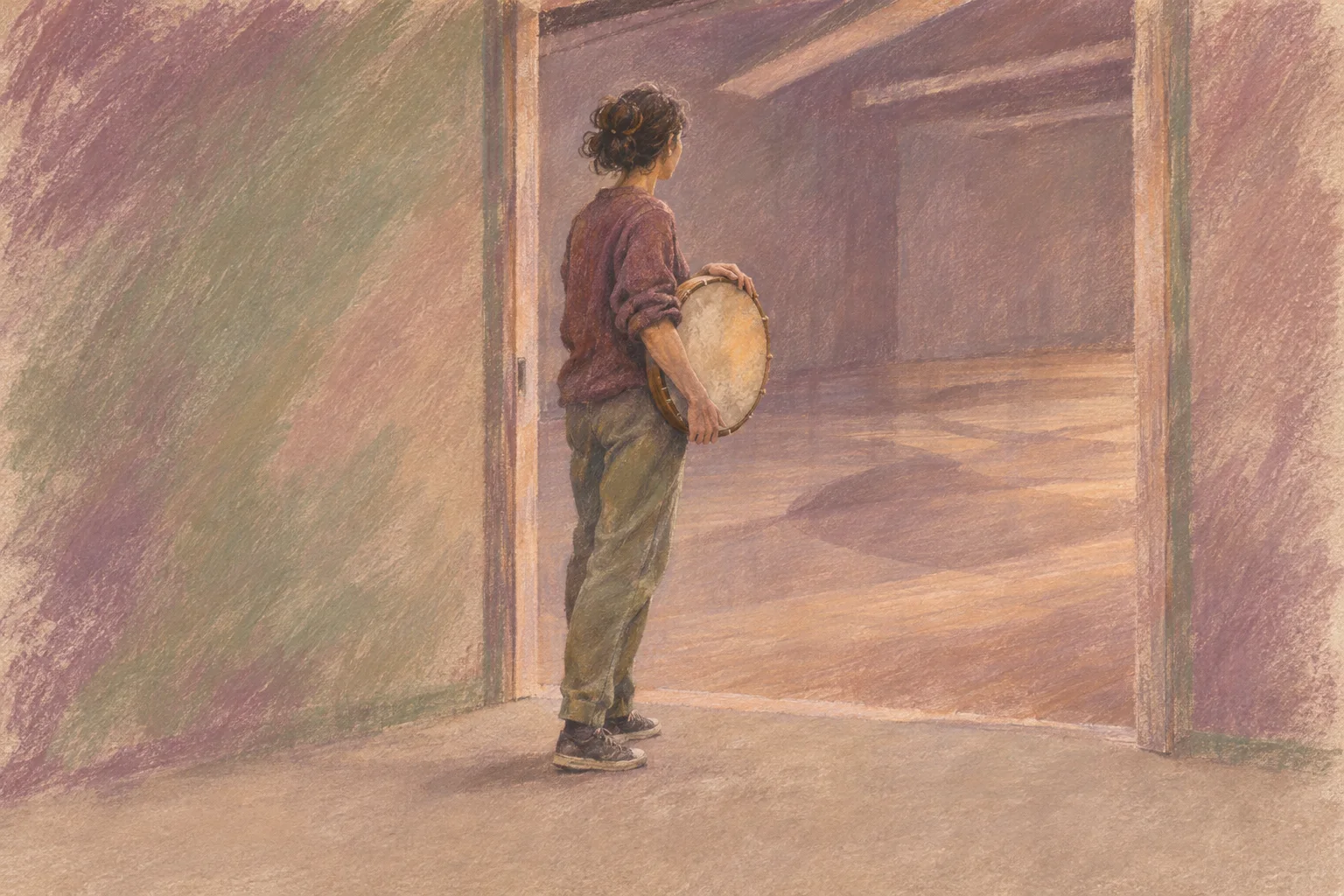
The rehearsal room of Six Strands, a fictional small voluntary adult ensemble
- Premise 1Synthetic premise: Six adults who gathered voluntarily want to vary the same short melody in the next performance by stretching or cutting it. In earlier rehearsals, they spent time aligning the point of re-entry together and did not finish practicing changing their own phrase in response to the other's final note.
- Premise 2Synthetic constraint: Two joint rehearsals remain and the performance is 20 minutes. Only existing instruments, the click device, and short melodies each has made may be used, so no new equipment or arranger can be added, and the lead has not secured the time to prepare all three approaches to performance level.
- Premise 3Synthetic conflict: Some players want to keep the harmony built up at a steady pulse, while others want to draw out the final note or insert an unexpected silence. A member who takes the lead role also worries that rehearsal may settle into making their cues legible.
Where it holdsWithin the scope delegated by the members, set one ensemble-organizing principle for the next performance and schedule the remaining rehearsals.
What can be lost
- Members who have practiced a common pulse may lose the chance to make use of existing practice and the predictability of the ensemble.
- Members who want to change the length of a phrase or the silences may find their expression trimmed to fit other members' entry criteria.
- Invited audience members may miss part of the chance to hear the players respond to one another in variation, or to follow a single flow.
What is still unknown
- Unknown 1It has not been confirmed whether members can express the stretching and silence they want while keeping the click.
- Unknown 2It is unconfirmed which cue members will reliably notice when the lead changes: sound or gesture.
- Unknown 3It is not known how often, when carrying a phrase forward, members will change their playing because of the other person rather than reproduce a prepared variation.
Signals to decide again
- The rehearsal lead confirms at the end of every joint rehearsal any stretch where re-entry breaks down after a phrase is extended or emptied.
- Each player records after every joint rehearsal the expressions they gave up because of the chosen rule, and the lead reviews them together.
- The performance lead confirms at every full run-through the length of the whole performance and the time left for the final phrase.
Where the paths partNot answers — paths that part from the same starting point
Independent follow-on branch A: In the next rehearsal, the stretch of entering while listening to the click ran to the end, but two members report shortening long final notes. The same melody has not yet been applied to the other approaches.
Independent follow-on branch B: In the next rehearsal, after missing the lead handover cue, one player starts a new phrase following the other's final note. Members hold different views on whether that stretch can be recreated.
Material and rootsThe frame, the values and the background documents
When play becomes the center of life, who has the right to change the rules?
An exploratory perspective chosen by the creator. Does not claim supernatural validity or the superiority of any particular option.The benefits and costs of the options accrue to different stakeholders. Which loss to accept remains undecided.
A subject for the decision-maker to argue over; the materials carry no conclusion of their own.- UNESCO · AI and Culture expert report overview 2025
- UNESCO · Ethics of Neurotechnology 2025
- OECD · Strategic Foresight 2026-09-10 overview of publication method viewed
The record of this question
- Question
FSP-PLAY-32· version 1.13.0- Content identity, SHA-256
7ed50f81ab1e90e9f88ae305ac3176de156daf554764abf9881fc7a5a84e5466- Input files
- Question input JSON · What followed, JSON