A self-repairing house also erases the occupant's traces
2221The deep futureDeadline · within 90 days for the new repair settings
Civilisational assumption
The people, events, figures, and contract terms are a synthetic premise. They are not statements of real cases or of current law. The source documents are the roots of the background and the norms and do not establish the premises of the scenario.
The question to decide
Suppose a house that repairs its own damage cannot always tell defects from changes its residents intended. Automatic repairs ease the maintenance burden, but they can erase traces holding memories and erase a renovation done by hand; waiting for confirmation delays needed repairs too. What repairs should be left to the house, and what changes should remain at the resident's discretion?
Who decidesFictional Self-Repairing Housing Meeting
What the AI judgments chose
Reading the judgment record…
The options
The order shown is not a ranking of preference.
The situation as it stands
The assumed building restores its damaged form on its own, but it cannot always tell the changes residents have made from defects that need repair. Decision deadline: within 90 days, before the new maintenance settings take effect.
Year 2221, a future synthetic scenario · A self-repairing house also erases the traces its residents leave behind. The events, figures, technologies, and nature of the civilization are assumptions for the sake of the question, not predictions of the future or observed facts.
- Premise 1The assumed building restores its damaged form on its own, but it cannot always tell the changes residents have made from defects that need repair.
- Premise 2Function-first restoration reduces the burden of upkeep, but it can undo memories and improvements made by hand.
- Premise 3Adding confirmation preserves choices, but it also makes necessary repairs wait while the house is empty.
Where it holdsAn assumed living building, its repairs, and the traces of daily life
What is still unknown
- Unknown 1The point where repairs and residents' intentional changes diverge
- Unknown 2Damage that grows if not repaired immediately
- Unknown 3The authority over personal traces left in shared structures
Signals to decide again
- Once the observations, responsible parties, and confirmation channels that establish 「the point where repairs and residents' intentional changes diverge」 are defined, and a new confirmation changes the tradeoffs among the options, re-judge.
- Once the observations, responsible parties, and confirmation channels that establish 「damage that grows if not repaired immediately」 are defined, and a new confirmation changes the tradeoffs among the options, re-judge.
- Once the observations, responsible parties, and confirmation channels that establish 「the authority over personal traces left in shared structures」 are defined, and a new confirmation changes the tradeoffs among the options, re-judge.
Where the paths partNot answers — paths that part from the same starting point
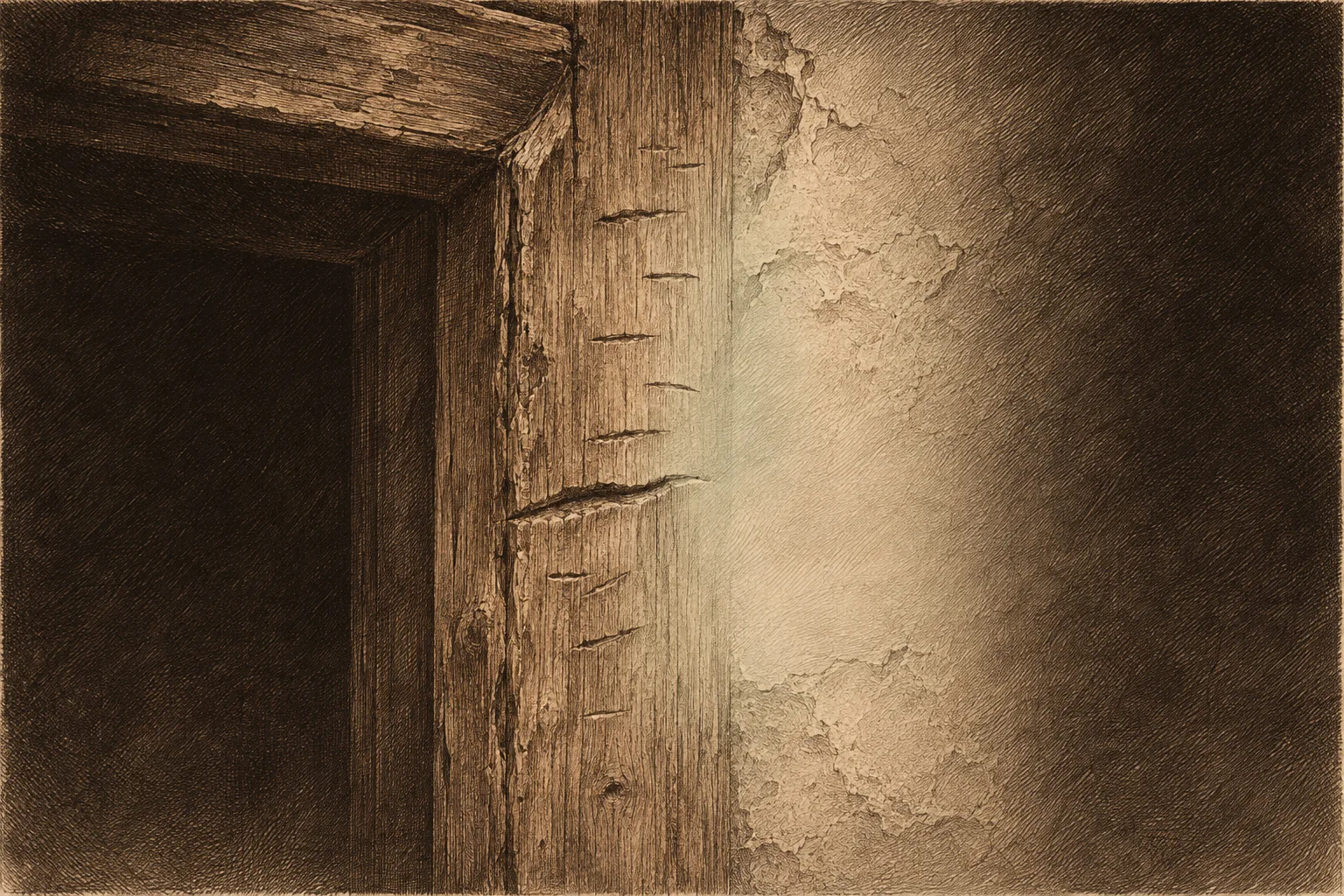
A mark left as a record of a child's growth was judged a defect and erased.
A review found that changes in preserved zones also affect the function of shared structures.
Material and rootsThe frame, the values and the background documents
What does the promise to leave a place to return to require?
An exploratory perspective chosen by the creator. Does not claim supernatural validity or the superiority of any particular option.The benefits and costs of the options accrue to different stakeholders. Which loss to accept remains undecided.
A subject for the decision-maker to argue over; the materials carry no conclusion of their own.The record of this question
- Question
FSP-WATER-30· version 1.5.0- Content identity, SHA-256
fdcecf2551addaa657ec9e9db25110049cde015bfa9bfcb55d7e020f0b1430ee- Input files
- Question input JSON · What followed, JSON