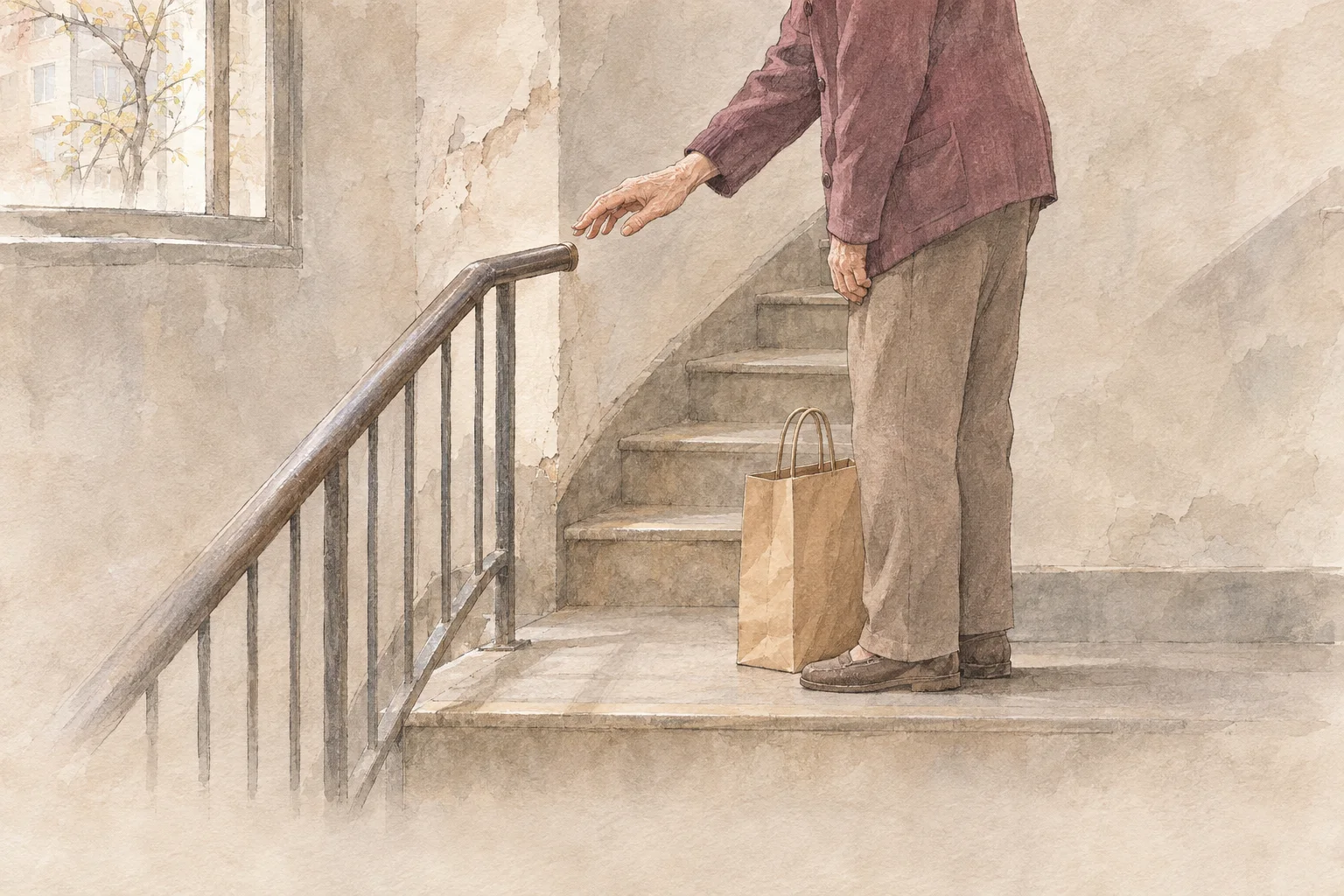
Cosmic Press, a studio in the RISCON family, publishes a catalog of AI-generated questions. Each record sets a question beside a compressed general form of it, says what that form assumes, keeps, loses and gets wrong, poses a counterquestion and adds six scale notes, and never answers the question. The studio files some of its questions under Aging. This paper reads every third of them in catalog order, counted from the second, which gives ten records from q089 to q710. All ten are AI-generated and set in hypothetical situations. Its question is whether these records locate the hardship of old age in a person's body or in the world around it, and how their self-criticism treats the images of later life that their own wording offers. It draws no fact about ageing, health, housing or care from the records and takes no side in any of their questions.
It makes three findings. First, the questions put the difficulty in the body and in a small task its owner or a relative takes on: learning a screen slowly, writing down a recipe, taping bubble wrap to a window, wiping a lampshade. Each record's account of its own blind spot then pushes the trouble out into the world, toward a machine's design, a narrow stairwell, cold housing and missing public care, while still keeping the body in sight. Second, whenever a record's wording ennobles later life, its self-criticism deflates the image. Third, the counterquestions often speak for someone else who would pay: the queue, a person carrying a pram, a tired child, citizens who need safe housing. The paper reads these devices against three debates, on successful ageing, on the social model of disability, and on ageing in place and the dignity of risk. The English is this study's translation of the Korean, and the readings through the works named are this study's interpretation.