Discussion
The eleven scenes read here are built around one move. A person says "not yet", "wait", "I can't" or "I will review it" to a decision, and the scene writes down how that sentence could be heard against the speaker, then how it could be heard for the speaker, and then leans, in ten of eleven cases, to neither. What it leans to instead is a condition: a cause to be found, a deadline to be set, an authority to be made clear, a record of answers to be read, a second cost to be counted. The scenes are synthetic, and nothing here shows that any real driver, foreman or technician is heard this way. What the reading shows is a form, a way of writing a decision that keeps the speaker's words from settling into either refusal or rescue until something has been checked.
That form bears on the debates this study entered. The research on silence asks why people withhold what they know, and finds fear of a negative label among the reasons. The scenes do not show anyone withholding; they show the label written down as one reading among three and then set aside. The research on voice defines it as talk directed upward. Several of the scenes here are directed less upward than across a schedule: to a dispatcher, to the person assigning jobs, to the builders. What they address is a time some record did not hold. The research on time at work treats temporal structures as something people produce through everyday action and that shape their practice. The scenes put the speaker at the point where such a structure turns out to be short, and they read the speaker's words as the first notice of it.
The scenes do not resolve the question of what a held-open decision costs. Their counter-conditions keep that open in every case: a check that finds no cause, an inspection already in the schedule, a recheck that was not needed, a missing paper that would have reached the operations room anyway. Where the scenes are silent, this study leaves the matter open with them.
Contributions
This study makes three contributions. First, it gives a close reading of a set of synthetic scenes as frames for talk addressed to a decision, and shows a structure in their readings that a count can test: a reading that sides with the schedule, the form or the one above in every scene, a lean that falls on it in none, and a third, conditional reading that takes the lean in ten of the eleven. Second, it shows that the scenes hear refusal as information about time, setting the voice research beside the research on temporal structure: the speaker's "not yet" is read as the place where a booking sheet, a plan or a results table is shown to lack a time. Third, and most of all, it brings into view the person who waits while a decision is held open, the next crew, the teachers, the visitors, the policyholder, the next customer, and shows that the scenes count that wait as a cost and divide it, along with the labour of explaining it, among people and times. The voice and silence works read here frame their question between the one who speaks and the one above; the scenes add that third figure, and this study offers it to the conversation as a reading of how the scenes are built.
Limits
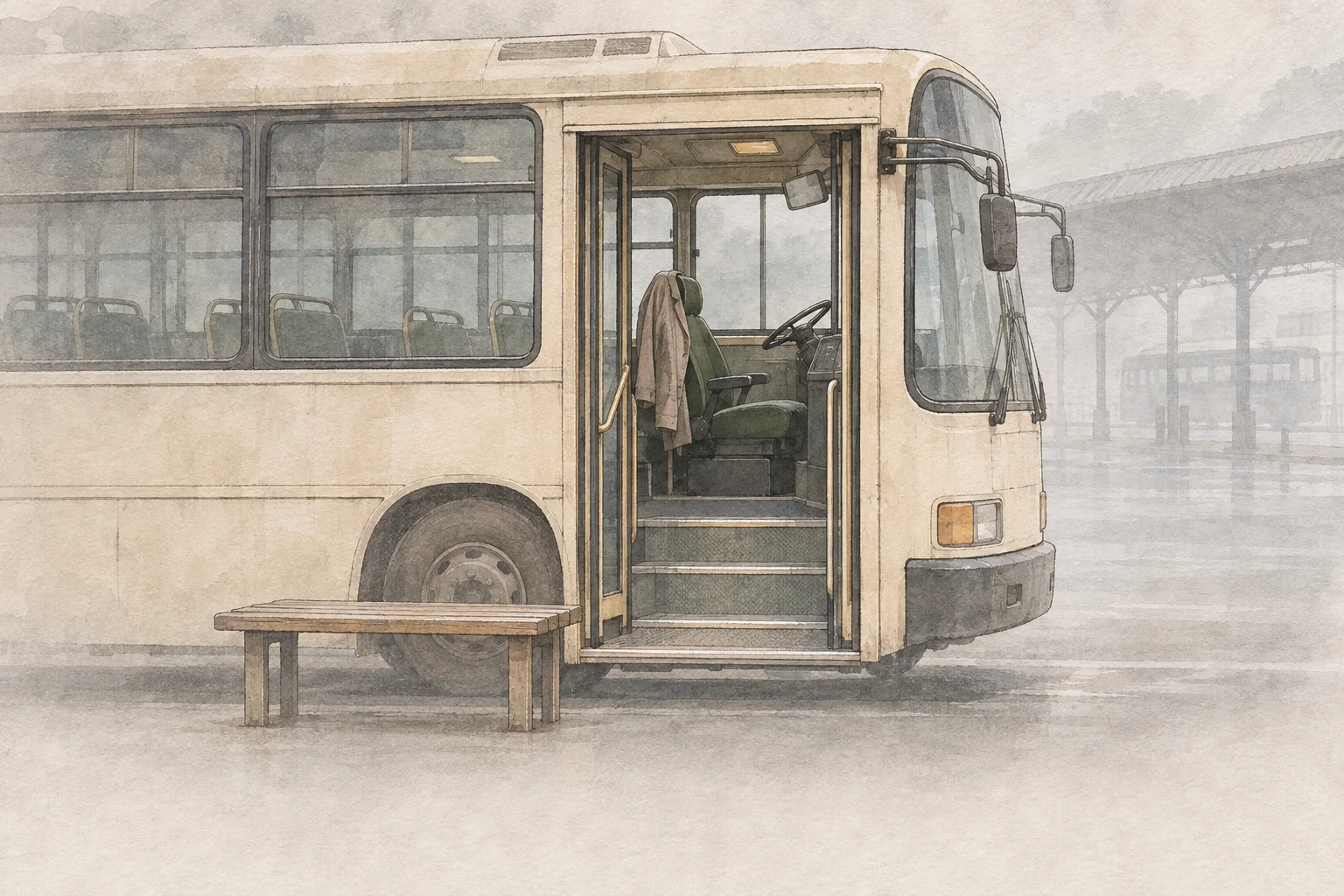
The scenes are synthetic. They are GAEKJU's constructions for comparison, not observations, and nothing in this study is evidence about power plants, schools, ports, banks, research institutes, arboretums, bus depots, insurance, webcomics, building or home repair. The rule that selected them, evidence without a digit, chose scenes whose evidence stands on words alone, which may be the scenes most given to the kind of balanced reading this study found. The counts rest on tests for Korean words that this study wrote; each test is listed with its words, and a different list would give somewhat different counts. The translation is this study's own and was made sentence by sentence, but every translation chooses, and the English names for roles were chosen to be neutral. The reading of the works is limited to what their notes say, and several fit the scenes only in part.
Further research
Three questions follow. The first is whether the same structure of three readings holds in GAEKJU's scenes of these two kinds whose evidence does hold a digit, which this rule set aside; a reading of those would show whether a figure in the evidence pulls the lean towards one side. The second is whether the waiting third party appears in GAEKJU's other kinds of talk, or only where a decision is held open. The third is how a scene would read if the automatic judgment that made the plan were also the one asked to wait, a turn the two scenes supposed for 2030 approach without taking. Each of these is a question about how scenes are written, and each could be answered from GAEKJU's public library without drawing on any trade.