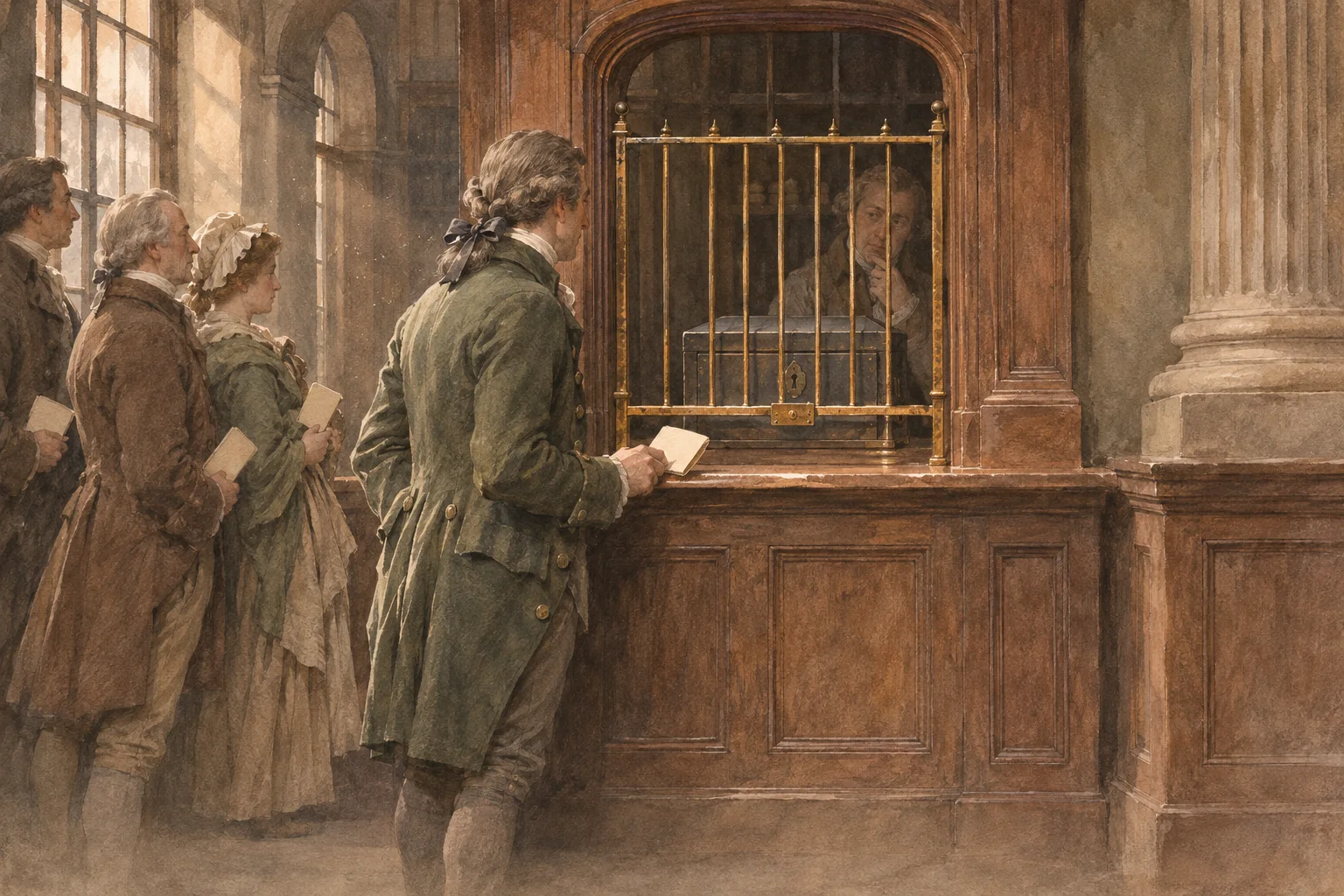
On Sunday evening, 15 August 1971, President Richard Nixon pre-empted prime-time television broadcasts across the United States to deliver a dramatic twenty-minute address to the nation. Speaking from the Oval Office, Nixon unveiled an aggressive economic offensive titled the New Economic Policy. Seeking to arrest escalating domestic price pressures and halt an immediate run on American gold reserves, the administration instituted a comprehensive program that paired price and wage restrictions with an emergency border tariff and the unilateral closing of the gold window. In his address, Nixon assured domestic citizens and foreign trading partners that the suspension of gold convertibility was a temporary, defensive action aimed at stabilizing the dollar and preparing the ground for international monetary reform.
This chapter argues that the closing of the gold window on 15 August 1971 provides the ultimate modern historical validation for the hypothesis that provisional emergency suspensions become permanent institutional realities. By examining the primary text of Nixon's address alongside the secret deliberations conducted at Camp David between 13 and 15 August 1971, this chapter demonstrates that the administration utilized the rhetoric of provisional crisis intervention to conceal an irreversible shift toward domestic policy autonomy. While the temporary ninety-day wage-price freeze and the ten percent import tax were eventually lifted, the suspension of gold convertibility permanently extinguished the fixed exchange rate system established at Bretton Woods in 1944, ushering in the global era of unbacked fiat currencies.
5.1The Camp David consultations and the Sunday address
The crisis of August 1971 was the product of more than a decade of mounting institutional strain within the postwar international monetary system. Established at the United Nations Monetary and Financial Conference in July 1944, the Bretton Woods system was organized around an asymmetric gold-dollar exchange standard. Under the Bretton Woods arrangements, member nations pegged their currencies within agreed margins under Article IV, while in practice the United States Treasury maintained the central anchor by buying and selling gold at thirty-five dollars per ounce for official settlements.
During the immediate postwar years of the 1940s and early 1950s, when the United States held the vast majority of the world's monetary gold and Europe faced an acute dollar shortage, this institutional arrangement functioned smoothly. In International Monetary Cooperation Since Bretton Woods, Harold James (1996) traced the rise and breakdown of the par value system, emphasizing how international monetary cooperation was repeatedly tested by crises and national interests. Historically, the resurgence of Western Europe and Japan altered the balance of payments, while expanding American commitments produced chronic deficits. By 1960, foreign liquid dollar claims surpassed the total monetary gold stock of the United States, creating an acute structural vulnerability.
Throughout the 1960s, American administrations attempted to preserve the thirty-five-dollar gold peg through an elaborate series of stopgap measures. In A History of the Federal Reserve (1951–1969), Allan H. Meltzer (2009) documented the strains upon the dollar under the gold exchange system. Multilateral holding operations deployed in that era—encompassing the 1961 London pool, bilateral central bank swaps, the 1963 interest equalization tax, and split gold pricing in 1968—failed to halt the erosion of American reserves. By mid-1971, United States gold reserves had fallen below ten billion dollars, while foreign official liquid dollar claims exceeded forty billion dollars. In early August 1971, requests by European central banks to convert official dollar balances into gold threatened an immediate run that would exhaust the remaining gold stock.
Confronting this acute reserve drain, President Nixon convened a secret three-day conference of his closest economic and political advisers at the presidential retreat in Camp David, Maryland, beginning on Friday afternoon, 13 August 1971. The participants included Secretary of the Treasury John Connally, Under Secretary for Monetary Affairs Paul Volcker, Chairman of the Council of Economic Advisers Paul McCracken, Federal Reserve Chairman Arthur Burns, and White House aide Peter Peterson.
Skeptron's standardized case record captures the vital historical distinction between the confidential deliberations at Camp David and the public broadcast that followed:
The policy deliberations from August 13 to August 15 and the announcement on August 15 are separated.
Skeptron's record reinforces this methodological separation in its chronological analysis:
The Camp David economic policy meeting start and Nixon's announcement of the suspension of dollar gold convertibility are separate events. The elapsed period and the difference between the actions are maintained, and causality is not proven on the basis of sequence alone.
As the record notes, the Camp David deliberations between 13 and 15 August constituted a private policy formulation process, whereas the national address on the evening of 15 August represented the public act of state that bound the government and altered international law.
5.2The mechanics of the suspension and the import surcharge
In his television address on Sunday evening, 15 August 1971, President Nixon articulated the New Economic Policy as an integrated offensive against unemployment, inflation, and currency speculation. To address domestic price pressures, Nixon announced a mandatory ninety-day freeze on all wages and prices across the United States. To protect American manufacturing and force trading partners to renegotiate their exchange rates, he proclaimed: "As a temporary measure, I am today imposing an additional tax of 10 percent on goods imported into the United States." Nixon explicitly assured the American public that this import tax was a temporary action, promising that when unfair trade treatment ended, the border surcharge would be removed.
Then, turning to the external position of the dollar, Nixon delivered the decisive blow to the Bretton Woods system: "I have directed Secretary Connally to suspend temporarily the convertibility of the dollar into gold or other reserve assets, except in amounts and conditions determined to be in the interest of monetary stability and in the best interests of the United States."
In Volcker: The Triumph of Persistence, William L. Silber (2012) described Paul Volcker's central role as Under Secretary of the Treasury in the end of dollar gold convertibility in 1971. The archival record indicates that the wording of the executive instruction was crafted with acute institutional care. By inserting the word "temporarily" and framing the suspension as an administrative instruction to the Secretary of the Treasury rather than an outright statutory repeal of gold parity, the administration presented the action as a provisional pause. The clause reserving the right to permit conversions in amounts determined to be in the best interests of the United States created a facade of flexibility, suggesting that official transactions might continue on a discretionary basis. In practice, however, the gold window was slammed shut.
In explaining the suspension to the domestic electorate, Nixon employed aggressive populist rhetoric that placed the entire blame for the crisis upon foreign financial actors. He asserted that in recent weeks, international money speculators had been waging an all-out war on the American dollar, thriving on international monetary instability. Nixon sought to reassure ordinary citizens that the closing of the gold window would have no adverse effect upon their daily lives, telling viewers that while travelers abroad or buyers of foreign automobiles might find their currency purchasing slightly less due to exchange market fluctuations, the vast majority of citizens purchasing domestic goods within the United States would see their dollar retain its full purchasing power tomorrow just as today.
Dismissing the prospect of dollar devaluation as a mere bugaboo, Nixon promised that the effect of his action would be to stabilize the currency and protect American jobs. He concluded by pledging that the United States would remain a forward-looking trading partner, working in full cooperation with the International Monetary Fund to negotiate the necessary reforms for a new international monetary system.
Skeptron's standardized case record highlights the simultaneous enactment of domestic economic controls alongside the external gold closure:
Wage and price controls were announced at the same time.
To safeguard historical accuracy against speculative projections, the studio notes the strict limits of verifiable data:
Calculations requiring unverified occurrence times or coordinates are held in reserve.
As Skeptron's record establishes, the domestic freeze on wages and prices and the external suspension of gold convertibility were joined in a single policy package. By freezing wages and prices at home, the administration sought to prevent the inflationary consequences of dollar depreciation from eroding domestic purchasing power before the presidential election of 1972.
5.3Domestic political imperatives versus international monetary commitments
The domestic political pressures shaping the Camp David decisions were examined by Joanne Gowa in 1983. In that analysis, electoral calculations in Washington took precedence over international monetary stabilization. Throughout 1970 and the first half of 1971, the Nixon administration confronted an austere domestic landscape: unemployment stood at six percent, inflation remained stubbornly elevated, and the upcoming presidential election of November 1972 dominated White House strategy.
Under the rules of the Bretton Woods system, resolving the balance-of-payments deficit while maintaining the thirty-five-dollar gold peg would have required severe domestic macroeconomic contraction: raising interest rates, cutting government expenditures, and accepting higher unemployment to depress domestic demand and reduce imports. In electoral calculations, the administration refused to adopt a deflationary course that could trigger recession ahead of the 1972 election. Consequently, Treasury Secretary John Connally convinced the President that closing the gold window would liberate domestic macroeconomic policy from the shackles of balance-of-payments discipline.
By suspending gold convertibility and imposing the ten percent import surcharge, the United States fundamentally reversed the traditional power dynamic of international monetary diplomacy. Instead of the United States being forced to alter its domestic policies to preserve the dollar's parity, European and Japanese monetary authorities were forced to choose between two unpalatable alternatives: either let their own currencies appreciate sharply against the dollar, which would undermine their export competitiveness, or purchase massive quantities of inconvertible, depreciating dollars in the open market to maintain their existing pegs.
In December 1971, the major industrialized nations convened at the Smithsonian Institution in Washington to negotiate a temporary restructuring of the exchange rate system. Under the Smithsonian Agreement of 18 December 1971, the United States agreed to devalue the official accounting price of gold from thirty-five dollars to thirty-eight dollars per ounce and eliminate the ten percent import surcharge, in exchange for an average multilateral currency appreciation of approximately eight percent by other industrial nations. President Nixon triumphantly proclaimed the Smithsonian Agreement to be the most significant monetary agreement in the history of the world.
Yet the Smithsonian Agreement was inherently flawed: while it established new central exchange rates, the United States explicitly refused to restore the convertibility of the dollar into gold. Deprived of its metallic convertibility anchor and subjected to continuing American monetary expansion, the Smithsonian structure survived for barely fourteen months. Following massive speculative capital flows in February and March 1973, European governments abandoned their fixed pegs against the dollar and allowed their currencies to float. Subsequently, international negotiations abandoned the restoration of gold convertibility, formalizing the transition to generalized floating exchange rates and completing the dissolution of the Bretton Woods system.
5.4What the 1971 record shows for Hypothesis F2
The closing of the gold window on 15 August 1971 represents an unassailable empirical confirmation of the principle that temporary emergency measures become permanent institutional baselines. The presidential decree explicitly announced that the suspension of gold convertibility was a temporary measure designed to defend the nation's currency. Yet that temporary suspension was never revoked. No subsequent president, Congress, or Treasury Secretary ever acted to restore the dollar's convertibility into gold. The provisional emergency measure became the permanent foundation of the modern international monetary order.
The 1971 decree illustrates the mechanisms of open-ended executive discretion. In announcing the suspension, President Nixon specified no observable terminal condition, no reserve threshold, and no calendar date for the resumption of convertibility. While the import surcharge was linked to foreign exchange rate adjustments and the wage-price freeze was given an explicit ninety-day statutory duration, the gold suspension was completely open-ended. It was an executive act of indefinite duration disguised by a single qualifying adverb.
The record also shows that while the administration insulated domestic corporations and organized labor through wage and price controls, the long-run costs of the suspension were shifted entirely onto unorganized currency holders and international trading partners. Uncoupling the monetary standard from gold facilitated the severe inflation of the mid-1970s, which eroded the real purchasing power of wage earners, diminished the value of savings accounts, and destabilized international trade until the severe monetary contraction implemented by Federal Reserve Chairman Paul Volcker in October 1979.
In the analytical continuum of Skeptron's crisis ledger, Case C002 stands alongside Case C001 as the quintessential historical embodiment of the ratchet effect in monetary governance. In 1797, a temporary suspension of cash payments endured for twenty-four years before an exhausting deflation permitted resumption. In 1971, a temporary suspension of gold convertibility became absolute and permanent, completely redefining the nature of sovereign money.