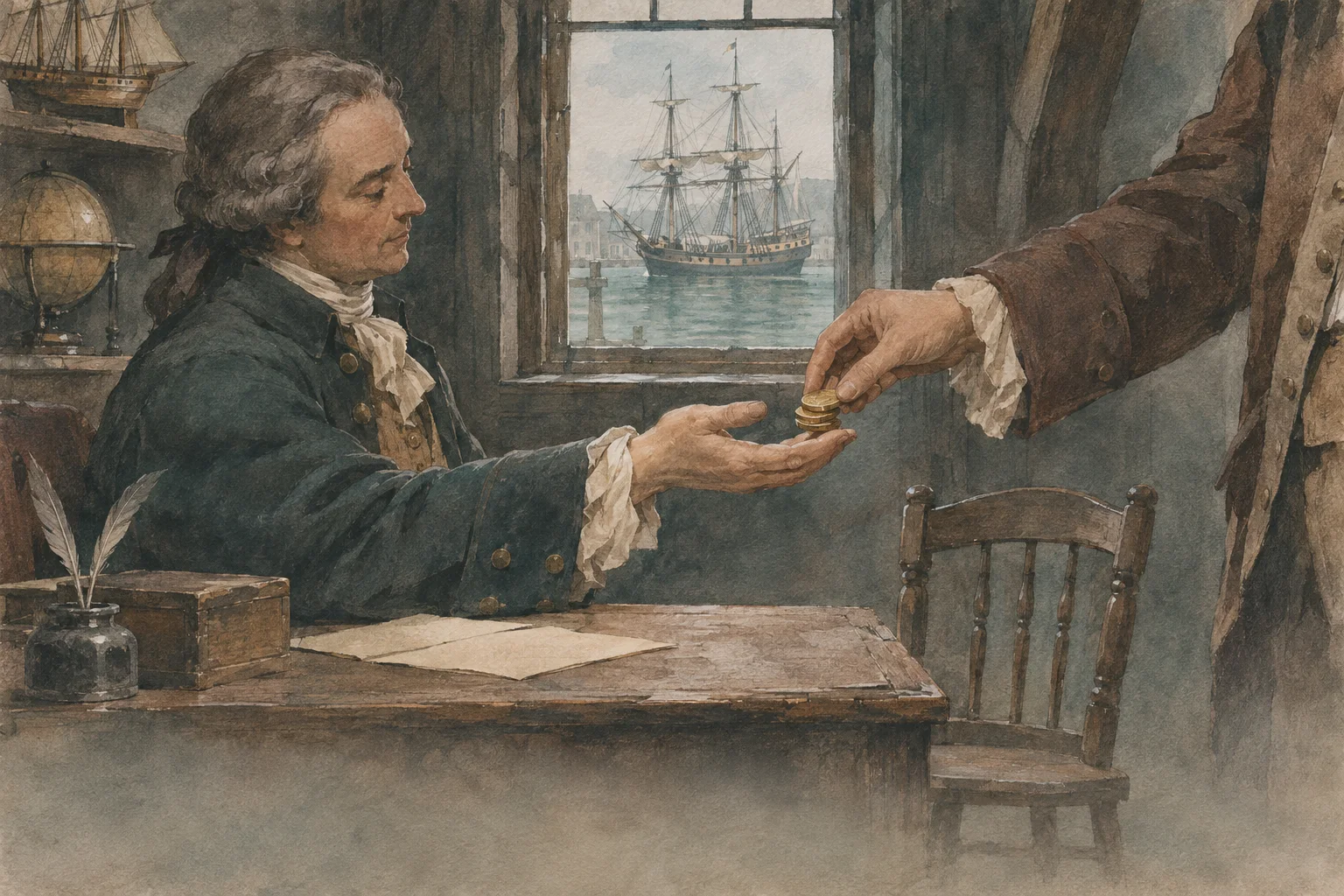
When financial strategies accumulate recurring premium income by absorbing catastrophic exposures, what institutional liabilities and waiting burdens are established at the hour of decision? This inquiry examines four synthetic scenarios from WSTiger alongside Charles Mackay's 1841 narrative of financial schemes, tracing how institutions evaluate marine policies, weekly options desks, on-chain vault protocols, and trapped partnership funds. By interrogating these cases through the analytical lens of the Meridian research architecture, this study examines how institutions structure tail risk, why immediate revenues obscure deferred losses, and how administrative records allocate the burdens of delay when markets turn.
The study advances three primary conclusions. First, strategies that collect premiums by selling tails generate steady cash flow while creating unhedged liabilities that transfer the costs of extreme events to third parties or future capital. Second, while WSTiger's synthetic records formulate explicit invalidation conditions in every case, only five of fifty-three records in the parent corpus (nine percent) state those conditions in terms of an observable number, threshold, or time, leaving the trigger for policy reversal largely dependent upon subjective managerial discretion. Third, institutional records systematically separate the actors who author financial schemes from the constituencies that absorb their eventual fallout, illustrating Niklas Luhmann's fundamental distinction between risk, which is attributed to one's own choice, and danger, which is suffered by those who did not decide.
Archival or empirical findings showing that tail-selling desks consistently reserve capital sufficient to withstand multi-year market panics without external support, or that on-chain protocol managers bear symmetrical personal downside upon capital depletion, would qualify this study's interpretation of how institutions manage asymmetric exposure.