Keep Earth's ecology enclosed even on a new planet?
2370The deep futureDeadline · Within three years, until the new living zone is opened
Civilisational assumption
The people, events, figures, and contract terms are a synthetic premise. They are not statements of real cases or of current law. The source documents are the roots of the background and the norms and do not establish the premises of the scenario.
The question to decide
Settlers on a new planet keep an ecology brought from Earth inside enclosed living zones. Opening the boundary expands living space and access to resources but can alter the cycles of an unfamiliar environment, and keeping it closed also has limits and costs. Which path to choose: continue closure, exchange on a limited basis, or adapt the living system to local relationships?
Who decidesFictional private settlement ecology meeting
What the AI judgments chose
Reading the judgment record…
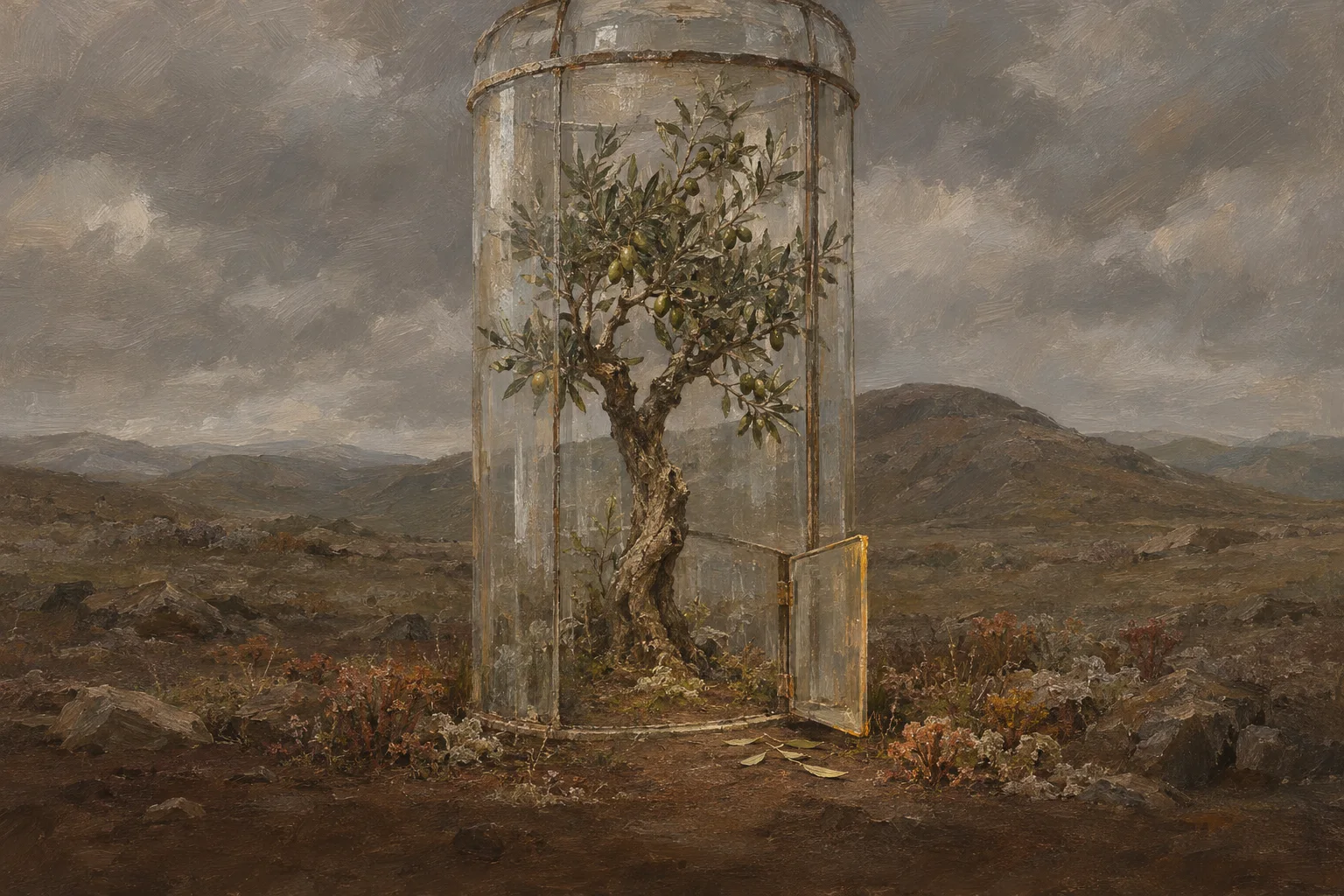
The options
The order shown is not a ranking of preference.
The situation as it stands
The assumed settled community maintains an ecology brought from Earth inside a closed living zone. Decision deadline: within 3 years, before the new living zone is opened.
Fictional synthetic scenario in the year 2370 · A migrant community sends the ecology it brought with it outside the bounds of a new planet. The events, figures, technologies, and nature of the civilization are assumptions for the sake of the question, not predictions of what is to come or observations of fact.
- Premise 1The assumed settled community maintains an ecology brought from Earth inside a closed living zone.
- Premise 2Widening the boundary increases living space and access to resources but can change local, little-known cycles.
- Premise 3Continuing closure reduces outside influence but increases the burden of internal diversity and of the means of maintenance.
Where it holdsAssumed mobile ecology · boundaries · the cost of settling
What is still unknown
- Unknown 1The actual points of contact between the internal ecology and local circulation
- Unknown 2Whether small exchanges bring reversible change
- Unknown 3The long-term resources and alternatives for maintaining a closed state
Signals to decide again
- Decide what observations, responsible parties, and confirmation channels can verify “the actual points of contact between the internal ecology and local circulation,” and re-judge when a new finding changes the trade-offs among the options.
- Decide what observations, responsible parties, and confirmation channels can verify “whether small exchanges bring reversible change,” and re-judge when a new finding changes the trade-offs among the options.
- Decide what observations, responsible parties, and confirmation channels can verify “the long-term resources and alternatives for maintaining a closed state,” and re-judge when a new finding changes the trade-offs among the options.
Where the paths partNot answers — paths that part from the same starting point
Observations showed that even inside the closed zone there had already been fine-grained exchange.
An interpretation that had been taken as a better understanding of the local environment collided with new data.
Material and rootsThe frame, the values and the background documents
How can the intent of nature that people speak for be reviewed?
An exploratory perspective chosen by the creator. Does not claim supernatural validity or the superiority of any particular option.The benefits and costs of the options accrue to different stakeholders. Which loss to accept remains undecided.
A subject for the decision-maker to argue over; the materials carry no conclusion of their own.The record of this question
- Question
FSP-ECOLOGY-45· version 1.5.0- Content identity, SHA-256
acd885b2eb14a1c569ffba8f9c843b15402b04d6f33bd7c2c0e669606d113b53- Input files
- Question input JSON · What followed, JSON