Those waiting for the last train, and those already on it
2026NowDeadline · Within 20 days until the new last-train operating compact
Realistic synthesis
The people, events, figures, and contract terms are a synthetic premise. They are not statements of real cases or of current law. The source documents are the roots of the background and the norms and do not establish the premises of the scenario.
Read it in depthThis record written out at length by AI
The question to decide
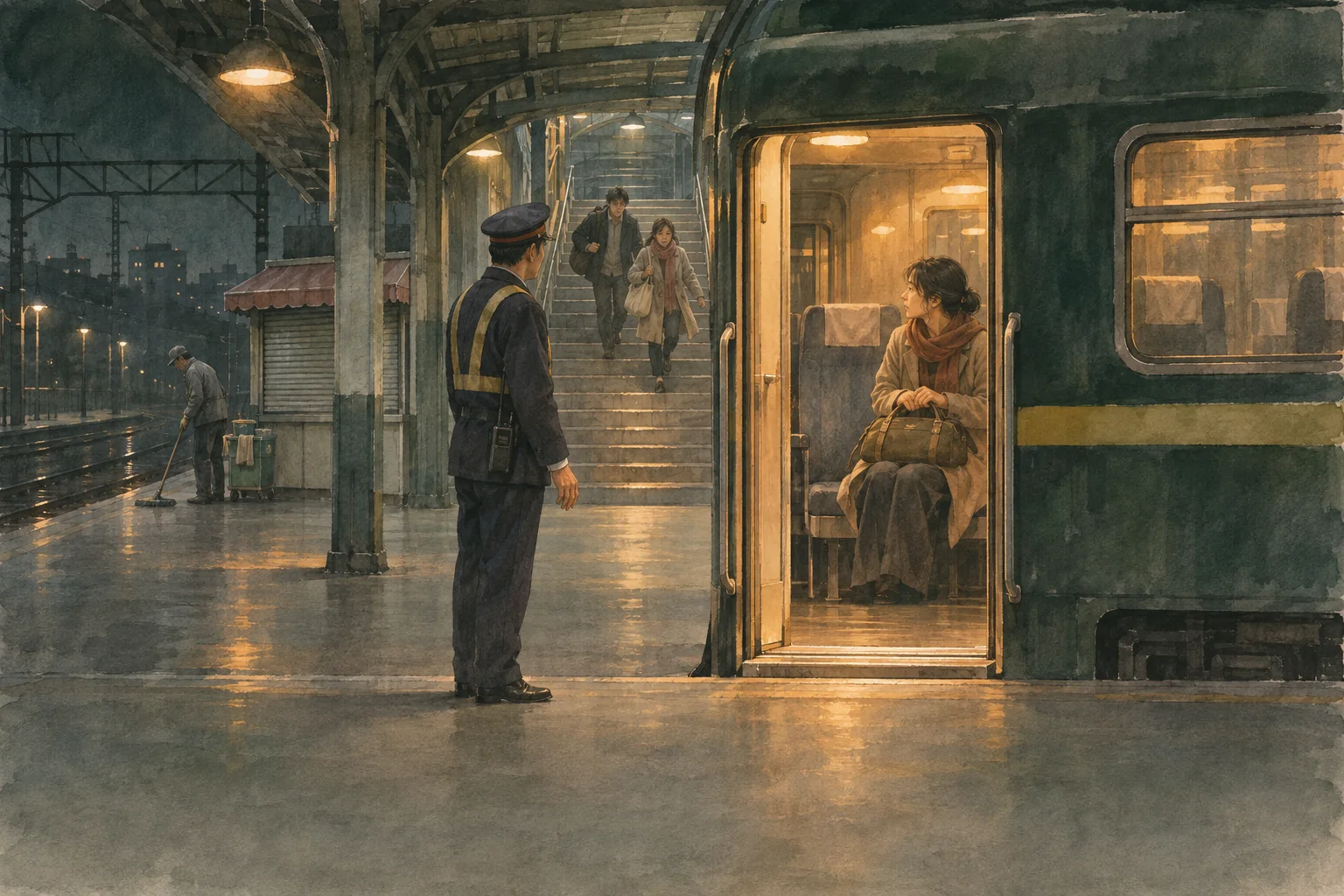
Missing the last train means there are no other scheduled services that day. Yet waiting for transfer passengers affects the onward connections of riders already aboard and the shifts of driving and maintenance staff. Do you depart on time, wait within a limit, or carry the passengers of a late-arriving connection separately?
Who decidesFictional Night Transport Connection Council
What the AI judgments chose
Reading the judgment record…
The options
The order shown is not a ranking of preference.
The situation as it stands
This is a synthetic operating condition in which passengers who miss a connection have no other regular service the same day. Decision deadline: within 20 days, by the new last-train operating agreement.
2026 synthetic scenario · Waiting for a transfer delays the entire last train. The people, organizations, figures, and events are fictional.
- Premise 1This is a synthetic operating condition in which passengers who miss a connection have no other regular service the same day.
- Premise 2Delaying the last train affects the destination connections of passengers already on board and the shift changes of driving and maintenance staff.
- Premise 3Separate transport is fast for a small number of passengers, but accessible vehicles and destinations by area must be verified.
Where it holdsTransfer waiting, destination connections, and operating labor hours
What is still unknown
- Unknown 1The delay distribution and the actual number of transferring passengers
- Unknown 2Users whose connection beyond the destination is cut off
- Unknown 3The accessibility conditions and nighttime operating feasibility of separate transport
Signals to decide again
- Set what observation, owner, and confirmation window will verify "the delay distribution and the actual number of transferring passengers," and re-judge when new findings change the tradeoffs of the options.
- Set what observation, owner, and confirmation window will verify "users whose connection beyond the destination is cut off," and re-judge when new findings change the tradeoffs of the options.
- Set what observation, owner, and confirmation window will verify "the accessibility conditions and nighttime operating feasibility of separate transport," and re-judge when new findings change the tradeoffs of the options.
Where the paths partNot answers — paths that part from the same starting point
Transferring passengers are few, but for some of them the accessibility equipment needed for a separate vehicle has not been confirmed.
The main cause of delay turned out to be a recurring mismatch in the connection timetable.
Material and rootsThe frame, the values and the background documents
Which movements require permission, and who guards that door?
An exploratory perspective chosen by the creator. Does not claim supernatural validity or the superiority of any particular option.The benefits and costs of the options accrue to different stakeholders. Which loss to accept remains undecided.
A subject for the decision-maker to argue over; the materials carry no conclusion of their own.The record of this question
- Question
FSP-MOBILITY-11· version 1.5.0- Content identity, SHA-256
85cb540ba0af4308765b10f4d56cd70d2d21283909cb087fc035a0dde08b43b4- Input files
- Question input JSON · What followed, JSON