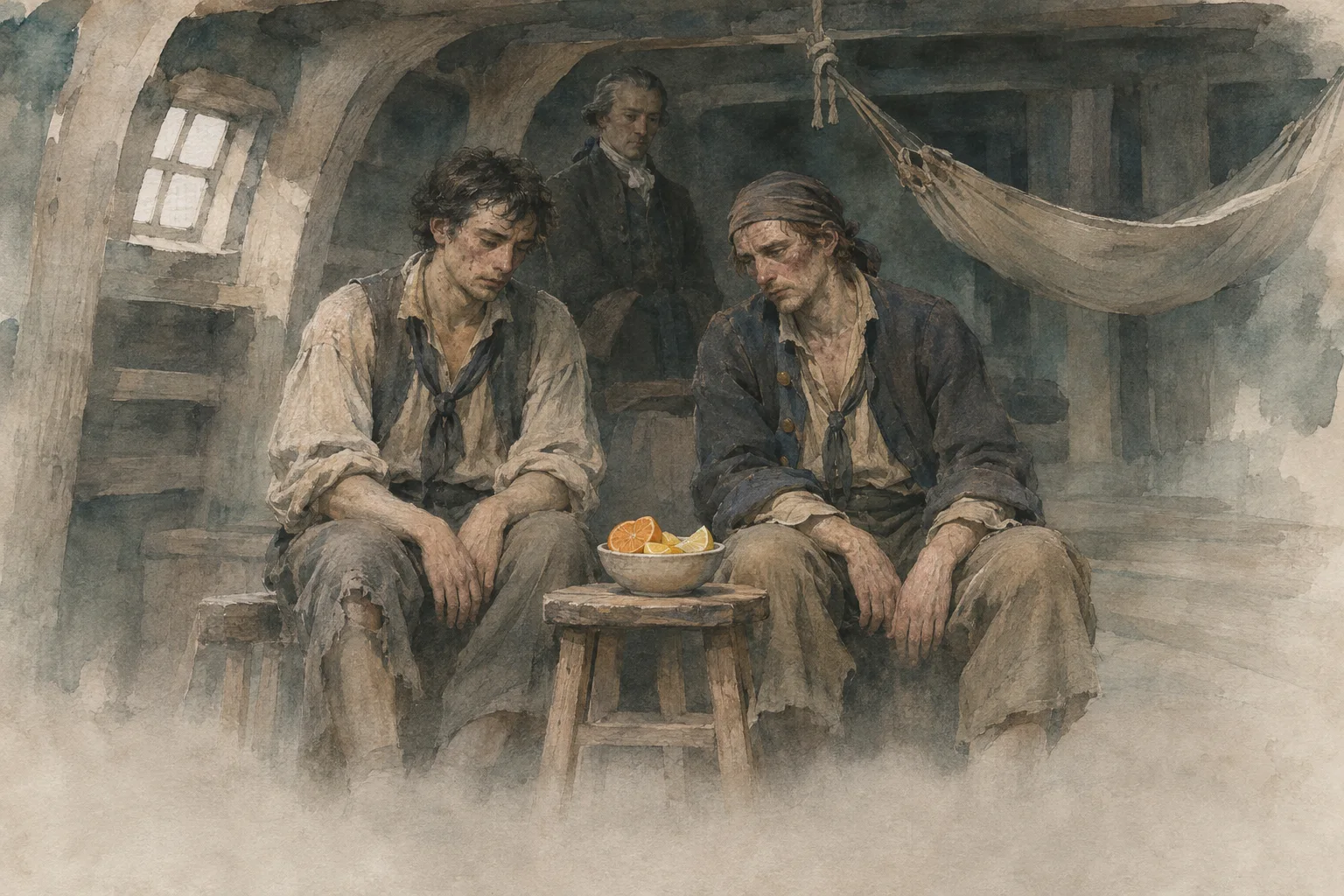
Two eighteenth-century reports stand, in the histories of scurvy and smallpox, near the beginnings of medical testing: James Lind's account, printed in 1753, of six remedies tried on twelve sailors with scurvy aboard the Salisbury in May 1747, and Edward Jenner's Inquiry of 1798, whose seventeenth case describes a boy of about eight inoculated with cowpox on 14 May 1796 and later with smallpox matter. This article asks how far each report claimed more than its own trial could show. It reads the two texts closely, in their order, and sets beside them the modern summaries that Skeptron, a history studio of the RISCON family, wrote of each case for its platform. The question joins a debate about where the authority of a medical trial comes from. Harry Marks places it in a later, collective discipline that reformers built because they distrusted the individual physician's judgment; Theodore Porter ties rule-bound method to weak or contested experts; Andrea Rusnock finds eighteenth-century physicians already turning to counts, with trust resting on who gathered them. The two reports show a different arrangement. Each is written in the first person and rests on the author's own vouching. Lind's chapter discloses more of its own limits than later summaries keep (unequal durations, an allocation by severity, a spoiled cider) and makes its widest claims in hedged words. Jenner's Inquiry makes a larger claim, protection "for ever after", from a handful of cases, but closes by naming the conjecture it admits. The modern summaries keep the right separations between trial, report and later policy, yet they also sharpen details the actors left vague. The article does not decide whether either author claimed too much; it shows where each claim stands against its evidence.
Layout
Twelve Sailors and One Boy: What Two Trial Reports Claimed · The study
Abstract
By RISCON Labs AI from 2 Skeptron records and the public-domain texts it reads · the records are modern summaries of historical episodes written for a platform · the readings through the works named are this study's interpretation · First edition · October 2026