2.1Keeping decisions correctable
Collingridge's The Social Control of Technology (1980) begins from a dilemma. While a technology is young, its effects cannot be known; once they are known, it is entrenched and hard to change. Collingridge's response is to keep decisions corrigible, easy to monitor and to correct, and to keep options open. The argument concerns technology, not war.
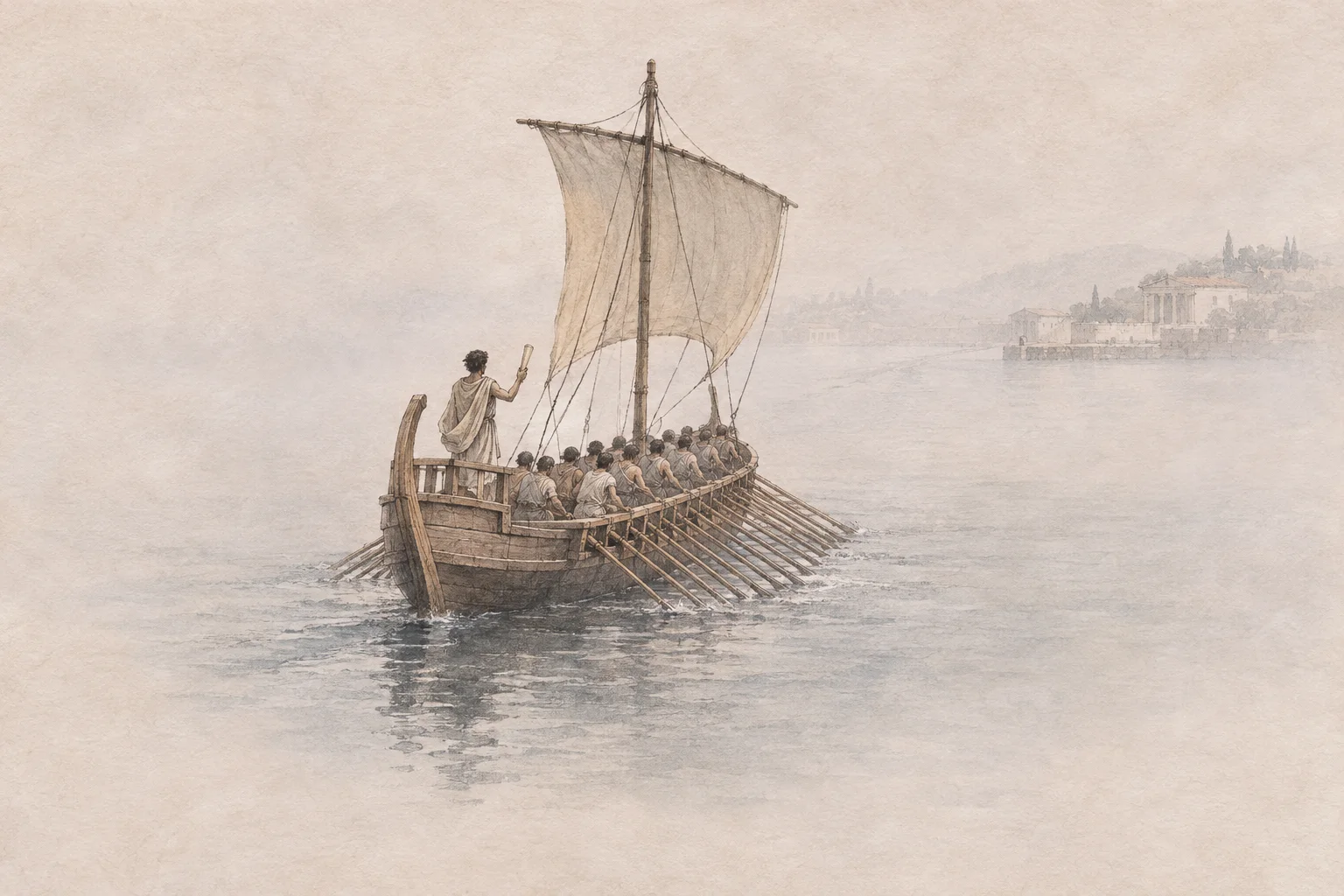
Carrying it over to war has some warrant. A decision to execute a city's men becomes irreversible at a definite moment; a decision about who holds ceasefire records compounds, since once one body holds the originals every later dispute runs through it. In both, the moment of entrenchment is visible in advance, which makes the dilemma less severe (the decider knows when the door will close) and the cost of failure plainer.
Two other works in this study's list bear on what happens inside the room. Neustadt and May's Thinking in Time (1986) holds that decision-makers misuse history, above all by seizing on one analogy, and recommends separating what is known, what is unclear and what is presumed, asking how the present situation came about, and seeing the issue as part of a stream of time running from past into future. Janis's Victims of Groupthink (1972) holds that cohesive groups under pressure come to seek agreement over a realistic appraisal of alternatives, suppressing doubts, and proposes remedies such as assigning a critical evaluator and inviting outside experts. Neither note concerns reversal as such. Separating the known from the presumed, and assigning a critical evaluator, are practices that can keep a decision from closing too early, which is why they stand beside Collingridge here.
2.2The irreversible and the priority of the bad prognosis
Jonas's The Imperative of Responsibility (1984) offers a different answer to consequences that reach beyond what can be known. Technological power, Jonas holds, reaches so far into the future that ethics must take responsibility for future generations, and where the stakes are irreversible the bad prognosis should be given priority over the good, in what he calls a heuristics of fear. Collingridge's note recommends keeping decisions open to correction; Jonas's recommends giving the bad prognosis priority where stakes are irreversible.
The two notes converge on irreversibility and part on the remedy: a decision kept correctable, or priority for the bad prognosis where it cannot be undone. The Mytilenean decree sits at their meeting point: an irreversible act that was, for one night, still reversible.
2.3Documents that persuade
Clarke's Mission Improbable (1999) holds that organisations write plans for catastrophes they cannot control. He calls these plans fantasy documents: they could not work as written, but they serve to persuade others, and the organisations themselves, that the risk is under control. The note does not say that every plan is a fantasy, and this article does not read Clarke that way. The point here is narrower. A written promise that a decision can be stopped may be judged by what it would do if the occasion came, or by whom it persuades now; Clarke, who speaks of plans that serve to persuade, points to the second.
Luhmann's Risk (1993) supplies a distinction. Luhmann separates risk, a possible loss attributed to one's own decision, from danger, a possible loss attributed to something outside one's control; the same loss is a risk to the one who decides and a danger to those affected who did not decide. A stop condition is written by those who carry the risk and needed by those who face the danger; if only the decider can check it, the people in danger depend on the attention of those who put them there.
2.4Ending and verifying
The last two works bring the question into war. Iklé's Every War Must End (1971) holds that wars are ended by decisions that governments often fail to think through when they begin them. The inference this article draws from that, and not Iklé's, is that the decision to stop may be the one least prepared, which is the decision the second galley carried. Fortna's Peace Time (2004) holds that ceasefires backed by stronger agreements, including buffer zones, peacekeepers, joint commissions and verification, tend to last longer. The finding concerns the durability of ceasefires, not the custody of records. It is used here only to suggest why a verification board might care who holds the observation records, a use Fortna's note does not make and one that says nothing about any synthetic setting.
2.5The two sides set side by side
The table sets out how the main positions would treat a written stop condition. The second column paraphrases each reading note; the third and fourth apply it to stop conditions.
| Position | What makes a decision correctable | What a written stop condition is | What would test it |
|---|---|---|---|
| Collingridge (1980) | Keeping it easy to monitor and correct, with options open | A means of control, if it is monitorable | Whether the condition was monitored and the decision corrected before entrenchment |
| Neustadt and May (1986); Janis (1972) | Separating known, unclear and presumed; a critical evaluator | Part of a practice that keeps the group from closing too early | Whether the doubts the evaluator raised reached the decision |
| Jonas (1984) | — | A weaker safeguard than giving the bad prognosis priority before the fact | Whether the irreversible step was taken at all |
| Clarke (1999) | — | Possibly a fantasy document that serves to persuade | Whether it could work as written, and whom it persuades now |
| Luhmann (1993) | — | Written by those who bear risk, needed by those who face danger | Whether those facing the danger can see the signal |
2.6What neither side says about time
Neither Collingridge nor Clarke, in the form given here, says how long correction takes, who carries it, or what happens if it arrives after the act it was meant to prevent; both leave correction as a single act. In Thucydides' account the Athenians decided correctly the second time and nearly failed anyway, because the first decree had a day and a night's start. The cited notes leave that interval empty. Thucydides fills it with rowers.